
Table of Contents
- What Is Food-Grade Silicone and Why It Matters
- Silicone vs Plastic: Key Safety Differences
- Does Silicone Leach Chemicals or Microplastics?
- What Are Phthalate-Free Baby Spoons Made Of
- How to Clean Silicone Baby Feeding Sets Properly
- Identifying High-Quality Silicone Products
- Heat Resistance, Durability and Long-Term Safety
- Conclusion
- Frequently Asked Questions
Last Updated: September 2, 2026
What Is Food-Grade Silicone and Why It Matters
Food-grade silicone is a synthetic polymer derived from silica that doesn't break down into harmful compounds when exposed to heat, cold, or acidic foods, unlike plastic polymers such as polypropylene and PVC, which can leach endocrine disruptors. Food-grade silicone is manufactured to strict standards, free from fillers, plasticisers, and volatile organic compounds. It's hypoallergenic, non-porous, and resists bacterial growth, critical for infants whose immune systems are still developing. At Bub and Co, we source high-quality silicone.
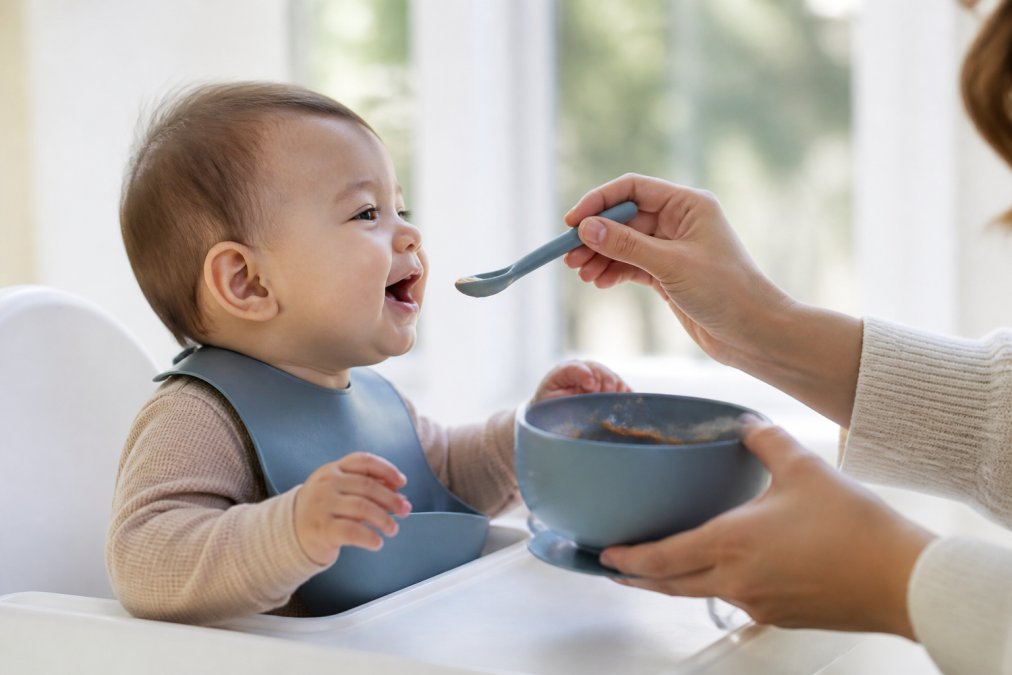
Babies aged four months and up exploring solid foods have digestive and neurological systems particularly vulnerable to chemical exposure. Silicone products eliminate the worry that feeding tools are leaching microplastics, phthalates, or BPA into every meal. The material is chemically stable across extreme temperature ranges, from freezer to oven, without degrading or releasing toxins. Unlike plastic, silicone won't absorb odours or stains, maintaining its appearance and hygiene indefinitely with proper care.
Silicone vs Plastic: Key Safety Differences
The safety gap between silicone and plastic comes down to molecular stability. Plastic polymers like polypropylene and PVC are held together by chemical bonds that break down under heat, light, and mechanical stress, releasing microplastics and chemical additives including phthalates and BPA directly into food. Silicone's cross-linked silicon-oxygen bonds are far more stable and don't degrade under normal use conditions.
| Factor | Silicone | Plastic |
|---|---|---|
| Heat stability | Withstands -40°C to 230°C without degradation | Begins leaching at 70°C+ |
| Porosity | Non-porous; resists bacterial growth | Porous; harbours bacteria in scratches |
| Chemical leaching | Chemically inert; no leaching | Releases BPA, phthalates under stress |
| Durability | Maintains integrity for years | Degrades, cracks, and discolours |
| Stain resistance | Naturally stain-resistant | Absorbs stains and odours permanently |
Plastic manufacturers often market products as "BPA-free," but this sidesteps the real issue. Removing BPA doesn't address the fundamental instability of the polymer itself. Many BPA-free plastics use alternative plasticisers like BPS, which carry similar endocrine-disrupting risks. Silicone eliminates this problem entirely because it doesn't require plasticisers. Plastic products also degrade over time; repeated washing, sun exposure, and normal wear cause microscopic fractures that release particles. Silicone doesn't degrade this way, a silicone spoon used daily for two years will look and perform identically to one used weekly.
Does Silicone Leach Chemicals or Microplastics?
Genuine food-grade silicone does not leach chemicals or microplastics under normal use conditions. Silicone is chemically inert; its silicon-oxygen backbone is extraordinarily stable and doesn't break apart when exposed to water, heat, acids, or mechanical stress. Unlike plastic, which sheds microplastics as it degrades, silicone doesn't degrade, there's nothing to leach and nothing to shed.
Not all silicone products are equal. Industrial-grade or recycled silicone may contain fillers, residual catalysts, or contaminants that can off-gas or leach. High-quality silicone undergoes purification steps to remove volatile organic compounds and uncrosslinked oligomers, the molecules most likely to migrate into food. A slight rubbery smell from new silicone products is normal and harmless; it's residual volatile compounds from manufacturing that dissipate within days.
The microplastics concern is often conflated with silicone degradation. Microplastics are fragments shed by degrading plastics. Silicone doesn't degrade, so it doesn't shed microplastics. If a silicone product breaks mechanically, the fragments are still inert silicone, not toxic microplastics. To verify that a silicone product won't leach, look for certifications from regulatory bodies. Bub and Co's feeding sets are manufactured to meet stringent safety standards, ensuring they remain chemically stable throughout your child's feeding journey.
What Are Phthalate-Free Baby Spoons Made Of
Phthalate-free baby spoons made from silicone are composed of a cross-linked siloxane polymer, essentially silicon and oxygen atoms bonded together in a three-dimensional network. This structure is fundamentally different from plastic spoons, which rely on long-chain hydrocarbons held together by carbon-carbon bonds.
High-quality silicone uses a catalyst during curing, resulting in a pure final product with fewer residual catalysts that could leach. The spoon contains no fillers, plasticisers, or additives, nearly pure silicone, a material so chemically stable it's used in medical implants and surgical applications.
Food-grade silicone can be formulated to different durometers (hardness levels) depending on intended use. Baby spoons are typically softer, around 40-60 Shore A, which is gentle on emerging teeth and gums but firm enough to scoop and deliver food effectively. Colour comes from food-grade pigments mixed into the silicone before curing; these pigments are also inert and won't leach.
How to Clean Silicone Baby Feeding Sets Properly
Silicone's non-porous structure makes it remarkably easy to clean. Hand wash silicone spoons and bowls with warm soapy water immediately after use, paying special attention to seams and textured areas. Rinse thoroughly under running water to remove all soap residue.
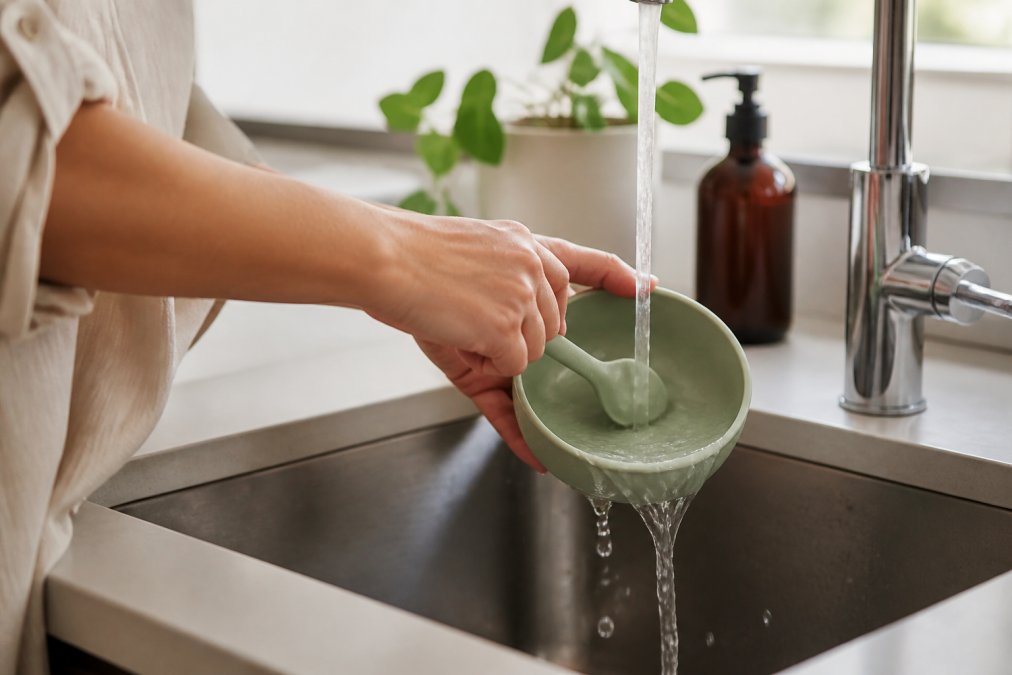
Most silicone products are dishwasher-safe on the top rack, though hand washing extends the life of wooden handles and reduces exposure to harsh detergent residues. Silicone can be sterilised by boiling (5-10 minutes at 100°C) or using a steam steriliser, particularly useful for new products or if your baby has been unwell.
For stains from turmeric, beetroot, or other pigmented foods, soak the item in equal parts white vinegar and water for 30 minutes, then scrub gently with a soft brush. A paste of baking soda and water works for stubborn stains. Avoid bleach and abrasive scrubbers. Air dry silicone products or pat dry with a soft cloth. Store clean, dry items in a cool, dry place away from direct sunlight. Soap and water are sufficient for daily use, silicone doesn't require special cleaning products or elaborate sanitising routines.
Identifying High-Quality Silicone Products
Look for products that meet food contact standards and display certifications or reference compliance on their website or packaging. High-quality silicone products list "food-grade silicone" as the primary material with no fillers, plasticisers, or unspecified additives.
Examine construction for smooth, even surfaces with no visible defects, rough edges, or seams that trap food particles. Suction cups should be intact and functional. Run your fingers over the product, high-quality silicone feels smooth and uniform; cheap silicone may feel grainy or uneven, indicating fillers or inconsistent curing.
Reputable brands like Bub and Co provide detailed information about sourcing, manufacturing processes, and safety testing. A slight rubbery smell from new silicone is normal and dissipates within days; a strong chemical odour persisting for weeks suggests poor-quality material. High-quality silicone maintains its colour through repeated washing; dramatic fading suggests substandard pigmentation or silicone.
Heat Resistance, Durability and Long-Term Safety
Food-grade silicone maintains its chemical integrity across temperatures from -40°C to 230°C, making it suitable for freezer storage, microwave reheating, and oven use. You can safely reheat your baby's porridge in a silicone bowl without worrying about chemical leaching or freeze expressed breast milk in silicone storage containers without degradation.
Plastic spoons and bowls typically last 12-18 months before cracking or developing surface damage that harbours bacteria. Silicone products maintain their integrity indefinitely with proper care. Many parents report using the same silicone feeding set across multiple children without noticeable wear. This longevity has environmental implications, a silicone spoon used for five years across three children represents far less waste than purchasing multiple plastic alternatives.
Long-term safety is assured because silicone doesn't degrade. A silicone spoon used daily for a decade will perform identically to one used weekly. Inspect silicone products regularly for visible damage and replace them if seams separate or large tears develop, though fragments remain inert silicone rather than toxic microplastics.
Conclusion
Silicone baby products are genuinely safe when sourced from reputable manufacturers who prioritise food-grade materials and comply with regulatory standards. The chemical inertness of silicone eliminates the risks associated with plastic, no leaching, no microplastics, no endocrine disruptors. For parents introducing solids or managing teething, silicone feeding sets offer peace of mind backed by material science.
The real differentiator is the quality of silicone you choose. Bub and Co's feeding sets are manufactured to the highest standards, free from BPA, PVC, and phthalates, with stain-resistant and odour-free designs that simplify your daily routine. Whether you're starting with the Mini Bub Set or investing in a comprehensive Pagi Kids Feeding Set, you're choosing a material that will serve your child safely through multiple developmental stages. Shop Feeding Sets and give your little one the safest start to solid foods.

Frequently Asked Questions
Are silicone baby products completely safe for babies?
Yes, food-grade silicone baby products are safe when manufactured to recognised standards. Food-grade silicone is inert, non-porous, and does not leach harmful chemicals like BPA, PVC, or phthalates. Look for products explicitly marketed as BPA-free and phthalate-free. Silicone's chemical stability means it remains safe across temperature changes, making it ideal for sterilisation and everyday use.
Does silicone leach microplastics into baby food?
High-quality food-grade silicone does not leach microplastics. Microplastic concerns typically apply to lower-grade plastics that degrade over time. High-quality silicone, used in premium baby products, is engineered to resist degradation and maintains its integrity through repeated use, washing, and heating. Avoid silicone products with fillers or unknown manufacturing origins, as these may not offer the same durability guarantee.
What makes phthalate-free silicone spoons safer than plastic alternatives?
Phthalate-free silicone spoons are made from pure polymer chains without chemical softeners, whereas many plastics rely on phthalates to achieve flexibility. Silicone's non-porous structure prevents bacterial growth and odour absorption, and it withstands heat without releasing compounds. Plastic spoons can leach chemicals when heated or worn, while silicone remains chemically stable. This makes silicone a more reliable choice for frequent sterilisation and microwave use.
How do I verify that silicone baby products are high-quality and safe?
Check for certifications, confirm the product is 100% food-grade silicone, and verify it's BPA, PVC, and phthalate-free. Reputable brands provide transparency about manufacturing standards. Inspect the product for discolouration, odour, or visible degradation. High-quality silicone maintains its colour and texture after repeated washing and heating. Choose products from established retailers with customer reviews confirming durability.
This article was written using GrandRanker
Leave a comment