
Table of Contents
- Why Sterilising Silicone Baby Plates Matters
- The Difference Between Cleaning, Sanitising, and Sterilising
- How to Clean Silicone Baby Plates Before Sterilising
- Boiling Silicone Baby Plates to Sterilise
- Using Your Dishwasher for Dishwasher-Safe Silicone Baby Plates
- Vinegar Soaking to Remove Odours and Disinfect
- How to Remove Soap Taste from Silicone
- How Often Should You Sterilise Silicone Baby Plates
- Frequently Asked Questions
Last Updated: October 15, 2026
Why Sterilising Silicone Baby Plates Matters
Learning how to sterilise silicone baby plates gives you an extra layer of protection when your baby starts solids. Babies under 12 months have immune systems that are still developing, and a feeding surface that isn't properly cleaned can harbour bacteria that cause tummy bugs.
Food-grade silicone is naturally resistant to bacteria, but it still requires proper sterilisation to eliminate pathogens completely. At Bub and Co, we design our silicone feeding sets to withstand the heat and stress of sterilisation methods, so parents can confidently prepare safe mealtime surfaces without worrying about material breakdown.
Most babies start using plates at around six months, when solids are introduced. For healthy babies at this age, thorough washing in hot soapy water is usually enough day to day. Sterilising is worth doing when a plate is brand new, after your baby has been unwell, or if your baby was premature or has a weakened immune system and your GP or child health nurse recommends it.
The Difference Between Cleaning, Sanitising, and Sterilising
These three terms sound similar but they do very different jobs. Understanding the difference helps you choose the right method for your situation.
Cleaning removes visible food, dirt, and organic matter from the surface. Warm soapy water does this job. It's your first step every single time, and it's essential; you cannot sanitise or sterilise a dirty plate.
Sanitising reduces bacteria and viruses to safe levels, but does not eliminate all microorganisms. A vinegar soak or a dishwasher cycle sanitises. It's sufficient for older babies (six months and up) and for plates used by healthy toddlers who've been eating solids for months.
Sterilising kills all bacteria, viruses, and spores. Boiling water, steam, or chemical solutions achieve true sterilisation. Use it for new plates, after illness, or for babies with weakened immune systems.
For most families, the pattern looks like this: clean after every meal, run plates through the dishwasher or a vinegar soak a few times a week, and sterilise when needed (new plates, after illness, or if your baby has health concerns and your GP or child health nurse recommends it).
| Method | Removes Visible Dirt | Reduces Pathogens | Kills All Microorganisms | Best For |
|---|---|---|---|---|
| Warm soapy water | Yes | Partial | No | Daily cleaning |
| Dishwasher | Yes | Yes | No | Daily use, older babies |
| Boiling | Yes | Yes | Yes | New plates, after illness, weakened immunity |
| Vinegar soak | Partial | Yes | No | Odour removal, sanitising |
How to Clean Silicone Baby Plates Before Sterilising
You must clean before you sterilise silicone baby plates. A dirty plate with food residue will not sterilise properly because bacteria can hide under organic matter. Cleaning is your foundation.
Removing food residue with soft tools
Start immediately after feeding. Dried-on food hardens and becomes harder to remove. Use a soft sponge or silicone brush, never abrasive scrubbers, steel wool, or rough cloths, which can scratch or damage the silicone surface.
Rinse the plate under warm running water. Gently wipe away visible food with your soft sponge, working into the suction base and any crevices. For stubborn residue, soak the plate in warm water for five minutes first, then wipe again.
Avoid sharp utensils or knife edges. They can create micro-tears in the silicone that trap bacteria and eventually degrade the material. A soft touch is all you need.
Washing with warm water and mild dish soap
Fill a bowl or sink with warm water and add a small amount of mild, fragrance-free dish soap. Place the plate in the water and use your soft sponge to wash all surfaces, including the underside and the suction base.
Pay attention to the rim and any grooves where food particles collect. Work the soapy water into every corner. Rinse thoroughly under running water until no soap residue remains; soapy water left behind can transfer to your baby's next meal and cause a soapy taste or mild stomach upset.
For plates with dividers or compartments, clean between the sections carefully. Food can lodge in tight spaces and create odours if left to decompose.
Boiling Silicone Baby Plates to Sterilise
Boiling is the most accessible sterilisation method for most families. It requires only a pot, water, and heat. The high temperature kills all bacteria, viruses, and spores within minutes.
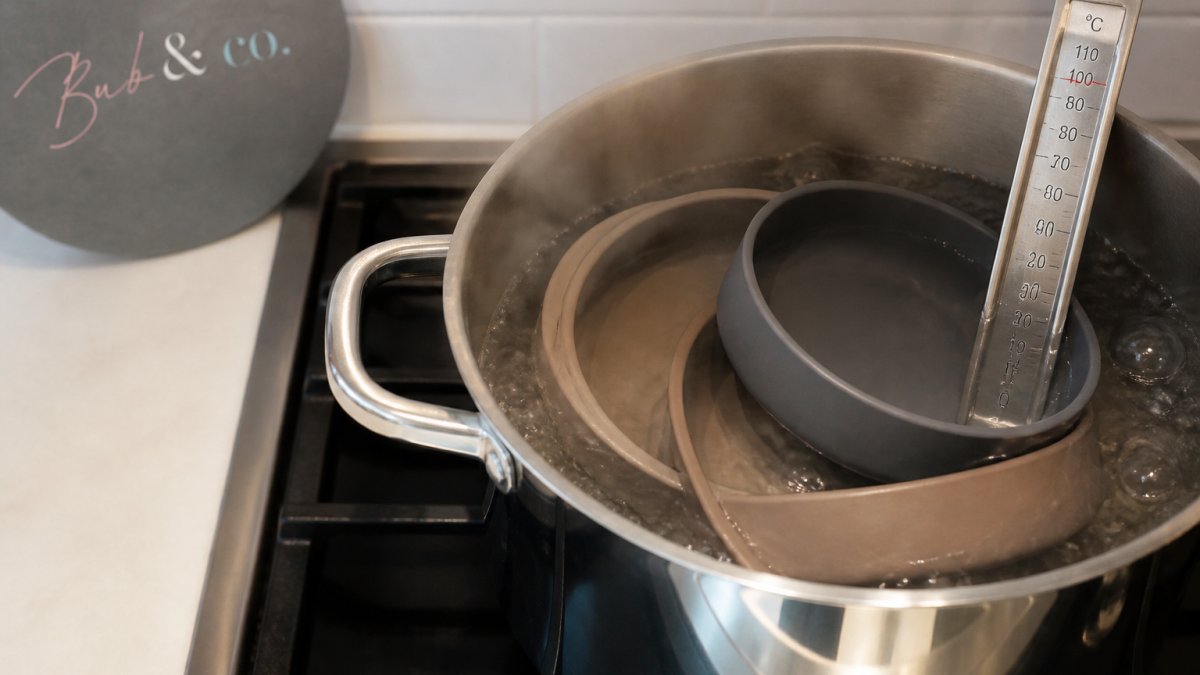
Step-by-step boiling method
Step 1: Clean the plates first. Wash with warm soapy water as described above. Pat dry or allow to air dry. Do not skip this step.
Step 2: Fill a large pot with water. Use enough water to submerge the plates completely, with at least 5 centimetres of water above them. Cold water is fine; the pot will heat gradually.
Step 3: Place the plates in the pot. Arrange them so they sit flat and do not overlap. If plates stack, water may not reach all surfaces.
Step 4: Bring the water to a rolling boil. Once the water reaches 100°C, maintain the boil for 10 minutes. This duration ensures all pathogens are killed, even if water temperature fluctuates slightly.
Step 5: Remove with tongs or a slotted spoon. Do not use your bare hands; the plates and water are extremely hot. Place them on a clean tea towel to cool.
Step 6: Allow to air dry completely. Do not wipe them dry with a cloth, which can reintroduce bacteria. Let them sit uncovered on the tea towel until completely dry before storing.
Safety limits and temperature considerations
Silicone can withstand boiling water without leaching chemicals or degrading, provided you follow safe practices. Food-grade silicone has a melting point well above 100°C, so boiling poses no risk to the material itself.
However, do not use boiling as an excuse to overheat. Prolonged exposure to temperatures above 120°C can eventually weaken silicone over many cycles. Stick to 10 minutes at a rolling boil; this is sufficient and safe.
Never use a pressure cooker or steam steriliser set above 120°C without checking your plates' care instructions. Some silicone products have lower temperature limits. At Bub and Co, our silicone baby plates are rated for boiling and standard dishwasher cycles, but always verify your specific product's guidelines before using any high-heat method.
If your plates have non-silicone components (handles, lids, or attachments made from other materials), check those limits too. A plastic handle might soften at 100°C, so you may need to remove it before boiling.
Using Your Dishwasher for Dishwasher-Safe Silicone Baby Plates
Many modern dishwashers reach temperatures high enough to sanitise (though not fully sterilise in the strictest sense). If your silicone baby plates are marked dishwasher-safe, this is a convenient option for regular sanitising.
Place the plates on the top rack, where water temperature is slightly lower than the bottom rack. Avoid the heating element at the bottom, which can exceed safe temperatures for some silicone products.
Use a gentle or baby-safe dishwasher cycle if available. Standard cycles work too, but gentler cycles reduce wear on the material over time. Avoid bleach-based detergents, which can degrade silicone and leave chemical residues.
Dishwashers sanitise effectively but do not achieve the same pathogen elimination as boiling. For babies with weakened immune systems, use the dishwasher for daily cleaning and boil when your GP or child health nurse advises.
Vinegar Soaking to Remove Odours and Disinfect
Silicone absorbs odours from strong foods like curry, tomato, or fish. Vinegar soaking helps neutralise these smells and provides a mild disinfecting action.
Mix equal parts white vinegar and warm water in a bowl. Submerge the plates completely and let them soak for 30 minutes to one hour. The acidity of the vinegar breaks down odour-causing compounds and kills many bacteria.
After soaking, rinse thoroughly under running water. Vinegar smell may linger briefly, but it dissipates quickly once the plate dries. Do not skip the rinse; your baby will taste vinegar otherwise.
Vinegar soaking is excellent for maintenance and odour control but should not replace boiling for sterilisation. It sanitises but does not sterilise. Use it weekly as part of your regular care routine, especially after feeding with strong-smelling foods.
How to Remove Soap Taste from Silicone
If your baby refuses a meal or you notice a soapy taste, residual dish soap is the likely culprit. This happens when rinse water does not completely remove soap film from the silicone surface.
Soak the affected plate in clean warm water for 10-15 minutes. Use your soft sponge to gently wipe the surface again, paying special attention to any grooves or textured areas where soap can hide. Rinse thoroughly under running water, holding the plate up to the light to check for any remaining soap film.
For stubborn soap residue, soak in a mixture of warm water and a small amount of white vinegar (one part vinegar to three parts water) for 20 minutes. The acidity helps break down soap buildup. Rinse again with plain water until no vinegar smell remains.
Always rinse at least three times after washing to ensure no soap remains. This is one of the most common causes of feeding refusal in babies who have been happily eating solids.
How Often Should You Sterilise Silicone Baby Plates
Frequency depends on your baby's age and health status.
New plates: Sterilise once before first use to remove any manufacturing residue.
After illness or a dirty drop: Sterilise after your baby has had a tummy bug or cold, or if the plate has landed somewhere unhygienic.
Babies six months and older: Once your baby is eating a variety of solid foods and has been on solids for several weeks, thorough daily washing is usually sufficient.
Healthy toddlers (12 months and up): Daily washing is adequate. Toddlers' immune systems are much stronger, and the risk of serious infection from feeding equipment is low.
If your child has a compromised immune system, has been hospitalised, or is recovering from gastroenteritis, ask your GP or child health nurse for personalised guidance. They may recommend more frequent sterilisation than standard advice.
The key principle is this: plates arrive at the solids stage, when good daily washing does most of the work. Sterilising is a top-up for specific situations, not a daily chore.
Keeping your baby's feeding equipment clean and sterilised gives you peace of mind during those early months. Browse our Junior Set or Ultimate Set to find the right feeding solution for your little one's stage.


Frequently Asked Questions
Can you boil silicone baby plates to sterilise them?
Yes, boiling is one of the most effective ways to sterilise silicone baby plates. Submerge clean plates in boiling water for 10 minutes to kill bacteria and pathogens. Most food-grade silicone can withstand boiling water safely. Always check your product's care instructions first, as some silicone items have specific temperature limits. Let plates cool completely before handling.
How do you remove a soapy taste or smell from silicone plates?
Soapy tastes and smells often come from residual detergent. Rinse thoroughly under running water, rubbing the surface with your fingers. For stubborn soap residue, soak the plate in fresh water for 30 minutes, then rinse again. You can also use white vinegar: soak the plate in equal parts vinegar and water for 15-30 minutes, then rinse well with clean water and air dry completely.
Do baby plates need to be sterilised after every use?
Not every time. Most babies start using plates at around six months, and for healthy babies thorough washing in hot soapy water after each meal is usually enough. Sterilise new plates before first use, after your baby has been unwell, or more often if your GP or child health nurse advises it for a baby with a weakened immune system.
Are silicone baby plates from Bub and Co microwave and dishwasher safe?
Yes, Bub and Co's silicone baby plates are both microwave and dishwasher safe, making them convenient for busy parents. The food-grade silicone withstands heat without leaching chemicals. For best results, place silicone items on the top rack of the dishwasher and avoid abrasive scrubbers. Always rinse promptly after use, especially after coloured foods, to prevent staining.
Leave a comment