
Table of Contents
- Are Silicone Baby Spoons Safe for Teething?
- Are Silicone Teethers Safe for Babies?
- Baby Spoon Choking Hazard: What You Need to Know
- Best Baby Spoons for Teething: What to Choose
- How to Clean Silicone Baby Spoons
- Heat Exposure and Food-Contact Safety
- Frequently Asked Questions
Last Updated: October 12, 2026
Are Silicone Baby Spoons Safe for Teething?
Silicone baby spoons are a popular choice for parents introducing solids and managing teething discomfort. The question of whether are silicone baby spoons safe for teething concerns caregivers who want to avoid harmful chemicals while offering relief. At Bub and Co, our feeding sets use food-grade silicone free from BPA, PVC, and phthalates.
The short answer is yes, silicone baby spoons are safe for teething when they meet proper safety standards. But not all silicone products are equal, so understanding what to look for matters.
What makes silicone different from plastic
Silicone is a synthetic polymer made from silicon, oxygen, and carbon.
Plastic spoons, particularly older polypropylene options, can crack, splinter, or leach chemicals when heated or chewed. Silicone flexes without breaking, won't splinter into your baby's mouth, and holds up through hundreds of wash cycles.
Silicone also resists staining and odour absorption far better than plastic, so a quality spoon stays fresh-looking after weeks of purees and colourful first foods.
Chemical safety and what to look for
When choosing a silicone baby spoon, verify it's made from food-grade silicone free from BPA, PVC, and phthalates, endocrine disruptors that can leach into food, especially when heated or chewed repeatedly.
Look for "food-grade" on the packaging, meaning the silicone is certified safe for direct food contact. Avoid generic silicone marketed for other purposes, since industrial-grade silicone may contain additives unsuitable for babies.
Independent safety testing adds confidence. Some manufacturers run third-party testing, though it isn't always prominently displayed.
Are Silicone Teethers Safe for Babies?
Teething typically begins around 4 to 6 months, though every baby is different. A soft silicone spoon can provide gentle relief when chewed on, but the real question is whether it's the right tool for teething.
Softness and relief for emerging teeth
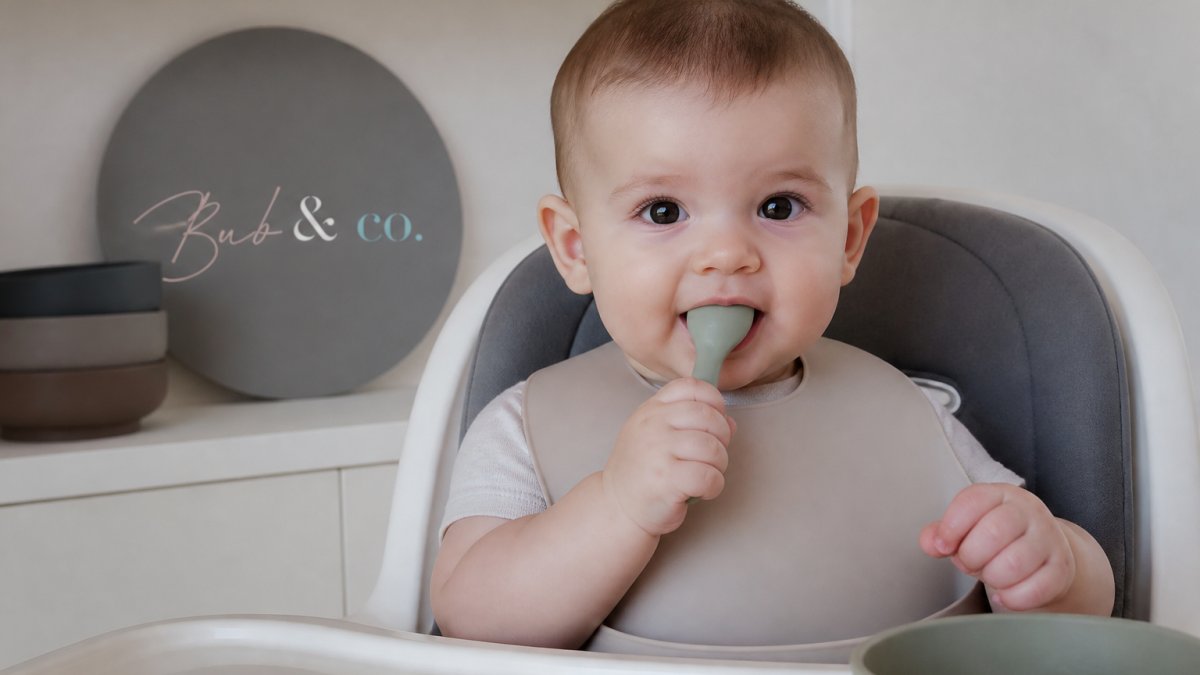
The soft tip of quality silicone spoons offers a gentler chewing surface than hard plastic or wood.
However, a silicone spoon is not a dedicated teether, it's a feeding tool that doubles as a mild teething aid.
An ergonomic handle matters too: a grip that's easy for small hands encourages self-feeding while giving your baby something to chew on.
Durability under chewing pressure
A common concern is whether repeated chewing will damage a silicone spoon. High-quality food-grade silicone is remarkably durable, it flexes and returns to shape rather than fracturing under a teething baby's chewing pressure.
Over months of use, the soft tip may show minor wear, slight surface roughness, or subtle colour changes. That's normal. What you're watching for is actual tearing, separation of parts, or degradation that could shed pieces.
Inspect your silicone spoons regularly. If you notice cracks, tears, or any sign pieces might separate, retire that spoon. Most quality silicone spoons last with proper care.
Baby Spoon Choking Hazard: What You Need to Know
Choking risk is a legitimate concern for any feeding utensil. Understanding the specific risks with silicone spoons helps you use them safely.
Spoon design and gag reflex considerations
The soft-tip design of silicone spoons is actually safer than hard alternatives.
That said, a spoon isn't designed to be chewed on intensely. The handle should never be small enough for a baby to fully insert into their mouth, quality designs are thick enough to prevent that.
The bowl should also suit your baby's age; too large a bowl increases the risk of pushing too much food toward the throat at once.
Supervision and age-appropriate use
Never leave a baby alone with a spoon, silicone or not. Supervision is non-negotiable during feeding and teething, babies can make sudden movements or insert objects further than seems logical.
Silicone spoons are generally suitable from around 6 months when your baby is sitting upright with support and beginning solids. Before that, spoon-feeding is your responsibility, you control the pace and amount.
As your baby moves into independent self-feeding around 8 to 12 months, a secure handle grip and appropriate bowl size become even more important.
| Age Range | Readiness Signs | Spoon Use | Supervision Level |
|---|---|---|---|
| 4-6 months | Sits with support, shows interest in food | Parent-fed only | Constant |
| 6-8 months | Sits independently, reaches for objects | Parent-fed, baby holds handle | Constant |
| 8-12 months | Brings objects to mouth intentionally | Self-feeding begins | Close watch |
| 12+ months | Improved coordination, understands "no" | Self-feeding with spoon | Nearby, frequent checks |
Best Baby Spoons for Teething: What to Choose
Selecting the right spoon involves balancing safety, durability, and practical features that make mealtimes easier.
Soft-tip design and handle grip
A quality soft-tip spoon has a flexible silicone bowl that's gentle on emerging teeth and gums. The tip should be rounded, never sharp or rigid, and the handle thick enough to prevent full insertion yet thin enough for small hands to grasp.
Ergonomic handles with gentle curves or textured grip zones help your baby maintain control as self-feeding skills develop; some are slightly flattened for easier holding.
The best spoons combine these features without feeling bulky. Your baby should bring the spoon to their mouth independently by around 8 to 10 months.
Age-appropriate sizing and self-feeding
A spoon sized for a 6-month-old is too large for a newborn but right once solids begin. The bowl should hold roughly one to two teaspoons, enough for a mouthful without overwhelming your baby.
Self-feeding begins when your baby reaches for the spoon and brings it to their mouth, usually around 8 months. A handle they can grip confidently makes the experience more successful.
Our Ultimate Set at Bub and Co includes a spoon sized for growing toddlers, paired with a suction bowl and plate that stay put during enthusiastic self-feeding. The Pagi Kids Feeding Set offers an ergonomic spoon designed for flexible feeding from first tastes through toddlerhood, with a soft tip gentle on gums yet firm enough for effective feeding.

How to Clean Silicone Baby Spoons
Proper cleaning and maintenance keep your silicone spoons safe and hygienic throughout their life.
Daily washing and dishwasher safety
Hand-wash silicone spoons with warm soapy water right after use to prevent food drying and staining. Use a soft cloth or sponge, and avoid abrasive scrubbers that damage the silicone surface.
Most silicone spoons are top-rack dishwasher-safe, and the heat won't damage quality food-grade silicone. Hand-washing extends the life of any wooden handles or non-silicone components.
After washing, check for residual food, especially where the handle meets the bowl. Thorough drying prevents moisture from harbouring bacteria.
Sterilising and wear inspection
For newborns and young babies, sterilising adds hygiene. Silicone can be sterilised by steam, boiling water, or a steriliser machine; boiling for 5 to 10 minutes is effective. Avoid prolonged extreme heat, since repeated high-temperature boiling over months can eventually affect the material.
Check monthly for damage: small tears, discolouration suggesting chemical breakdown, or soft spots indicating degradation. If you notice any, replace the spoon.
Silicone washed promptly, dried thoroughly, and stored in a clean, dry place can last for years.
Heat Exposure and Food-Contact Safety
Heat is where silicone's reputation is strongest and where caregivers most often over-generalise. "Silicone is heat-resistant" is true of the material, but the safe range for a specific spoon is whatever its manufacturer states, and that varies.
Why the temperature range is not universal
Food-grade silicone is typically rated somewhere between roughly -40°C and 220°C, but that's a material rating, not a product rating. A spoon may have:
- A silicone head bonded to a handle made of another material (wood, polypropylene, a metal core). The handle's limit is usually far lower than the silicone's.
- A printed or painted decoration that is not heat-stable even when the silicone is.
- A hollow or multi-part construction where steam can build up and distort the shape.
Trust the number on the packaging or the maker's care instructions, not a generic figure from a blog. If no temperature range is published, treat the spoon as hand-wash and cool-food only until you confirm otherwise.
Microwaves, dishwashers, and hot food
- Microwave. Many silicone spoons are microwave-safe, but that usually means the spoon can go in, not that you should reheat food in it for minutes. Warm puree in a separate bowl and stir thoroughly before serving.
- Dishwasher. Top-rack cycles are usually fine for all-silicone spoons. Bottom-rack cycles run hotter and shorten the life of non-silicone components, so hand-wash spoons with wooden or printed elements.
- Hot food. Silicone doesn't conduct heat like metal, so a spoon can feel cool while the food on it is scalding. Always test the food itself, on your inner wrist or lips, not the spoon.
- Sterilising. Brief boiling or steam sterilising is fine for all-silicone spoons. Prolonged boiling, repeated over months, can eventually dull the surface and make it more prone to holding odours. Follow the maker's sterilising instructions rather than improvising.
Food-contact use, what the spoon is actually for
A feeding spoon is designed for food contact. That means it should be cleaned before first use, washed after every use, and not used for anything it was not designed for. Two common mistakes:
- Using a feeding spoon as a teether in the freezer. Some silicone spoons can be chilled, but freezing makes silicone rigid and can cause cracking. If you want a chilled teething aid, use a product specifically designed and labelled for that purpose.
- Using a silicone spoon to stir hot food in a pot. The spoon may survive, but the sustained heat is outside its intended use and can accelerate wear.
Signs heat has affected the spoon
Retire the spoon if you notice any of the following after heat exposure:
- Warping, curling, or a change in the shape of the bowl or handle.
- A sticky or tacky surface that will not wash clean.
- A persistent smell that survives washing.
- Cracking, crazing, or separation where the head meets the handle.
These are not cosmetic issues. A warped or cracked spoon can trap food, harbour bacteria, and, in the worst case, shed a fragment into a baby's mouth. Replacement is cheap; the alternative is not.
ACCC, product safety and recalls
The useful version of that advice is: check the maker's stated limit, keep the spoon out of sustained high heat, and inspect it after every dishwasher cycle or sterilising run.
Frequently Asked Questions
Is it safe for babies to chew on silicone spoons?
Yes, food-grade silicone spoons are safe for babies to chew on when they are BPA-free, phthalate-free, and made to food-contact standards. The soft, flexible material is gentle on emerging teeth and gums. Always supervise your baby and inspect the spoon regularly for signs of wear, cracks, or pieces coming loose. High-quality silicone resists tearing under normal chewing pressure, making it a safer choice than plastic alternatives.
Can a silicone baby spoon become a choking hazard?
Silicone spoons designed for babies are low-risk when used correctly. The soft-tip design is less likely to cause injury than hard metal or plastic spoons. However, choking risk increases if the spoon shows visible damage, cracks, or if pieces are coming away. Avoid leaving your baby unattended with any utensil, and choose age-appropriate sizes. Soft-tip spoons are designed to flex rather than break, reducing the risk of sharp fragments.
How do I know if a silicone spoon is safe for my baby?
Look for food-grade silicone that is certified BPA-free, PVC-free, and phthalate-free. Check the product listing for independent testing or safety certifications. Inspect the spoon before each use for cracks, discolouration, or sticky residue. The spoon should be soft enough to flex under gentle pressure but firm enough to scoop food. Bub and Co's feeding sets, like the Pagi Kids Feeding Set ($39.95), are made from food-grade silicone and designed specifically for safe baby feeding from 6 months.
Should I stop letting my baby chew on a silicone spoon once they start teething?
Silicone spoons can provide gentle relief during teething and are safe to chew on as long as they remain intact. Continue to allow supervised chewing, but monitor the spoon for wear. Once your baby is eating confidently with utensils (usually around 12-18 months), they will naturally transition away from chewing spoons as part of normal development. Replace any spoon showing cracks, discolouration, or degradation immediately.
Leave a comment