
Table of Contents
- What Makes Food-Grade Silicone Different
- Is Silicone Plastic Free? Understanding the Material
- Safety Standards: LFGB Certification and Australian Consumer Law
- Why Parents Trust Food-Grade Silicone Over Plastic
- How to Clean Silicone Baby Feeding Sets Properly
- Durability and Heat Resistance: What You Need to Know
- Making the Switch: Practical Benefits for Busy Parents
Last Updated: August 30, 2026
What Makes Food-Grade Silicone Different
Food-grade silicone is a synthetic rubber polymer derived from silica, the same material found in sand. Unlike conventional plastics, it remains inert, it doesn't break down, leach chemicals, or degrade when exposed to heat, cold, or repeated use. Standard plastics contain additives like BPA, PVC, and phthalates that can migrate into food or saliva, particularly when heated. Food-grade silicone contains none of these.
Silicone's structure is also non-porous. Unlike plastic, which absorbs food particles, odours, and bacteria into microscopic cracks, silicone remains smooth and impermeable. This is why silicone feeding sets resist staining and odour far better than plastic counterparts.
The material's flexibility is another defining feature. Silicone bends, stretches, and returns to its original shape without cracking or tearing. This durability means a silicone feeding set can handle years of daily use and temperature fluctuations. For parents weighing cost per use over time, this longevity translates to real savings compared to plastic alternatives that degrade and need replacing.

Is Silicone Plastic Free? Understanding the Material
Silicone is not plastic, though both are polymers. The two materials belong to entirely different chemical families, and this distinction directly affects safety and performance.
Plastics are carbon-based polymers, typically derived from petroleum. Their molecular structure allows additives, plasticisers, and flame retardants to be incorporated during manufacturing. These additives can leach out, especially under heat or acidic conditions.
Silicone is an inorganic polymer built on a silicon-oxygen backbone. When properly manufactured as food-grade silicone, it requires no chemical additives to achieve its properties. The material is inherently heat-stable, flexible, and resistant to degradation.
The manufacturing process matters enormously. Food-grade silicone is typically produced using platinum-cured or peroxide-cured methods. Platinum-cured silicone is the higher standard because it leaves virtually no residual catalyst in the finished product. The Pagi Kids Feeding Set from Bub and Co is manufactured to these exacting standards, ensuring that the material itself provides the safety and durability parents expect.
Silicone also produces no harmful fumes during manufacturing or use. Plastic production can release volatile organic compounds; silicone production does not. This is another reason why silicone is increasingly preferred in products designed for infants.
Safety Standards: LFGB Certification and Australian Consumer Law
Two major regulatory frameworks govern food-contact silicone: the European LFGB (Lebensmittelgesetzgebuch) standard and other international food safety regulations.
The LFGB standard is particularly stringent. It requires that food-contact materials undergo migration testing to ensure no harmful substances leach into food under worst-case conditions, high temperature, prolonged contact, and acidic or fatty foods. LFGB certification demands third-party verification that the silicone meets these migration limits.
For Australian parents, regulatory oversight comes through the ACCC (Australian Competition and Consumer Commission) guidelines on product safety. While Australia does not have its own independent silicone certification standard equivalent to LFGB, products sold here must comply with Australian Consumer Law. Many reputable manufacturers, including Bub and Co, voluntarily meet LFGB standards as a mark of quality assurance.
When shopping for silicone feeding sets, look for products that explicitly state LFGB compliance. This indicates third-party testing and accountability. Products that make vague claims about being "food-safe" or "non-toxic" without citing a specific standard may not have undergone rigorous migration testing.
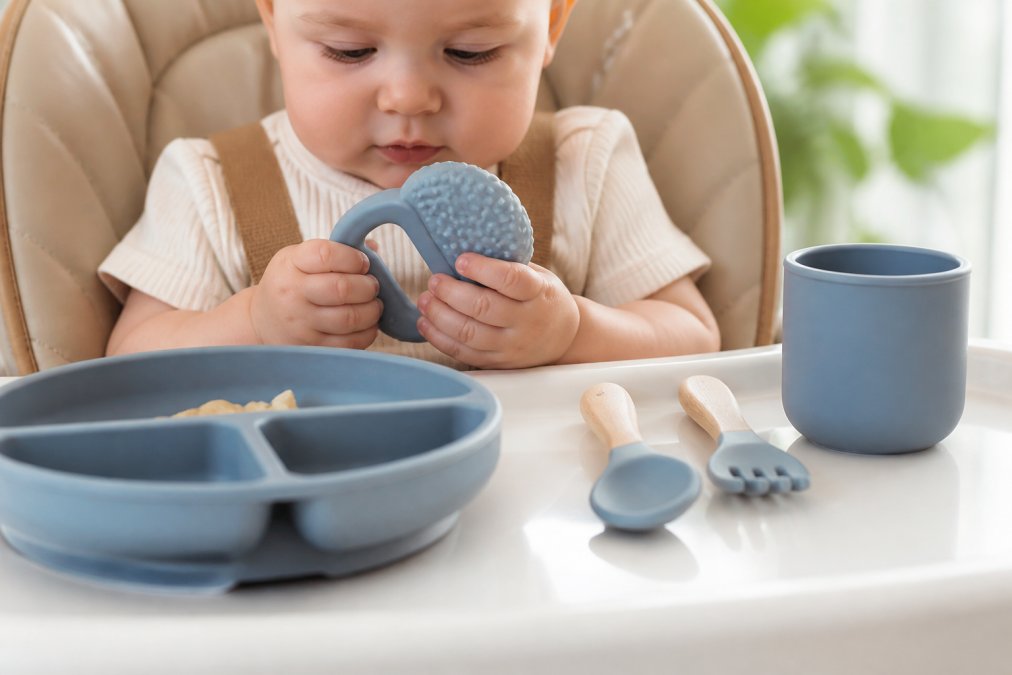
Why Parents Trust Food-Grade Silicone Over Plastic
The shift toward food-grade silicone reflects a fundamental change in how parents approach feeding safety. Unlike plastic, which has faced scrutiny over chemical leaching for years, silicone offers a material that simply doesn't pose that risk by design.
Chemicals like BPA and phthalates are endocrine disruptors that can interfere with hormone development in infants and young children. Plastic spoons, bowls, and bibs used multiple times daily represent cumulative exposure. Silicone eliminates this exposure entirely because the material contains no such additives.
Durability reinforces this trust. Plastic utensils degrade quickly, becoming brittle and developing cracks where bacteria hide. Silicone feeding sets remain soft and flexible even after years of use. A set purchased when a baby is four months old can still be in perfect condition at age three.
The cleaning experience also builds confidence. Plastic absorbs food particles and odours, creating a persistent "used" appearance. Silicone's non-porous surface means stains and smells simply don't embed. A silicone bib or spoon looks clean and fresh after each wash.
Thermal stability is another trust factor. Parents can safely move silicone products from freezer to dishwasher to oven without worrying about chemical release. Silicone simply works across the full range of household temperatures without degradation.
Perhaps most importantly, silicone feels safer to parents because it is safer. There's no hidden chemistry, no additives waiting to leach, no regulatory grey areas. It's an inert material that has been used in medical-grade applications for decades.
How to Clean Silicone Baby Feeding Sets Properly
Cleaning silicone is straightforward. Because silicone is non-porous, it doesn't trap bacteria the way plastic does, but proper technique ensures your feeding sets remain hygienic and last for years.
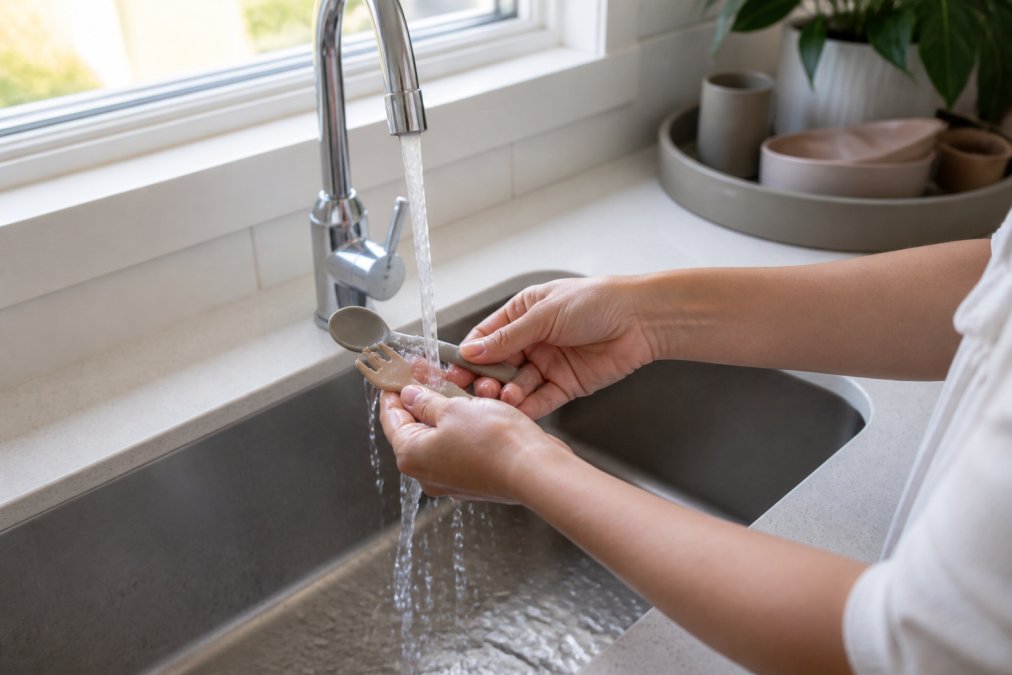
Hand washing is the simplest method. Rinse silicone items under warm water immediately after use to remove food residue. Use a soft sponge or cloth with mild dish soap. Pay attention to seams or textured areas where food particles might lodge.
Dishwasher cleaning works equally well. Most silicone feeding sets are dishwasher-safe and can go in the top or bottom rack. Silicone doesn't degrade in the dishwasher the way some plastics do.
For stubborn stains or odours, soak the item in warm water with white vinegar for 30 minutes, then wash normally. Alternatively, a paste of baking soda and water works similarly.
Avoid extreme temperatures during cleaning. Warm water is sufficient for hygiene.
Storage is simple. Silicone doesn't require special conditions. Store feeding sets in a clean, dry place. Unlike plastic, silicone doesn't absorb odours from storage.
Silicone's smooth surface prevents biofilm formation, the thin layer of bacteria that accumulates on porous materials. This makes silicone inherently more hygienic, which is why hospitals and food-service industries use silicone extensively.
Durability and Heat Resistance: What You Need to Know
Food-grade silicone's heat resistance is one of its defining advantages. Silicone remains stable across a temperature range from approximately -40°C to 200°C. A silicone teether can go directly from the freezer to a baby's mouth without risk. A silicone feeding set can transition from the refrigerator to the oven, from a hot dishwasher to cold storage, all without degradation or chemical release.
Parents can sterilise silicone items in boiling water if desired, warm silicone bowls in the microwave, or freeze silicone teethers for teething relief without worrying about the material breaking down.
Durability extends beyond heat. Silicone resists UV degradation, so products won't yellow or become brittle if left in sunlight. It resists oxidation and doesn't become sticky or gummy over time. A silicone feeding set purchased today will feel and function the same in three years.
The material's flexibility also contributes to durability. Unlike rigid plastic that cracks under stress, silicone flexes and returns to shape. A baby can chew on a silicone spoon handle without damaging it. A toddler can bend a silicone bowl without breaking it.
The Helm Silicone Teether and Flower Silicone Teether from Bub and Co exemplify this durability. Both are designed to withstand months of daily teething without degradation, remaining soft, flexible, and safe throughout their lifespan.

Making the Switch: Practical Benefits for Busy Parents
Switching from plastic to silicone simplifies parenting in ways that compound over time.
Reduced cleaning burden is immediate and tangible. Silicone's non-porous surface means no staining, no odours, no hidden residue. A quick rinse and wash leaves items looking brand new. Over months of three meals a day plus snacks, this efficiency adds up to hours saved.
Lower replacement costs emerge over time. A plastic feeding set might need replacing every 6-12 months as items degrade. A silicone set lasts years. The upfront cost is higher, but the cost per use, calculated over 2-3 years of daily feeding, is significantly lower. For families with multiple children, a durable silicone set can be passed down.
Fewer health worries is perhaps the most valuable benefit. Parents using food-grade silicone don't need to monitor temperature, avoid heating, or worry about chemical leaching. This mental ease is worth something, particularly for parents managing the stress of introducing solids or teething.
Aesthetic appeal shouldn't be overlooked. Silicone products come in attractive colours and designs that look modern and intentional. The Pagi Kids Feeding Set is designed with both function and aesthetics in mind.
Environmental alignment appeals to parents who prioritise sustainability. Durable silicone products generate less waste than plastic items that need frequent replacement. The longer lifespan means fewer resources consumed overall.
Versatility across ages is another practical advantage. A silicone teether works for a 4-month-old and a 12-month-old. A silicone bowl and spoon set can transition from purees to finger foods to toddler meals.

The cumulative effect is that silicone simplifies the feeding journey. Parents can focus on their child's development and nutrition rather than managing product maintenance or safety concerns.
Making the switch to food-grade silicone addresses one of the core challenges parents face: choosing products that are genuinely safe, durable, and practical for daily life. Bub and Co's silicone feeding sets, teethers, and bibs are engineered to meet the highest safety standards, free from BPA, PVC, and phthalates, whilst remaining stain-resistant, heat-stable, and built to last through multiple children. Start with the Pagi Kids Feeding Set or add the Helm Silicone Teether to your routine and experience the difference that genuinely safe, durable feeding products make.
| Feature | Food-Grade Silicone | Standard Plastic |
|---|---|---|
| Heat Resistance | -40°C to 200°C | Limited; degrades with heat |
| Chemical Leaching | None; inert material | Risk of BPA, phthalates, PVC leaching |
| Stain Resistance | Non-porous; resists staining | Porous; absorbs stains and odours |
| Durability | Years of daily use | 6-12 months before degradation |
| Flexibility | Remains soft and flexible | Becomes brittle over time |
| Dishwasher Safe | Yes; withstands heat cycles | Yes; but degrades faster |
| Cost per Use (over 2-3 years) | Lower | Higher due to frequent replacement |
| Environmental Impact | Lower waste; recyclable | Higher waste; frequent replacement |
Frequently Asked Questions
Why use food-grade silicone for baby products?
Food-grade silicone is non-toxic, BPA-free, and does not leach harmful chemicals when heated or chewed. Unlike plastic alternatives, it remains inert across temperature extremes, making it ideal for teethers, feeding sets, and bibs. It's also durable enough to withstand years of use without degrading, offering better value and safety for developing infants.
Does food-grade silicone give off microplastics?
True food-grade silicone, when properly manufactured and certified, does not shed microplastics. Low-quality or non-food-grade silicone may degrade under stress or heat, potentially releasing particles. Look for products with LFGB certification to ensure the silicone has undergone rigorous material testing and will remain stable throughout your baby's use.
What is the difference between LFGB and other silicone certifications?
LFGB (German food safety standard) certifies food-grade silicone safety, applying stringent testing protocols for Europe. While Australia does not have an equivalent independent standard, many reputable manufacturers adhere to LFGB as a mark of quality. This confirms the material is non-toxic and won't leach chemicals, signalling a safe, rigorously tested product for Australian parents.
Is silicone truly plastic-free?
Food-grade silicone is not plastic. It's a synthetic rubber derived from silica (found in sand) bonded with oxygen and carbon, creating an inert polymer. Unlike single-use plastics, silicone is durable, reusable, and does not break down into microplastics. This makes it fundamentally different from petroleum-based plastics and a safer choice for prolonged contact with food and sensitive baby skin.
This article was written using GrandRanker
Leave a comment