
Table of Contents
- Why Silicone Baby Products Are Worth the Switch
- What Are Phthalate-Free Baby Spoons Made Of?
- Silicone vs Plastic Baby Products: A Material Comparison
- Safety and Non-Toxicity: What Certifications Matter
- Durability, Heat Resistance and Everyday Practicality
- How to Clean Silicone Baby Feeding Sets
- The Downsides of Silicone: What Parents Should Know
- Frequently Asked Questions
Last Updated: September 11, 2026
Why Silicone Baby Products Are Worth the Switch
If you're weighing up the benefits of silicone baby products, the short answer is this: food-grade silicone is non-toxic, heat-resistant and far more durable than the plastic spoons most of us grew up with.
Here's the uncomfortable part. Many conventional plastic spoons and bowls are made with additives like BPA and phthalates, which research has linked to concerns about hormone disruption in developing babies. Silicone sidesteps that problem entirely. It's made from silica, the same compound found in sand, and it doesn't leach chemicals when heated.
Below, we'll walk through exactly what silicone baby products are made of, how they compare to plastic, which certifications matter, and how to keep them clean for years.
What Are Phthalate-Free Baby Spoons Made Of?
Phthalate-free baby spoons are made from food-grade silicone, a synthetic rubber that contains no plasticisers, no BPA and no PVC. The material starts as silica, which is processed into a flexible, non-porous polymer that stays soft at room temperature and stable under heat.
That non-porous surface matters more than most parents realise. Plastic is often porous at a microscopic level, which means it traps bacteria, absorbs food colour and holds onto odours. Silicone doesn't. A tomato-based puree that would permanently orange a cheap plastic spoon wipes straight off silicone.
Food-Grade Silicone vs. Regular Silicone
Not all silicone is safe for a baby's mouth. Food-grade silicone is manufactured to meet strict purity standards, meaning it contains no fillers, no industrial additives and no heavy-metal contaminants. Regular or industrial silicone is used for sealants, adhesives and caulking, and it can contain additives you would never want near food.
The practical test is simple: if a product doesn't state it's food-grade and list a certification, treat it as industrial. Reputable makers will tell you exactly what standard their silicone meets.
Silicone vs Plastic Baby Products: A Material Comparison
Silicone wins on safety and longevity, while plastic wins on price. That's the honest trade-off. But when you factor in how often plastic feeding gear needs replacing, the gap narrows fast.
| Feature | Food-Grade Silicone | Conventional Plastic |
|---|---|---|
| Chemical leaching when heated | No | Possible |
| BPA and phthalates | Free | Often present |
| Heat resistance | High, oven and microwave safe | Limited, can warp |
| Dishwasher safe | Yes | Sometimes |
| Stain and odour resistance | High | Low |
| Lifespan | Years | Months |
| Recyclability | Yes | Limited |
What most guides miss is the wear-and-tear angle. A plastic spoon that's been through hundreds of dishwasher cycles develops scratches and cloudiness. Those scratches become hiding places for bacteria, and no amount of washing removes them.
Product Safety Australia guidance on banned substances in children's products
Safety and Non-Toxicity: What Certifications Matter
The certifications that matter most are food-contact approvals and independent testing for harmful substances. In Australia, the relevant framework has three layers: the mandatory safety standard for toys for children up to and including 36 months, enforced by the ACCC; the Australia New Zealand Food Standards Code for anything that touches food; and voluntary third-party certifications that go beyond the minimum.
The Australian Regulatory Layer
The ACCC's mandatory standard for toys for children up to 36 months sets limits on the migration of certain elements, including heavy metals, from toy materials. Teethers, silicone spoons and feeding sets marketed for babies fall within scope. A compliant product should carry a visible warning or statement of compliance, and suppliers must be able to produce test evidence on request.
For food-contact items, plates, bowls, spoons, bibs used during feeding, the Australia New Zealand Food Standards Code governs what materials may come into contact with food. Food-grade silicone is recognised as a suitable food-contact material when it meets the relevant migration limits.
International Certifications Worth Knowing
Beyond the domestic framework, two international certifications carry weight:
- LFGB (German food-contact standard) is widely regarded as stricter than most equivalents, testing for sensory changes as well as chemical migration.
- FDA food-contact approval signals the material has been assessed for food-contact use under US rules. It is a useful benchmark, but it is not an Australian legal requirement.
What to Check Before You Buy
- Does the product explicitly state BPA-free, phthalate-free and PVC-free?
- Is there a named food-contact certification, or just a vague "non-toxic" claim?
- Does the packaging reference the mandatory standard for toys for children up to 36 months?
- Will the brand show you third-party test results if you ask?
Hypoallergenic is another useful marker. Silicone is naturally hypoallergenic, which makes it a sensible choice for babies with sensitive skin or a family history of allergies.
ACCC mandatory safety standard for toys for children up to 36 months
Product Safety Australia guidance on banned substances in children's products
Durability, Heat Resistance and Everyday Practicality
Silicone handles temperature extremes that would destroy plastic. It goes from the freezer to the microwave to the dishwasher without melting, cracking or releasing fumes. That range is what makes it genuinely practical for daily infant feeding rather than just a nice idea.
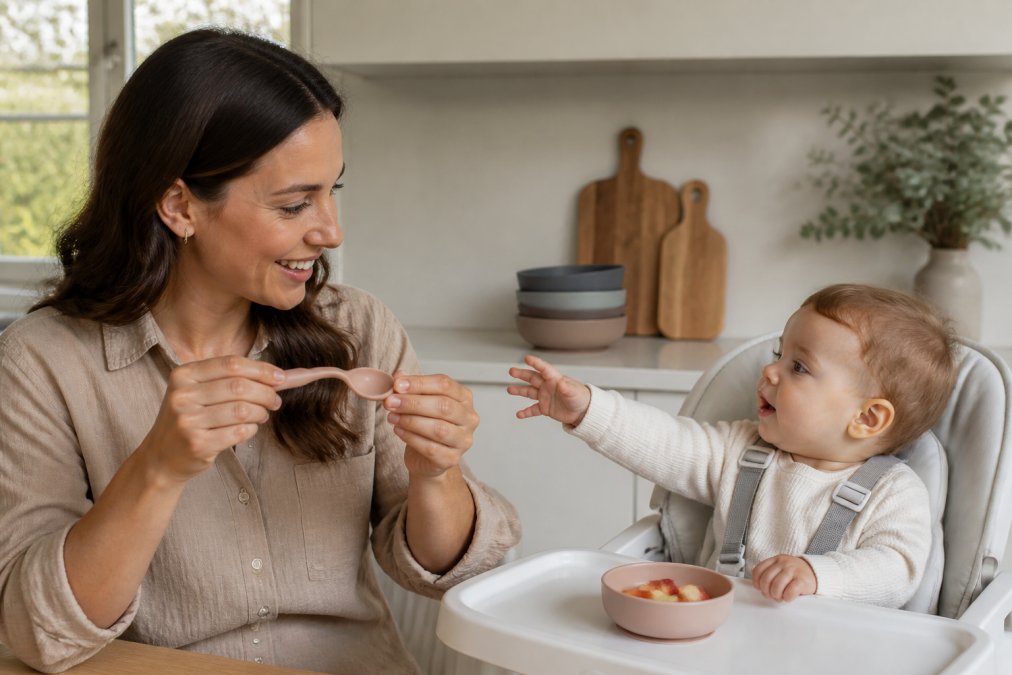
The softness is a real feature, not a gimmick. A flexible spoon is gentler on sore gums during teething, and it's far less likely to cause injury if your baby grabs it and jams it toward their face. For babies working on motor skills, a spoon that bends slightly is more forgiving than a rigid one.
Heat resistance also means you can sterilise by boiling. Drop silicone into boiling water, and it comes out clean without warping. Try that with most plastic and you'll end up with a bent, cloudy mess.
How to Clean Silicone Baby Feeding Sets
Silicone baby feeding sets are easy to clean day to day: warm soapy water for routine washing, the dishwasher for convenience, and a boil or bake for deep sanitising. The non-porous surface means food doesn't cling, so most messes rinse away in seconds. But "easy to clean" is where most guides stop, and it's the maintenance detail that determines whether a set lasts two years or ten.
Routine Cleaning
- Rinse immediately after use to stop residue drying on
- Wash in warm water with a mild dish soap
- Place on the top rack of the dishwasher for a deeper clean
- Air dry, or pat with a clean cloth
Avoid abrasive scourers, which can dull the surface over time, and avoid leaving silicone soaking in dirty water for long periods.
Deep Cleaning and Odour Removal
Silicone can pick up lingering smells from strong foods like garlic, fish or curry, especially if it's been stored in a sealed container while still damp. The fix is straightforward and worth doing monthly, or whenever a smell lingers after washing.
Baking soda paste. Mix baking soda with enough water to form a paste, work it into the surface with your fingers or a soft cloth, leave for a few hours (overnight for stubborn cases), then rinse and wash as normal. This is the most reliable single method for odour removal.
Vinegar soak. For deeper odours, soak the item in a solution of equal parts white vinegar and water for 30 minutes, then wash thoroughly. Vinegar also helps lift the faint film that can build up from oily foods.
Boiling. A five-minute boil in plain water resets the material and is the simplest way to sanitise without chemicals. Silicone tolerates boiling without warping, which is not true of most plastic feeding gear.
Baking. For items that can't be fully submerged, or for a deeper sanitise, place clean silicone on a baking tray in an oven at around 180°C for 20 minutes. This is a common reset method for silicone bakeware and applies equally to feeding items. Let cool fully before use.
Sanitising After Illness
After a bout of gastro or any illness where the same spoon or plate has been in contact with a sick baby, routine washing is not enough. Boil the item for at least five minutes, or run it through a hot dishwasher cycle, then follow with a baking soda paste if any odour remains. Discard any silicone item that has developed cracks, tears or a persistent smell that survives a boil; those are signs the surface has broken down and is no longer reliably cleanable.
Preventing Stains and Smells
- Never store silicone sealed while damp
- Avoid leaving tomato, turmeric or beetroot residue to dry on
- Rinse before the dishwasher, not after
- Store in a dry, ventilated spot rather than a closed container
The Downsides of Silicone: What Parents Should Know
Silicone isn't perfect, and pretending otherwise doesn't help anyone. The main drawbacks are cost, weight and static.
Silicone costs more upfront than plastic. A quality feeding set will set you back more than a bargain-bin plastic one, though it typically outlasts several rounds of cheap replacements. Silicone pieces also tend to be slightly heavier, and some parents find certain items attract dust and lint because of a mild static charge.
There's also a sustainability caveat worth naming. Silicone is recyclable in principle, but it isn't accepted in most kerbside recycling streams, so it often ends up in landfill at the end of its very long life. It's a better choice than disposable plastic, but it isn't a zero-impact material.
Finally, quality varies enormously. Cheap silicone can be cut with fillers, which makes it less heat-stable and more prone to tearing. If a silicone product feels unusually rigid or smells chemically out of the box, that's a red flag.
For parents who want one set that covers feeding, teething and food storage without a chemical worry list, the trade-offs are easy to accept. Bub and Co's Pagi Kids Feeding Set is built from food-grade silicone that's hypoallergenic and recyclable, and it handles the freezer-to-oven range without complaint. If you're starting smaller, the Silicone Bib and Silicone Placemats tackle the mealtime mess, while the Silicone Lunch Box carries the same material into toddler lunches.


Frequently Asked Questions
Are silicone baby products safe for my baby to chew on?
Yes, food-grade silicone is soft, flexible and non-toxic, making it safe for teething babies to chew on. Look for products labelled BPA-free, phthalate-free and LFGB certified. Unlike hard plastic, silicone won't crack or splinter, so there are no sharp edges. Always check for wear and tear and replace anything that becomes damaged.
Does silicone contain BPA, PVC, or phthalates?
Food-grade silicone does not contain BPA, PVC or phthalates. These chemicals are typically found in lower-quality plastics and synthetic rubber. Reputable brands like Bub and Co clearly state their products are free from these substances. If a product doesn't specify, check for third-party testing or certifications such as LFGB to confirm safety.
How do I properly clean and sanitise silicone baby products?
Wash silicone items in warm soapy water after each use, or place them on the top rack of your dishwasher. For deep cleaning, boil them in water for 5 minutes or use a steam steriliser. Silicone is non-porous, so it doesn't harbour bacteria or absorb odours. Avoid abrasive scrubbers, which can scratch the surface over time.
Is silicone heat-resistant for microwave or dishwasher use?
Most food-grade silicone is heat-resistant up to 230°C, making it safe for microwaves, dishwashers and even ovens. It won't melt, crack or leach chemicals when exposed to high temperatures. Always check the manufacturer's guidelines, as some products with plastic components may have lower limits. Silicone also handles freezing without becoming brittle.
Switching to silicone means fewer replacements, less chemical guesswork and easier cleanups. Bub and Co makes that switch simple with feeding sets, bibs, placemats and lunch boxes crafted from non-toxic, stain-resistant food-grade silicone that's free from BPA, PVC and phthalates. Get started with Bub and Co and give your little one feeding gear that's built to last from first puree to packed lunch.
Leave a comment