
Table of Contents
- Why Silicone Absorbs Odours (And When to Worry)
- How to Remove Smells from Silicone: Step-by-Step Methods
- Best Way to Clean Silicone Baby Spoons After Every Meal
- Is Silicone Dishwasher Safe? Dishwasher vs. Hand-Wash Efficacy
Last Updated: August 17, 2026
Why Silicone Absorbs Odours (And When to Worry)
Silicone is porous at a microscopic level, trapping food residue and volatile organic compounds over time. Unlike glass or stainless steel, its textured surface absorbs scents from strong-smelling foods like garlic, onion, and fish purees.
For parents starting solids, a silicone spoon smelling of last week's salmon is off-putting but manageable with proper cleaning. Odour retention does not indicate chemical leaching or safety failure. However, persistent smells combined with deep discolouration, tackiness, or visible cracks signal silicone degradation. According to Food Standards Australia New Zealand guidance on food contact materials, food contact items should be inspected regularly for degradation signs. Discard and replace at that point.
Silicone odour absorption occurs when microscopic surface pores trap volatile organic compounds from food, creating persistent smells that survive standard rinsing. This is normal and controllable.
How to Remove Smells from Silicone: Step-by-Step Methods
Different odour types respond to different treatments. Layering methods gives better results than any single approach.
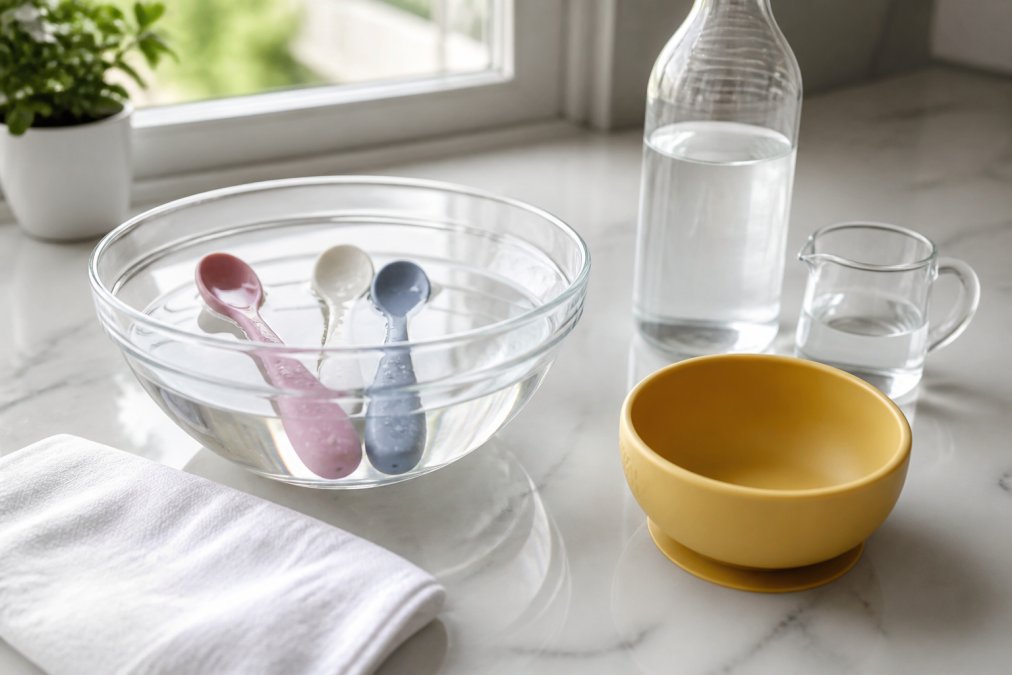
Method 1: White Vinegar Soak
White vinegar is a natural acid that neutralises alkaline odour compounds from many foods.
- Fill a bowl with equal parts white vinegar and hot water.
- Submerge the silicone item completely.
- Soak for 30 minutes to 2 hours for stubborn smells.
- Rinse thoroughly under running hot water.
- Air dry fully before storing.
Method 2: Baking Soda Paste
Baking soda is particularly effective on fatty or oily food residue.
- Mix baking soda with just enough water to form a thick paste.
- Apply directly to the silicone surface and work in with a soft brush.
- Leave for 15-20 minutes.
- Rinse well and air dry.
Method 3: Boiling Water
Heat opens the porous material slightly, helping release trapped volatile organic compounds.
- Bring a pot of water to a rolling boil.
- Submerge the silicone item for 3-5 minutes.
- Remove carefully and allow to cool.
- Air dry completely, ideally in sunlight for mild bleaching and deodorising effect.
Method 4: Degreasing Soap Scrub
For silicone smelling of fat or cooking oil, degreasing soap cuts through residue buildup that milder soaps miss. According to NSW Health guidance on cleaning and hygiene for infant feeding equipment, all infant feeding equipment should be cleaned thoroughly after each use, with particular attention to removing food residue before sterilising.
| Method | Best For | Soak Time | Non-Toxic |
|---|---|---|---|
| White vinegar soak | General food smells | 30 min - 2 hrs | Yes |
| Baking soda paste | Oily or fatty residue | 15-20 min | Yes |
| Boiling water | Deep clean, odour release | 3-5 min | Yes |
| Degreasing soap scrub | Fat-based aroma transfer | Immediate | Check label |
Best Way to Clean Silicone Baby Spoons After Every Meal
The best way to clean silicone baby spoons after every meal is to rinse immediately after use, wash with warm soapy water, and air dry completely. This prevents food residue from setting into the porous surface, the primary cause of persistent odours.
Most odour problems develop because food is left to dry on the surface before washing. Purees containing tomato, carrot, or fish are the worst offenders. Once dried, they bond firmly to silicone and require significantly more effort to remove.
Follow this routine after every feed:
- Rinse the spoon under hot running water immediately after the meal.
- Apply dish soap and scrub with a soft brush, paying attention to grooves or texture.
- Rinse thoroughly to remove all soap residue.
- Stand upright or hang to air dry; do not stack wet silicone items, as trapped moisture promotes odour development.
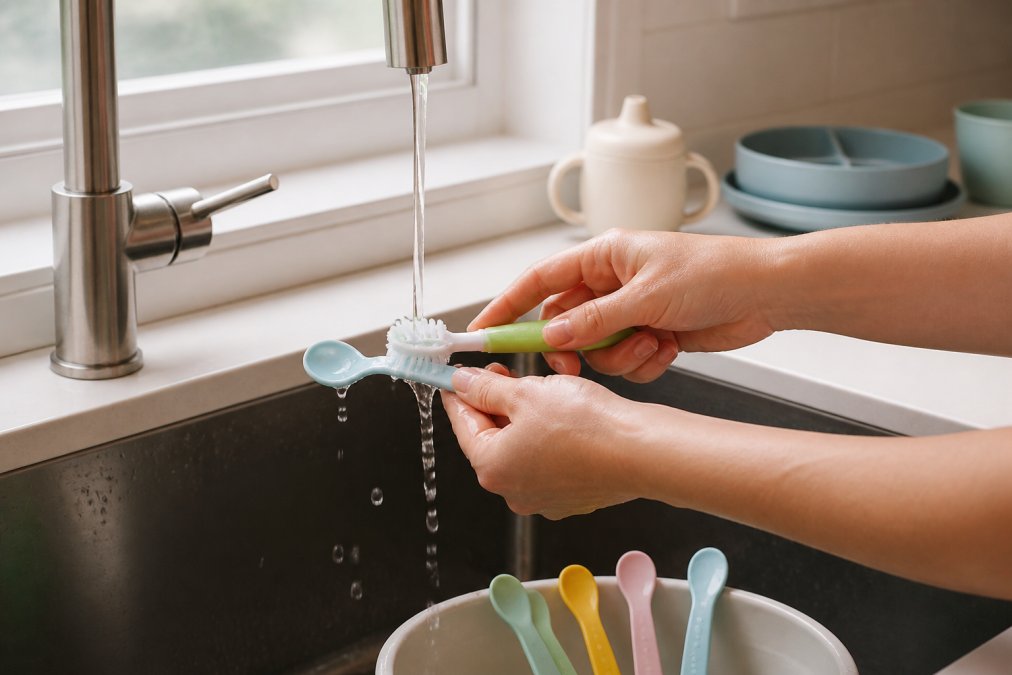
Designate specific silicone items for baby use only and store them separately from general kitchen silicone to avoid aroma transfer. At Bub and Co, the silicone feeding sets feature smooth, easy-clean surfaces that minimise residue buildup. The My First Solid Bundle includes BPA-free, PVC-free silicone spoons and bowls built to withstand daily hot water cleaning without degrading.

Is Silicone Dishwasher Safe? Dishwasher vs. Hand-Wash Efficacy
Food-grade silicone is generally dishwasher safe, but the dishwasher is not always the most effective method for removing odours. Dishwashers clean through hot water, detergent, and mechanical action, but standard cycles do not always reach temperatures high enough to fully open silicone's porous structure and release embedded volatile organic compounds. Hand-washing with dedicated scrubbing, followed by a vinegar soak or boiling, consistently outperforms dishwasher cycles for odour removal.
The practical recommendation:
- Daily cleaning: Dishwasher is fine for standard food residue.
- Odour treatment: Hand-wash with degreasing soap, then follow with a vinegar soak or boiling water method.
- Weekly deep clean: Boil silicone items for 3-5 minutes to reset the surface.
As noted in guidance on sterilising baby feeding equipment from the Raising Children Network, boiling is a recommended sterilisation method for silicone feeding items under 12 months, which conveniently doubles as an effective deodorising technique.
Always store silicone items completely dry and away from strong-smelling foods. Silicone left in closed containers alongside onions or spices will absorb ambient aromas over time, even without direct contact.
Persistent silicone odours are almost always preventable with consistent cleaning habits and the right methods. The Bub and Co Ultimate Set and Mini Bub Set offer BPA-free, phthalate-free silicone designed for easy kitchen maintenance, holding up to daily hot water cleaning and occasional deep cleans without degrading. Shop Bub and Co feeding sets and give mealtime the straightforward, safe foundation it deserves.


Frequently Asked Questions
How do I stop silicone baby products from smelling?
Rinse silicone kitchenware immediately after use to prevent food residue from bonding with the porous material. For persistent silicone odours, soak items in a 1:1 white vinegar and hot water solution for one hour, then rinse and air dry in sunlight. Baking soda paste applied and left for 30 minutes also neutralises stubborn ambient aromas. Storing items in an open, ventilated space rather than sealed bags prevents scent absorption between uses.
How long until silicone smell goes away on its own?
A faint manufacturing smell on new silicone typically fades within one to two weeks of regular washing. Odours from food residue buildup, however, will not disappear without active cleaning. A vinegar soak or baking soda treatment usually resolves most smells within a few hours. If a strong smell persists after repeated deep cleaning, check the item for silicone degradation signs such as tackiness or discolouration, and replace it if needed.
Can you use vinegar to clean silicone baby products?
Yes. White vinegar is a safe, non-toxic option for cleaning silicone baby spoons, bowls, and bibs. Mix equal parts white vinegar and warm water, submerge the items, and soak for at least one hour. The acetic acid in vinegar helps neutralise odour-causing compounds without leaving harmful residue. Rinse thoroughly with clean water afterwards. Vinegar is one of the most effective natural cleaning methods for silicone kitchenware and is safe for baby feeding products.
Does silicone release toxins when heated in the dishwasher?
High-quality, food-grade silicone that is free from BPA, PVC, and phthalates does not leach volatile organic compounds or toxins when exposed to dishwasher heat cycles. Products that meet Australian food contact material standards are tested for this. Lower-quality silicone with fillers may degrade over time. Always check that baby feeding items are labelled food-grade and free from harmful additives before purchasing, and inspect regularly for any tackiness or colour change.
This article was written using GrandRanker
Leave a comment