
Table of Contents
- Silicone plates and spoons: the real case for switching
- Safety concerns: what the material science actually shows
- Silicone vs plastic baby plates: durability and longevity
- How to clean silicone baby spoons and prevent staining
- Benefits of silicone baby feeding sets for self-feeding and weaning
- Cost and value: is the price premium justified?
- The verdict: fad or genuine improvement?
Last Updated: August 29, 2026
Silicone plates and spoons: the real case for switching
The question isn't whether silicone feeding products are trendy, it's whether they actually solve problems that matter to your family. At Bub and Co, we've spent years helping Australian parents navigate the overwhelming choice between silicone, plastic, bamboo, and stainless steel options for their little ones. What we've found is that silicone plates and spoons address specific pain points that other materials simply don't, but only if you understand what you're actually paying for.
The shift toward silicone isn't arbitrary. Parents are moving away from traditional plastic for concrete reasons: concerns about chemical leaching, frustration with staining and odour retention, and the simple fact that silicone performs differently across the board. Yet plenty of families still wonder if they're paying a premium for marketing hype rather than genuine durability and safety.
Here's what actually separates the hype from reality. We'll walk you through the material science behind food-grade silicone, compare it directly against plastic and other alternatives, and show you exactly what staining and cleaning challenges you'll face, and how to prevent them. By the end, you'll know whether switching makes sense for your situation right now.
Safety concerns: what the material science actually shows
Food-grade silicone and industrial silicone are fundamentally different materials, and this distinction matters far more than marketing suggests. Food-grade silicone is specifically formulated to resist chemical leaching when exposed to food, saliva, and repeated washing. It's designed to remain stable across a wide temperature range, from freezer to microwave to dishwasher, without breaking down or releasing compounds into food.
The key difference lies in the manufacturing process and additive composition. Industrial silicone may contain fillers, plasticisers, or other compounds that aren't appropriate for prolonged contact with food or a baby's mouth. Food-grade silicone, by contrast, is produced under stricter controls and tested to ensure it doesn't leach harmful substances over time.
Many parents worry about microplastics in silicone products. This concern is worth taking seriously, but the evidence suggests it's a lower risk with genuine food-grade silicone than with plastic alternatives. Silicone is a synthetic rubber derived from silica, essentially sand, rather than petroleum. When silicone degrades, it breaks down into inorganic compounds: amorphous silica, carbon dioxide, and water vapour. Plastic, by contrast, fragments into microplastics that persist in the environment and can accumulate in the body.
Look for products certified to LFGB (Lebensmittelbedarfsverordnung) standards or equivalent food-contact material certifications. These certifications indicate third-party testing for chemical safety and stability. Bub and Co's silicone products are manufactured to food-grade standards and tested to ensure they remain non-toxic throughout their lifespan.
The thermal stability of silicone is another genuine advantage. Unlike plastic, which can warp or leach compounds when heated, food-grade silicone withstands extreme temperature swings without degradation. This means you can safely move a silicone plate from the freezer to the microwave without worrying about chemical release.
Silicone vs plastic baby plates: durability and longevity
The durability comparison between silicone and plastic comes down to how each material responds to repeated stress, heat, and the acids in food. Plastic plates and spoons become brittle over time, especially with repeated dishwasher cycles and exposure to acidic foods like tomato sauce or citrus. They crack, discolour, and eventually become unsafe for use. Most plastic feeding sets last 12-18 months before noticeable degradation appears.
Silicone, by contrast, remains flexible and resilient across hundreds of wash cycles. It doesn't become brittle, and it resists permanent warping from heat exposure. A quality silicone feeding set can last 3-5 years or longer, through multiple children if cared for properly. This longevity is a genuine cost advantage when you factor in replacement frequency.
The trade-off is that silicone requires slightly different care than plastic. Plastic is more forgiving if you use abrasive scrubbers or harsh chemicals. Silicone benefits from gentler handling: soft brushes, warm soapy water, and avoiding bleach-based cleaners that can degrade the material over time. Hand-washing is ideal, though most quality silicone products are dishwasher-safe on the top rack.
Stainless steel offers another comparison point. It's incredibly durable and won't stain or absorb odours, but it's heavier, conducts heat more aggressively (making it uncomfortable for small hands), and poses a higher choking risk if a spoon is dropped or bent. For babies learning to self-feed, stainless steel's rigidity can be problematic, it doesn't flex with a baby's gag reflex the way silicone does.
Bamboo is marketed as eco-friendly, but it's actually less durable for everyday feeding use. Bamboo absorbs moisture, stains easily, and can develop mould or bacterial growth in crevices if not dried thoroughly. It also splinters over time, creating a safety concern for babies putting utensils in their mouths.
| Material | Durability | Staining Risk | Temperature Range | Best For |
|---|---|---|---|---|
| Silicone | 3-5 years | Low | -40°C to 200°C | Self-feeding, frequent use |
| Plastic | 12-18 months | High | Limited heat tolerance | Short-term use, budget-conscious |
| Stainless steel | 10+ years | None | Full range | Older toddlers, occasional use |
| Bamboo | 1-2 years | High | Limited | Occasional meals, eco-conscious parents |
How to clean silicone baby spoons and prevent staining
Silicone's resistance to staining is often overstated in marketing. The material itself doesn't stain, but it can absorb pigments from strongly coloured foods, particularly tomato sauce, beetroot, turmeric, and berries. This isn't a safety issue; it's purely cosmetic. However, preventing it is straightforward.
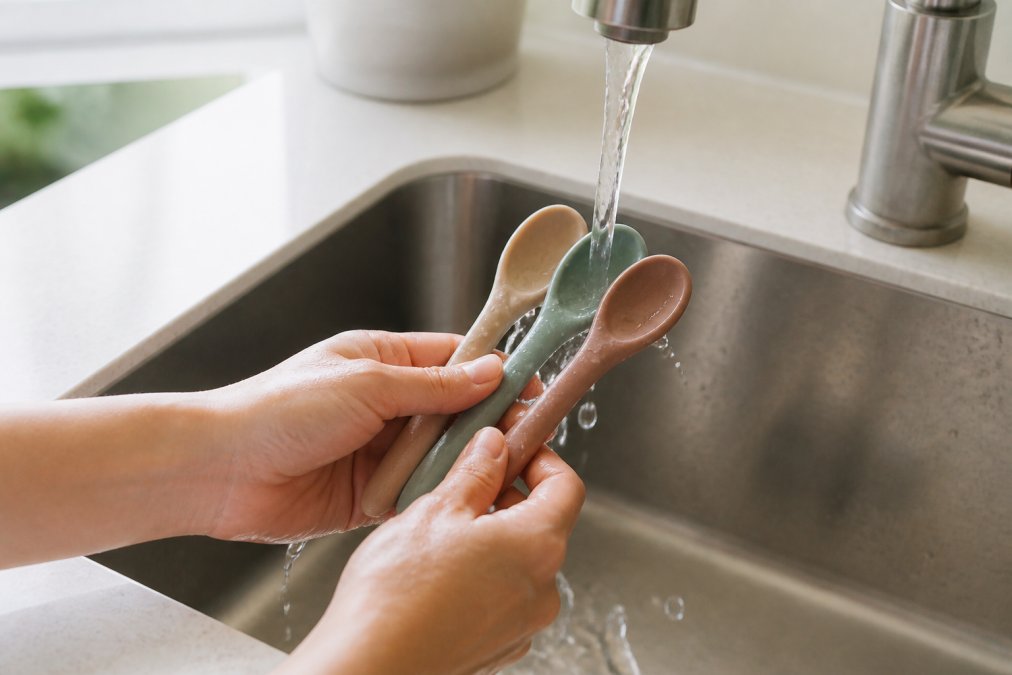
The most effective prevention is immediate rinsing. After your baby finishes eating, rinse the silicone pieces under warm water within a few minutes of use. This removes the pigmented food before it has time to set. For stubborn stains that do develop, soak the silicone in warm water with a small amount of white vinegar for 30 minutes, then scrub gently with a soft brush.
Never use bleach or harsh chemical cleaners on silicone. These can damage the material and potentially leave residues. Similarly, avoid abrasive scrubbing pads or steel wool, they can create tiny scratches that trap food particles and bacteria.
Dishwasher cleaning works well for silicone, but place pieces on the top rack and avoid the heat-dry cycle. Air-drying is gentler. Most parents find that regular dishwasher use doesn't cause staining if you rinse the silicone first.
Odour absorption is less of an issue than staining, but it can happen. If your silicone develops a persistent smell, soak it in water with a few drops of lemon juice or baking soda for several hours. The acidic or alkaline environment helps neutralise odours without damaging the material.
Benefits of silicone baby feeding sets for self-feeding and weaning
Silicone's flexibility is a genuine advantage for babies learning to self-feed and transitioning to solid foods. Unlike rigid plastic or stainless steel, silicone spoons flex slightly, which reduces gagging and makes it easier for babies to explore food without triggering their gag reflex excessively. This matters during the 6-12 month window when babies are developing eating skills and still have a strong protective reflex.
The suction base feature on silicone plates and bowls addresses a real problem: toddlers throwing food. A strong suction connection to the highchair tray keeps the plate stable, reducing the number of times your little one can flip their meal onto the floor. This isn't magic, suction only works on smooth, dry, non-textured surfaces, but when it does work, it genuinely reduces mealtime frustration.
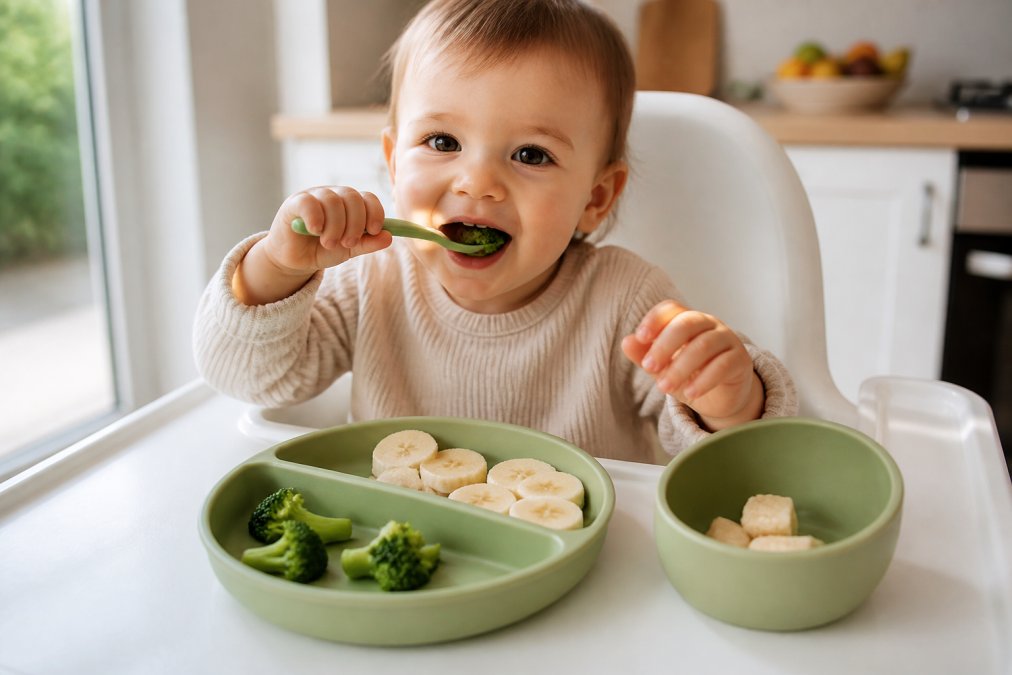
For baby-led weaning specifically, silicone products offer practical advantages. The soft edges and flexible construction make them safer for babies exploring food independently. A silicone spoon won't hurt a baby's gums if they chew on it, and the shallow bowl design encourages scooping, a key skill for self-feeding development.
The aesthetic consistency of silicone feeding sets also matters more than you might think. Matching plates, bowls, bibs, and utensils create a cohesive mealtime environment that many parents find less chaotic than mixing and matching separate plastic pieces. This is purely psychological, but psychology affects how parents approach feeding routines.
Bub and Co's feeding bundles, like the My First Solid Bundle and Ultimate Set, are designed to address these specific needs. They combine suction plates, flexible spoons, and bibs in coordinated sets, so you're not hunting for individual pieces. The bundles cost between $44.95 and $60.00, which is a premium compared to buying plastic separately, but accounts for the longer lifespan and the convenience of having everything you need in one purchase.
Cost and value: is the price premium justified?
Silicone feeding products cost more upfront than plastic alternatives. A silicone plate or spoon typically costs $10-20, whereas plastic equivalents might be $3-8. A complete silicone feeding set ranges from $39.95 to $60.00, compared to $15-25 for a plastic set.
The cost-per-use calculation, however, tells a different story. If a plastic set lasts 12-18 months of regular use before degrading, and a silicone set lasts 3-5 years, you're amortising the cost across significantly more meals. For a family using feeding sets daily, a silicone set might cost roughly the same per meal as replacing plastic sets multiple times.
The value also depends on whether you're feeding one child or planning to reuse the set for younger siblings. If you have multiple children, silicone's durability becomes a genuine financial advantage. The set you buy for your first child can move to your second or third child in comparable condition.
There's also the question of what you're actually paying for. You're not just paying for material durability; you're paying for the reduction in mealtime frustration. Suction bases that actually work, stain-resistant surfaces, and utensils that don't degrade after six months of use, these are convenience factors that affect your daily experience.
Where the premium becomes harder to justify is if you're only feeding one child and plan to move to regular adult tableware within 12-18 months anyway. In that scenario, a mid-range plastic set might be the more sensible choice financially.
The verdict: fad or genuine improvement?
Silicone feeding products aren't a fad, but they're not a universal necessity either. They solve specific problems for specific situations. If you're managing mealtime chaos with a toddler who throws food, worried about chemical leaching, or planning to reuse feeding sets for multiple children, switching to silicone makes genuine sense. The durability, safety profile, and suction-base functionality address real pain points.
If you're on a tight budget, feeding a child who's already past the high-throw phase, or only need feeding sets for a few months, plastic remains a reasonable option. The key is understanding what you're actually choosing between, not just accepting marketing claims at face value.
The research data supports silicone's advantages in durability and thermal stability. Food-grade silicone genuinely doesn't leach harmful compounds the way some plastics can, and it withstands repeated heating and cooling without degradation. These aren't marketing claims, they're material properties you can verify through certification documentation.
What separates a worthwhile switch from an unnecessary upgrade is your specific situation. Parents managing multiple children, concerned about long-term chemical exposure, or frustrated with replacing plastic sets every year will see clear value. Parents with one child, limited budget, or minimal feeding time will find the premium harder to justify.
At Bub and Co, we've designed our silicone feeding sets to address the exact concerns Australian parents raise most often: safety, durability, ease of cleaning, and the ability to move sets between children. Our bundles like the Junior Set ($44.95) and Ultimate Set ($44.95) are priced to reflect genuine value, not just material cost, but the time and frustration you save by not replacing sets repeatedly.
The real question isn't whether silicone is worth the switch in theory. It's whether your specific family situation matches the problems silicone solves. If it does, the investment pays for itself quickly. If it doesn't, a quality plastic set remains a perfectly sensible choice.
Switching to silicone feeding products isn't about following a trend, it's about choosing materials that match your family's actual needs. If you're ready to reduce mealtime mess, eliminate concerns about chemical safety, and invest in feeding sets that last through multiple children, silicone is worth exploring. Shop Bub and Co's complete range of silicone feeding sets, from the Pagi Kids Feeding Set ($39.95) to the comprehensive My First Solid Bundle ($60.00), and discover why thousands of Australian families have made the switch.

Frequently Asked Questions
Are silicone plates and spoons safe for daily use?
Yes. Food-grade silicone is non-toxic, BPA-free, and does not leach chemicals into food even when heated. Unlike plastic, silicone does not break down into microplastics with regular use or washing. It withstands temperature extremes from freezer to oven without degradation, making it one of the safest long-term feeding materials for babies and toddlers.
How does silicone compare to stainless steel for baby feeding?
Silicone is softer and gentler on developing gums and teeth, making it ideal for teething babies. Stainless steel is more durable and does not retain odours or stains, but it conducts heat quickly and can be harder for little hands to grip. For self-feeding practice, silicone's flexibility and suction bases give toddlers better control; stainless steel works better for parents doing the feeding.
Do silicone baby plates need to be sterilised?
No. Once your baby is past the newborn stage (around 3-4 months), sterilisation is not necessary. Regular washing with warm soapy water or the dishwasher is sufficient. Silicone's non-porous surface does not harbour bacteria the way textured plastics can, so it is naturally more hygienic after standard cleaning.
How do you remove odours from silicone baby plates?
Rinse silicone immediately after meals, especially after strong-smelling foods like curry or tomato. Soak in warm water with baking soda for 30 minutes, or run through the dishwasher with a rinse aid. If odours persist, expose the items to sunlight for a few hours, which naturally neutralises smells. High-quality food-grade silicone resists odour retention far better than low-grade alternatives.
This article was written using GrandRanker
Leave a comment