
Table of Contents
- What Are Phthalate-Free Baby Spoons Made Of
- Top Stain Resistant Baby Feeding Sets
- How to Clean Silicone Baby Bowls and Keep Them Stain-Free
- Silicone vs Plastic Baby Plates: Why Stain Resistance Matters
Last Updated: August 24, 2026
What Are Phthalate-Free Baby Spoons Made Of
Phthalate-free baby spoons are made from food-grade silicone, a synthetic polymer derived from silica (found naturally in sand) rather than petroleum-based plastics. This material is free from phthalates, BPA, PVC, and other endocrine disruptors that can leach into food or saliva during use (peer-reviewed research).
Food-grade silicone withstands extreme temperature changes without breaking down or releasing harmful chemicals. It's soft enough to be gentle on developing gums and teeth, yet durable enough to survive years of daily use. The material's non-porous structure resists bacteria growth and doesn't absorb odours or stains the way plastic does. Bub and Co's range of silicone feeding sets uses this exact composition, ensuring your little one's transition to solids happens with materials designed for safety and longevity.
Top Stain Resistant Baby Feeding Sets
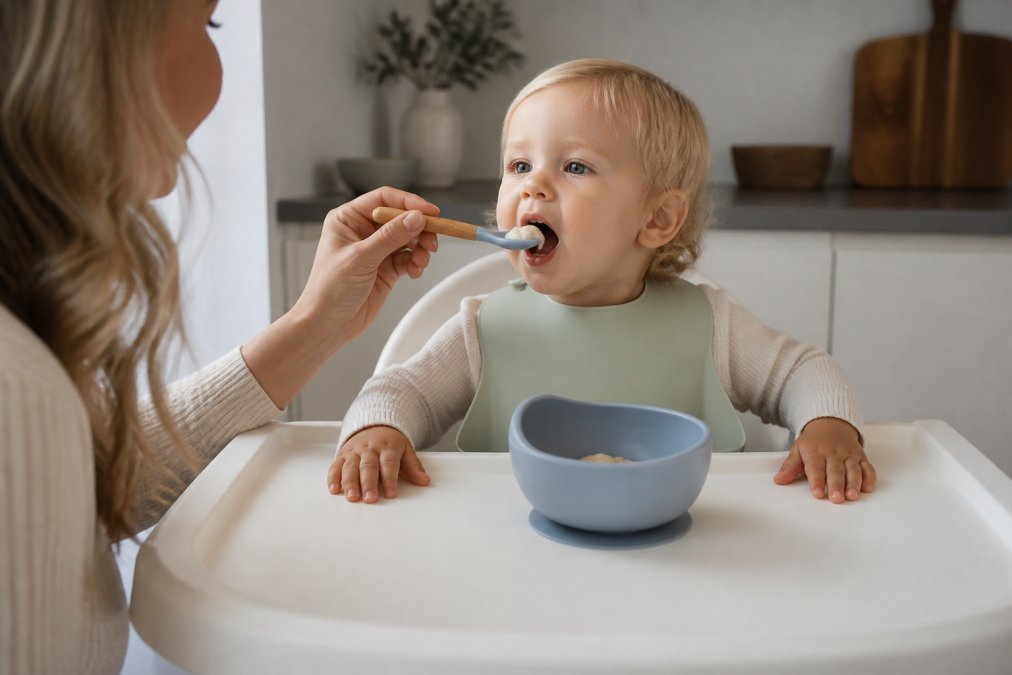
Finding the right stain resistant baby feeding sets means balancing durability, ease of cleaning, and safety. The best options combine suction bases that prevent spills with materials that genuinely resist discolouration after months of purées, fruit, and vegetable meals.
Ultimate Set ($44.95) is the most comprehensive option. This six-piece bundle includes a suction plate with lid, suction bowl, bib, spoon, and fork. The food-grade silicone resists stains and odours naturally, and every piece is dishwasher and microwave safe.

My First Solid Bundle ($60.00) bundles the Pagi Kids Feeding Set, a non-grid suction plate, a silicone placemat with catch pocket, and a sip-and-snack cup. The placemat catches spills before they hit your table.
Junior Set ($44.95) includes a suction plate, suction bowl, cup, and spoon, ideal for babies six to eight months old. The easy-grip utensils suit baby-led weaning and are microwave and dishwasher friendly.
Mini Bub Set ($25.00) is the budget-conscious entry point with a silicone bib, suction bowl, and wooden-handled spoon. It's perfect for parents testing whether their baby is ready for solids.
Pagi Kids Feeding Set ($39.95) is a mid-range six-piece option made from silica-derived silicone. It includes a pocket bib, suction bowl with curved design, ergonomic spoon, and leakproof sippy cup with detachable lid and internal straw.
| Set | Price | Pieces | Best For | Key Feature |
|---|---|---|---|---|
| Ultimate Set | $44.95 | 6 | Complete mealtime kit | Plate with lid |
| My First Solid Bundle | $60.00 | 10+ | Starting solids comprehensively | Includes placemat & sippy cup |
| Junior Set | $44.95 | 4 | Early self-feeding | Easy-grip utensils |
| Mini Bub Set | $25.00 | 3 | Testing readiness | Compact starter kit |
| Pagi Kids Feeding Set | $39.95 | 6 | Temperature extremes | Freezer to oven safe |
How to Clean Silicone Baby Bowls and Keep Them Stain-Free
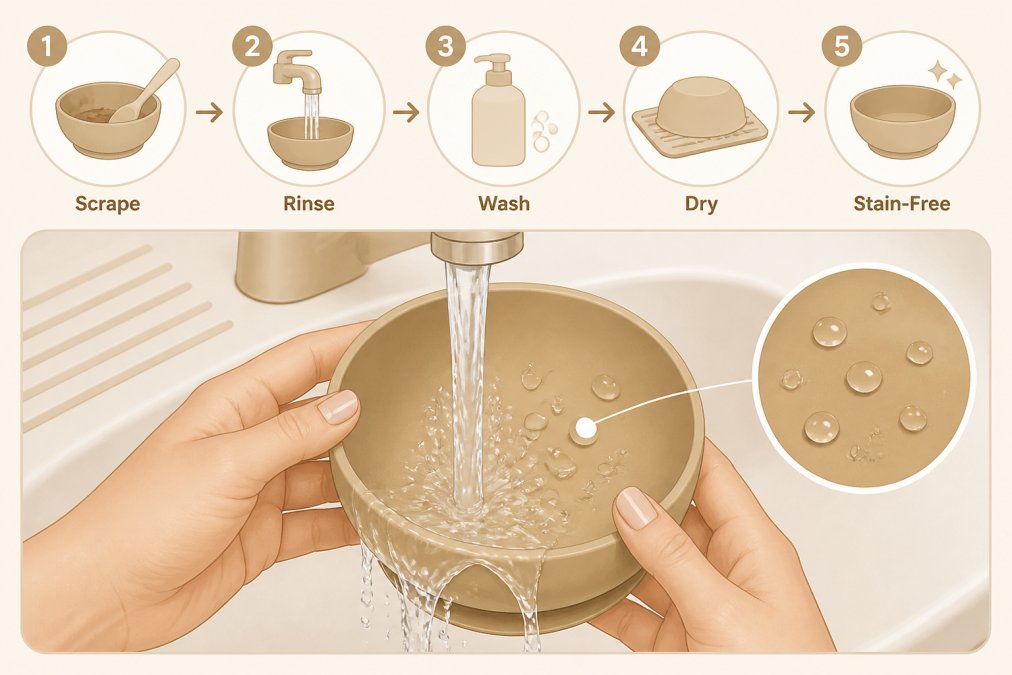
Silicone's non-porous structure naturally resists staining better than plastic. Rinse bowls immediately after meals, especially after strongly coloured foods like tomato, beetroot, or curry. For everyday cleaning, warm soapy water works fine. Most silicone bowls from Bub and Co are dishwasher safe (top rack recommended). If staining occurs, soaking the bowl in warm water with white vinegar for 30 minutes often lifts discolouration.
Microwave safety is a key advantage of food-grade silicone, you can reheat food directly in the bowl without transferring to another container. For wooden-handled spoons, hand wash only to preserve the handle.
Silicone vs Plastic Baby Plates: Why Stain Resistance Matters
When comparing silicone and plastic baby plates, stain resistance reflects deeper differences in material safety and longevity. Plastic plates absorb colour and odours over time, looking worn after weeks of use. Silicone doesn't absorb; it resists.
Plastic's porous nature means microscopic food particles and bacteria can lodge in its surface. Silicone's smooth, non-porous structure makes it genuinely easier to sanitise. Heat resistance also differs: silicone withstands temperatures from freezer to microwave to oven without leaching chemicals. Most plastic plates aren't microwave safe and many aren't dishwasher safe either.
A quality silicone plate lasts years through multiple children. Plastic plates crack, warp, and discolour within months. For most families starting solids, silicone's combination of safety, cleanliness, heat resistance, and durability outweighs plastic's lower initial cost.
Choosing stain resistant baby feeding sets means investing in materials that genuinely simplify mealtime and cleanup. Food-grade silicone from brands like Bub and Co resists the stains and odours that plague plastic alternatives, stays safe across temperature extremes, and lasts through multiple children. Whether you start with the comprehensive Ultimate Set ($44.95) or build gradually with individual pieces, silicone feeding products make the transition to solids less messy and more sustainable. The Australian Consumer Law protects your purchase, and reputable retailers like Bub and Co offer secure transactions with bank-grade security, so you can shop with confidence.
Frequently Asked Questions
Are silicone baby feeding sets really stain resistant?
Yes. Food-grade silicone resists stains better than plastic because it does not absorb pigments from foods like tomato, beetroot, or curry. Rinsing soon after meals and hand-washing with warm soapy water keeps stain resistant baby feeding sets looking fresh. Most silicone bowls and plates maintain their appearance through hundreds of uses when cleaned promptly.
What are phthalate-free baby spoons made of?
Phthalate-free baby spoons are made from food-grade silicone derived from sand (silica). This material contains no phthalates, BPA, or PVC. Silicone is hypoallergenic, soft on gums, and withstands extreme temperature changes without leaching chemicals. Bub and Co spoons are made from food-grade silicone, making them safe for daily use from six months onward.
How do you get tomato stains out of silicone baby bowls?
Rinse the bowl immediately after the meal with warm water. For stubborn stains, soak in warm soapy water for 10-15 minutes, then scrub gently with a soft cloth. Avoid abrasive scrubbers that can damage the silicone. Silicone resists permanent staining, so discolouration usually fades with time. Dishwasher-safe bowls can also be run on a hot cycle to help lift stains naturally.
This article was written using GrandRanker
Leave a comment