
Table of Contents
- The Real Reasons Toddlers Reject Food
- The Pros and Cons of Divided Plates for Picky Eaters
- How Silicone Suction Plates for Toddlers Support Self-Feeding
- Practical Tips for Feeding a Picky Toddler
- Choosing the Best Non-Toxic Feeding Sets Australia Parents Trust
- Neurodivergent-Specific Mealtime Strategies
- Conclusion
- Frequently Asked Questions
Last Updated: September 25, 2026
The Real Reasons Toddlers Reject Food
Most parents assume a rejected dinner means their child is being difficult. In practice, food refusal usually traces back to how a toddler's brain and senses are wired, not to stubbornness. According to Raising Children Network's guide to fussy eating, fussy eating is a normal part of development for many young children, and understanding why it happens changes how you respond to it.
Sensory Processing and Mealtime Anxiety
Sensory processing is how the brain interprets information from the senses, including taste, texture, smell and sight. For some toddlers, certain textures trigger a genuine stress response rather than simple dislike. A common mistake is treating this like defiance. In practice, a child who gags at a mixed-texture casserole may be managing sensory overload, not testing boundaries. Keep portions small, introduce one new food alongside familiar ones, and let your child watch you eat it first.
The Psychology of Food Separation
Foods touching each other can genuinely bother a young child. When peas bleed into mashed potato, the flavour and texture of both change, and a toddler who was fine with each food separately may refuse the whole plate. Separate compartments remove that variable. It's not fussiness; it's one less sensory surprise at the table.
The Pros and Cons of Divided Plates for Picky Eaters
Divided plates are neither a cure nor a cause. They're a tool, and like any tool, the result depends on how you use it. The research on fussy eating points to a consistent pattern: children accept new foods more readily when the sensory load is predictable, and divided plates reduce one variable, foods touching and cross-contaminating flavour, texture and smell.
Benefits: Autonomy, Exploration, and Structure
- Visual clarity: Each food sits in its own section, so nothing touches and nothing looks unfamiliar. For a toddler still building a mental catalogue of safe foods, this removes the visual ambiguity that triggers refusal before a bite is even taken.
- Portion control: Smaller compartments make a full meal look achievable rather than overwhelming. A toddler's stomach is roughly the size of their fist, and a plate piled high reads as a demand rather than an invitation.
- Toddler autonomy: Children can point to, choose from, and explore each section at their own pace. Autonomy is one of the strongest predictors of long-term food acceptance, pressure is the strongest predictor of aversion.
- Routine: The same layout every meal builds a predictable mealtime structure. Predictability lowers anxiety, and lower anxiety means more willingness to try.
- Reduced cross-contamination: When a sauce bleeds into rice or peas roll into mashed potato, both foods change. A compartment plate keeps each food's sensory profile intact, which matters most for children who are still deciding whether a food is safe.
For a child working through food aversion, that predictability lowers the stakes of trying something new. It also gives you a neutral way to present a new food alongside familiar ones without it touching anything the child already trusts.
Drawbacks: When Compartments Become a Crutch
The main risk is rigidity. If every meal arrives pre-sorted, some children stop tolerating mixed dishes entirely, which narrows food variety over time rather than widening it. A divided plate used as a permanent gatekeeper can reinforce picky eating habits instead of easing them.
Three specific patterns to watch for:
- Refusal of any mixed dish, pasta bake, fried rice, curry, casserole, even when the child eats the individual ingredients separately.
- Distress when foods touch that goes beyond preference into gagging, crying or leaving the table.
- Narrowing, not widening, variety over a three-to-six month window despite consistent exposure.
What the Evidence Actually Says
Most practitioners find that divided plates are a neutral tool, they help some children and hinder others, depending on the child's sensory profile and how long the plate is used as the only format. The plate itself doesn't cause picky eating; the risk is in using it as a permanent accommodation rather than a temporary scaffold. Used deliberately, divided plate for meals with several distinct items, undivided plate for mixed dishes, it supports variety rather than limiting it.
How Silicone Suction Plates for Toddlers Support Self-Feeding
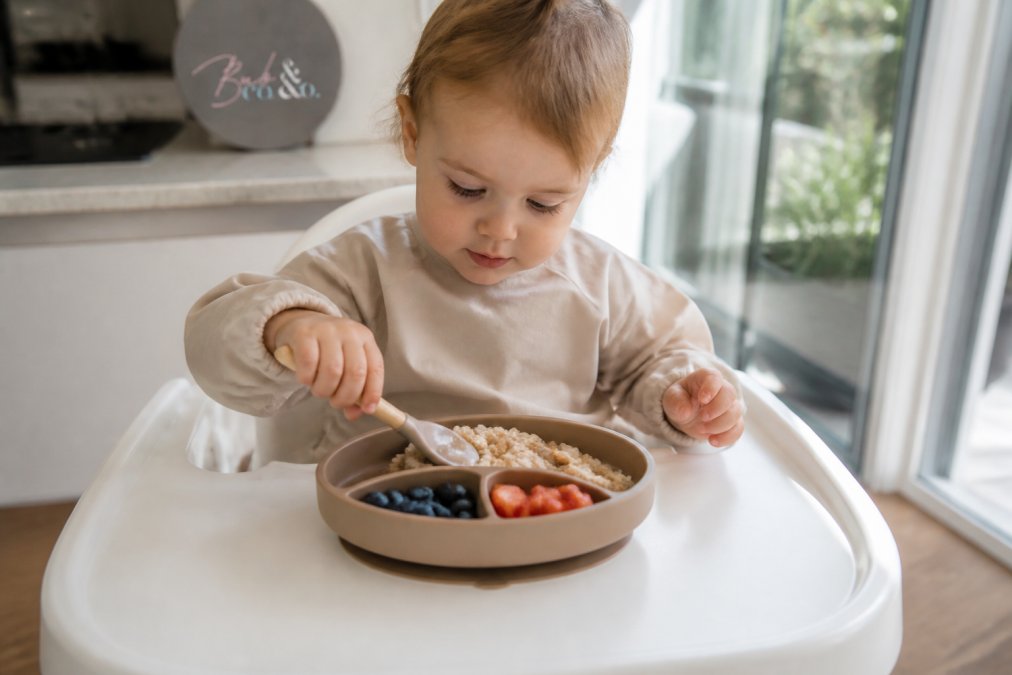
Silicone suction plates for toddlers solve a different problem to the divider question: they stay put. A plate that slides across the tray turns self-feeding into a frustration exercise, and a frustrated toddler eats less. A suction base keeps the plate anchored so your child can focus on scooping, which builds fine motor skills meal by meal.
Practical Tips for Feeding a Picky Toddler
The plate matters less than what happens around it. A few habits make the biggest difference:
- Offer one new food next to two or three familiar ones, never a plate of all-new items.
- Serve small portions. A toddler can always ask for more, and a full plate can feel like a demand.
- Eat the same food yourself at the same table. Modelling does more than encouragement.
- Keep mealtimes to around 20 to 30 minutes, then pack up without a fight.
- Never force a bite. Pressure builds food aversion rather than reducing it.
When to Transition to Undivided Plates
Move to an undivided plate once your child reliably eats a mixed dish without distress. A common approach is to run both in rotation: divided plate on days with several distinct items, undivided plate for pasta bakes, curries and stir-fries. This keeps the divider as a support rather than a permanent rule, and it protects dietary diversity as your child's palate widens.
Choosing the Best Non-Toxic Feeding Sets Australia Parents Trust
When you're choosing the best non-toxic feeding sets, the material matters more than the design. Look for food-grade silicone that is free from BPA, PVC and phthalates, and check that it withstands heat and cold without leaching chemicals. Silicone is also stain-resistant and odour-free, which matters when tomato and curry are on regular rotation.
| Bub and Co Set | Price | What's Included | Best For |
|---|---|---|---|
| Non Grid Suction Plate | $14.95 | Single plate, deep walls | Toddlers ready for mixed dishes |
| Rainbow Suction Plate with Lid | $17.95 | Divided plate + lid | Picky eaters, meals on the go |
| Junior Set | $44.95 | Plate, bowl, cup, spoon | Starting solids through toddler years |
| Ultimate Set | $44.95 | Plate with lid, bowl, bib, spoon, fork | Full mealtime setup, 6 months+ |
Neurodivergent-Specific Mealtime Strategies
For neurodivergent children, divided plates often do more than help. They can be the difference between eating and not eating. Children with texture sensitivity or sensory overload frequently need absolute separation of foods, and a compartment plate delivers that without a battle. Where a neurotypical child might outgrow the divider, a sensory-sensitive child may use one well into primary school, and that's a reasonable accommodation rather than a failure.

A few adjustments that help:
- Keep the mealtime environment quiet and predictable, with the same seat and same plate each time.
- Introduce new foods in a separate compartment, never mixed into a familiar one.
- Allow your child to touch, smell or lick a new food without any expectation of eating it.
- Track which textures trigger a reaction and build tolerance one at a time.
Conclusion
The honest answer is that divided plates don't cause picky eating, and they don't cure it either. They remove one barrier, food touching, which lets a sensory-sensitive or cautious toddler focus on eating rather than managing discomfort. Used as a stepping stone and paired with a suction base that keeps the plate where it belongs, they support self-feeding and build confidence at the table.
Frequently Asked Questions
What are the benefits of divided plates for toddlers?
Divided plates separate foods, which can reduce sensory overload for toddlers who dislike their food touching. The compartments also help with portion control and make it easier for children to recognise different food items, supporting food exploration and toddler autonomy during meals. For picky eaters, this structure can lower mealtime anxiety and encourage them to try new textures without feeling overwhelmed by a mixed plate.
Is it normal for a toddler to refuse food that touches other items?
Yes, it is very common. Many toddlers go through a phase where they reject mixed dishes or foods that touch, often due to sensory processing sensitivities or a desire for predictability. Using divided plates can help bridge this phase by keeping foods separate, which respects their need for order while still offering variety. This behaviour usually lessens as children get older and become more comfortable with different textures.
How do silicone suction plates assist with independent feeding?
Silicone suction plates have a base that sticks firmly to highchair trays or tables, so the plate stays put while your toddler practises scooping and self-feeding. This stability reduces spills and frustration, building confidence and fine motor skills. Look for plates with deep walls and easy-to-scoop curves, like those in the Bub and Co range, to make self-feeding easier for little hands.
Are there downsides to using divided plates for children?
Divided plates can become a crutch if a child refuses to eat from a regular plate later on. Some parents find that children who always use divided plates struggle with mixed dishes or sauces that touch other foods. To avoid this, gradually introduce undivided plates during low-pressure meals once your child is comfortable, so they learn flexibility without mealtime anxiety.
What features should I look for in a non-toxic toddler feeding set?
Prioritise food-grade silicone that is free from BPA, PVC, and phthalates, as these materials are durable, stain-resistant, and safe for hot and cold foods. Check for a strong suction base, deep walls for easy scooping, and dishwasher-safe parts for simple cleaning. Sets like the Bub and Co Ultimate Set include a plate, bowl, bib, and utensils, offering a complete non-toxic option for starting solids.
Choosing the right plate is the easy part; the harder work is staying patient through the messy months. Bub and Co makes that easier with non-toxic, food-grade silicone sets that grip the tray, resist stains and odours, and go straight into the dishwasher. Explore the feeding sets, teethers and bundles built to support your child's development, and get started with Bub and Co today.
Leave a comment