
Table of Contents
- Why Silicone Baby Teethers Are a Safe Choice
- How Silicone Teethers Support Your Baby's Development
- When to Introduce Teething Toys to Your Baby
- Silicone vs Natural Rubber Teethers: What Parents Should Know
- How to Clean Silicone Baby Teethers Safely
- Temperature Benefits: Warm and Cool Teething Relief
- Choosing the Right Silicone Teether for Your Baby
- Frequently Asked Questions
Last Updated: September 24, 2026
Why Silicone Baby Teethers Are a Safe Choice
The benefits of silicone baby teethers start with what they don't contain. Unlike plastic teethers that may leach chemicals when chewed, food-grade silicone is chemically inert and holds its shape under pressure. This guide from Bub and Co explains what makes silicone the safest everyday option for sore gums.
Food-Grade Silicone and Non-Toxic Materials
Food-grade silicone is manufactured to the same standard as bakeware and bottle nipples, which means it can safely contact a baby's mouth. It's BPA-free, phthalate-free, and hypoallergenic, so it suits babies with sensitive skin or allergies.
How Silicone Teethers Support Your Baby's Development
Chewing on a teether is developmental work, not just comfort. The action builds oral motor development, strengthens jaw muscle strength, and supports the chewing patterns your baby will need for solid foods. It also delivers sensory stimulation and tactile feedback that help an infant map their mouth and hands.
When to Introduce Teething Toys to Your Baby
Most babies are ready for a teether between 3 and 6 months, when teething symptoms first appear. Signs include drooling, fussy behavior, gum swelling, and the urge to chew on everything within reach. Introducing a teether early gives your baby a safe outlet before they start gnawing furniture or fingers.
Silicone vs Natural Rubber Teethers: What Parents Should Know
Both materials are non-toxic when made well, but they behave differently in daily use. Here's how they compare:
| Feature | Silicone | Natural Rubber |
|---|---|---|
| Chemical reactivity | Inert, won't leach | Generally safe, can degrade |
| Durability | Long-lasting, holds shape | Softens and wears over time |
| Cleaning | Dishwasher safe | Hand wash, gentler care |
| Allergy risk | Hypoallergenic | Rare latex sensitivity |
| Temperature use | Safe warm or chilled | Best chilled, not heated |
| Odour retention | Odour-free | Can absorb smells |
How to Clean Silicone Baby Teethers Safely
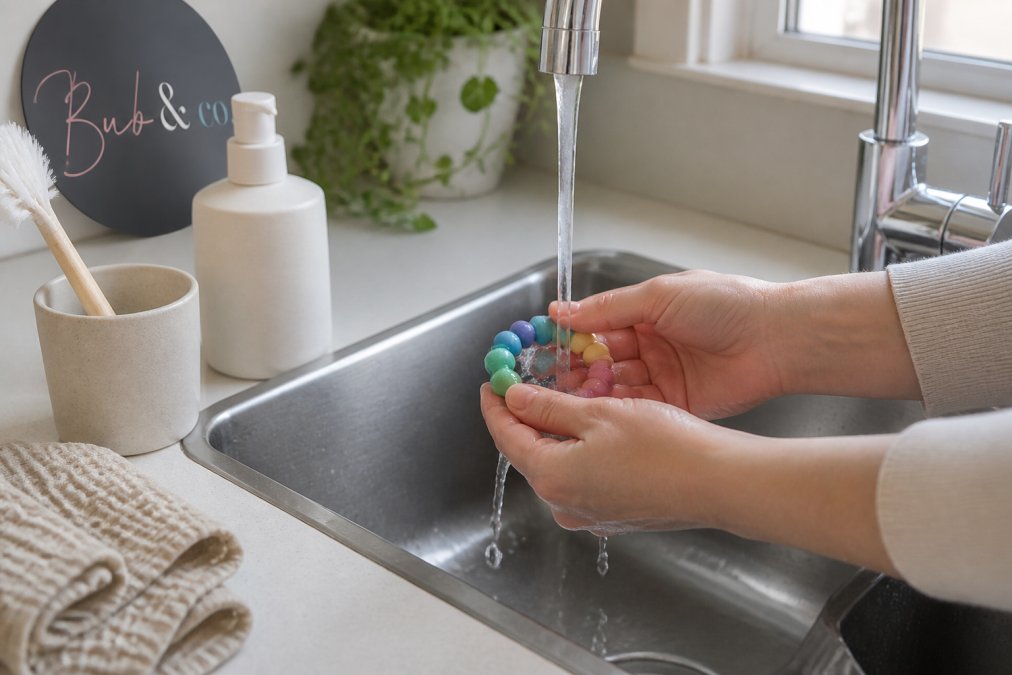
Cleaning silicone is straightforward, and that's part of its appeal. Wash with warm water and mild dish soap, then rinse thoroughly. Most silicone teethers are dishwasher safe on the top rack, which handles the deeper clean for you.
Temperature Benefits: Warm and Cool Teething Relief
Temperature is the single biggest lever you can pull on a silicone teether, and most guides reduce it to "put it in the fridge." The mechanism is worth understanding, because it changes how you use the teether.
How to chill a silicone teether correctly
- Fridge, not freezer. Around 20-30 minutes on a shelf in the fridge is enough to get a useful cooling effect. The refrigerator compartment sits at roughly 4°C, which is cold enough to soothe without hardening the silicone.
- Never freeze it solid. A frozen teether becomes rigid and abrasive against inflamed gums, and it can also crack at the seams where the silicone meets any wooden or plastic component. If a product claims to be freezer-safe, treat that as a marketing claim rather than a benefit.
- Re-chill in rotation. Keep two teethers in the fridge so one is always ready while the other is being washed or is warming back up in your baby's hands.
- Check before offering. A teether straight from the fridge should feel cool, not painfully cold, against the inside of your wrist.
How to warm a silicone teether safely
- Bowl of warm water. Submerge the teether in warm, not hot, water for a minute or two. This is the gentlest method and the easiest to control.
- Never microwave. Microwaving creates hot spots that can scald a baby's mouth even when the teether feels fine to your hand, and it can degrade the material over repeated cycles.
- Never boil for warming. Boiling is a sanitising step, not a comfort step. A boiled teether needs to cool fully before it goes anywhere near your baby.
UV resistance is a quiet advantage of silicone here. It doesn't break down quickly under UV light, so a teether left in a sunny pram or on a windowsill won't degrade the way some rubbers do, though direct sun is still a poor way to warm one, because you can't control the surface temperature.
Choosing the Right Silicone Teether for Your Baby
The best teether is the one your baby will actually hold and chew, and the honest truth is that the first one you buy often isn't it. Selection and troubleshooting are the same skill, so treat this section as a decision process rather than a shopping list.
What to look for before you buy
- Ergonomic design. A shape with a clear handle or a loop your baby can hook a fist through is easier to grip than a smooth oval, especially before the pincer grasp develops.
- Soft texture, right firmness. Food-grade silicone sits firmer than natural rubber at room temperature. If your baby has rejected firm teethers before, look for a thinner-walled or hollow design that flexes more easily.
- Size that clears the gag reflex. A teether should reach the front and side gums comfortably without extending so far back that it triggers a gag. If your baby gags on a teether that's otherwise a good shape, it's usually too long rather than too hard.
- One-piece construction where possible. Fewer seams and joins mean fewer places for moisture and residue to collect.
- Weight. A teether that's too heavy for small hands gets dropped constantly, which reads as refusal but is really a grip problem.
Bub and Co's range covers these bases with options built for real teething. The Koala Teethers ($14.95) pair wood for handling with 100% food-grade silicone for chewing, free from BPA, PVC, and Phthalates. For a lighter, easy-grip option, the Banana Teether ($11.99) is recommended from 3 months and shaped to reach the back gums. The Paw Print Teether ($14.95) follows the same wood-and-silicone design, while the Star teether ($9.95) offers a simple, budget-friendly shape.


If your baby refuses the teether
Refusal is the most common teething complaint parents raise, and it's almost never about the teether being "wrong." Work through these before buying another one:
- Timing. Offer the teether during a fussy window, not a calm one. A baby who is happily playing has no reason to chew; a baby whose gums are throbbing will reach for relief.
- Temperature. Try the same teether chilled, then at room temperature, then gently warmed. Some babies only accept one.
- Texture. Alternate between smooth and textured surfaces. A baby who rejects a smooth teether may chew happily on a bumpy one, and vice versa.
- Position. Offer it while your baby is upright and supported rather than lying flat, which changes how the teether sits against the gums.
- Model it. Chew on a clean teether yourself, or hand your baby a second one while you hold the first. Imitation is a powerful driver at this age.
- Grip support. If your baby drops it repeatedly, hold the teether for them for a minute so they can focus on chewing rather than hanging on.
- Teething jewellery or a cold cloth as a bridge. If silicone is consistently rejected, a chilled damp cloth or a silicone teething necklace worn by you can keep the chewing habit going until your baby is ready to accept a handheld teether.
Frequently Asked Questions
What is the safest material for baby teethers?
Food-grade silicone is widely recommended because it is free from BPA, PVC, and phthalates, and it does not leach chemicals when heated or cooled. It is also hypoallergenic, soft on gums, and durable enough to withstand repeated cleaning. Natural rubber is another safe option, but some babies may be sensitive to latex. Always check that the teether is labelled non-toxic and designed for teething, and supervise your baby during use.
Is 2 months too early for teething toys?
Most babies start showing teething signs around 4 to 6 months, but some begin earlier. At 2 months, a baby's grasp is still developing, so a lightweight teether may be difficult to hold. If you introduce one, choose a small, easy-to-grip design and always supervise. The Banana Teether is recommended for babies 3 months and older, making it a good starting point once your baby shows interest in chewing.
Which is better for my baby, silicone or natural rubber teether?
Both materials have merits. Silicone is hypoallergenic, odourless, stain-resistant, and can be washed in the dishwasher or sterilised. Natural rubber is biodegradable and softer, but it may have a slight smell and can degrade faster. For parents who prioritise easy cleaning and durability, silicone is often the better choice. If you prefer a plant-based option, natural rubber works well, but check for latex allergies.
How do I clean and sanitise silicone teethers safely?
Wash silicone teethers with warm water and mild dish soap, then rinse thoroughly. For deeper cleaning, boil them for 2-3 minutes or place them on the top rack of your dishwasher. Avoid harsh chemicals or abrasive sponges. Always inspect the teether for tears or signs of wear, and replace it if damaged. Regular cleaning prevents microorganism growth and keeps the teether safe for your baby.
Teething is a short but intense phase, and the right teether makes it easier on everyone. Bub and Co builds safe, modern silicone products designed to support your baby's development, with feeding sets and teethers that are free from BPA, PVC, and Phthalates, stain-resistant, and built to withstand heat and cold without leaching. Explore the range and find the shape your baby will reach for. Get started with Bub and Co and make teething a little calmer.
Leave a comment