
Table of Contents
- Why Silicone Bibs With Food Catchers Change Mealtime
- Silicone vs Cotton Bibs for Feeding
- How to Clean Silicone Bibs (and Stop Mould Before It Starts)
- Are Silicone Bibs BPA Free? Safety and Material Checks
- The Food Catcher Pocket: Why Rigidity Matters
- Age-Specific Suitability: From First Purées to Toddler Self-Feeding
- Portability, Durability and End-of-Life: What to Look For
- Choosing the Right Silicone Bib Setup for Your Family
- Frequently Asked Questions
Last Updated: September 22, 2026
Why Silicone Bibs With Food Catchers Change Mealtime
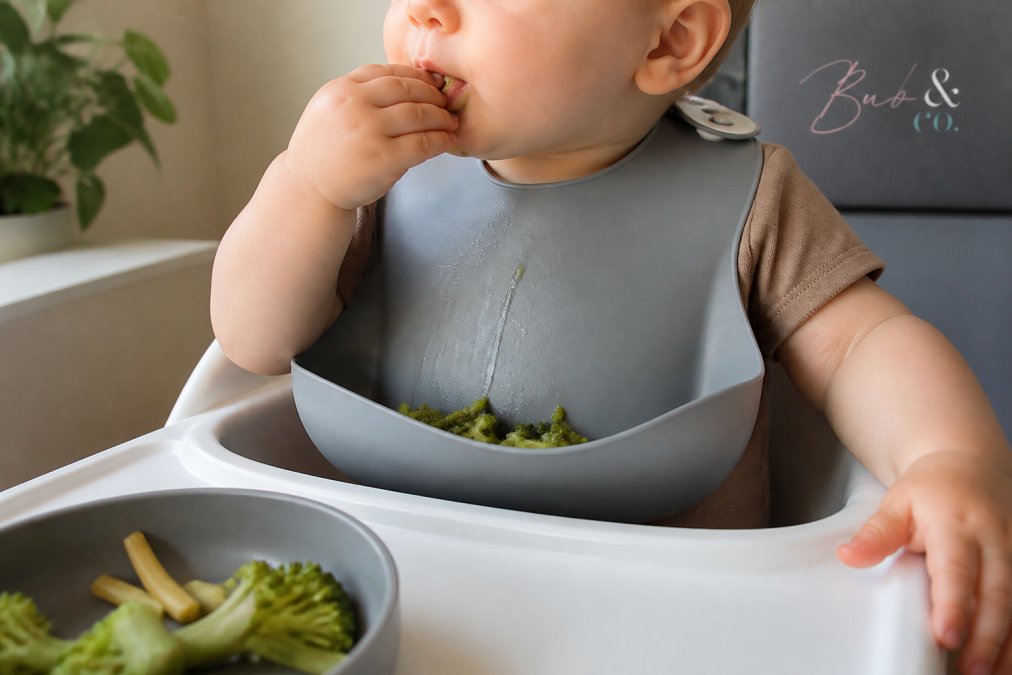
A silicone bib with a food catcher is a soft, food-grade silicone bib featuring a wide, scooped pocket at the base that traps dropped food before it reaches the floor. For parents starting solids, that single design change removes a large share of the daily clean-up that comes with weaning.

Here's the practical reality: most of the mess in early feeding isn't the food your baby eats. It's the food that never makes it to their mouth. A crumb pocket catches it mid-fall, and a quick rinse resets the bib for the next meal.
This guide from Bub and Co breaks down how silicone bibs compare with cloth, how to clean them properly, what to check for safety, and which setup suits your child's stage. Below, we'll show you exactly how to choose, clean and store a bib that survives the toddler years.
Silicone vs Cotton Bibs for Feeding
Silicone wins on mess control and cleaning; cotton wins on softness and price per unit. The right choice depends on how much of your day you want to spend on laundry.
Cloth bibs absorb drips well, which suits milk feeds and light purées. Once your baby starts grabbing food and turning their head mid-spoon, absorption stops helping. A soaked cloth bib transfers stains to whatever is underneath it, and the fabric itself holds onto orange and beetroot marks.
Silicone behaves differently. It doesn't absorb anything, so food sits on the surface until you wipe it away. A food-grade silicone bib with a moulded pocket does two jobs at once: it shields the clothes and it catches the fall.
Cleaning and Drying Differences
Cloth bibs need a wash after most meals. That means a laundry cycle, a drying period, and a spare bib on standby while the first one is out of action. Silicone bibs need a rinse under the tap and a wipe, then they're ready again in seconds.
For families doing three meals plus snacks a day, that difference adds up fast. Many parents find they rotate through six or more cloth bibs daily and still run out.
Cost Per Use Over Time
A cloth bib is cheaper at the checkout. Over a year of daily use, though, the maths shifts. Cloth bibs wear thin, lose their shape and get replaced. Silicone holds its form and doesn't fray, so one bib typically covers the whole weaning period and beyond.
| Factor | Cloth Bib | Silicone Bib |
|---|---|---|
| Clean-up time per meal | Wash and dry cycle | Rinse and wipe |
| Stain resistance | Low | High |
| Dries | Hours | Seconds |
| Food catcher | None | Wide scooped pocket |
| Lifespan | Months | Years |
How to Clean Silicone Bibs (and Stop Mould Before It Starts)
Wash silicone bibs in warm soapy water after every meal, or place them on the top rack of the dishwasher. Mould grows where moisture sits, so the pocket and the neck strap are the two areas that need the most attention.
Most mould problems on silicone bibs come from one habit: folding a damp bib into a drawer. The pocket holds a small amount of water, the drawer stays dark and warm, and within a week you have black spots along the fold line.
Daily Rinse and Dishwasher Routine
Turn the pocket inside out and rinse both sides. Run your thumb along the inside seam of the scooped base, where purée collects and hides. A soft brush helps if you've served anything oily.
Dishwasher-safe silicone handles the top rack without warping. Skip the heated drying cycle if your machine runs hot, and let the bib air dry instead.
Deep Sanitising and Mould Prevention
Once a week, or after any illness, sanitise the bib properly. Pour boiling water over it, or soak it in a diluted white vinegar solution for ten minutes, then rinse and dry completely.
- Check the neck strap holes for trapped food
- Turn the pocket fully inside out
- Feel along the seams for residue
- Air dry flat, pocket open, never folded
- Store hanging or flat, not compressed
Are Silicone Bibs BPA Free? Safety and Material Checks
Quality silicone bibs are BPA free, and most reputable brands also exclude PVC and phthalates. The check that matters is what the manufacturer states on the product listing, not what a marketplace seller claims in a title.
BPA is bisphenol A, an industrial chemical historically used to harden polycarbonate plastics. It has been restricted in baby bottles and feeding products in many markets because of concerns about how it interacts with hormones.
Silicone is a different material entirely.
When you're checking a listing, look for:
- A clear statement of food-grade or FDA-approved food-grade silicone
- Explicit mention of BPA, PVC and phthalate exclusion
- No vague terms like "silicone blend" or "silicone-style"
- A brand that answers material questions directly
The Food Catcher Pocket: Why Rigidity Matters
A food catcher only works if the pocket stays open. Soft, floppy pockets collapse against your baby's chest, and once that happens the bib is just a flat sheet with a decorative fold.
Age-Specific Suitability: From First Purées to Toddler Self-Feeding
The bib that suits a six-month-old starting purées is not always the bib that suits an 18-month-old learning to use a spoon. Neck sizing and pocket depth matter more as your child grows.
| Stage | Typical Age | What Matters Most |
|---|---|---|
| First purées | Around 6 months | Soft strap, lightweight |
| Grabbing the spoon | 9-12 months | Pocket depth, secure fit |
| Self-feeding | 12-24 months | Adjustable sizing, durability |
| Toddler meals | 2 years+ | Stain resistance, easy clean |
Portability, Durability and End-of-Life: What to Look For
A bib that lives permanently on the highchair is only half the job. The other half is the one that goes in the nappy bag, survives a cafe table, and comes home without staining the inside of your bag.
Choosing the Right Silicone Bib Setup for Your Family
Match the setup to your stage, not to the biggest bundle on the page. A parent starting purées needs less kit than a parent chasing a toddler around the kitchen.
| Setup | Price | Best For |
|---|---|---|
| Silicone Bib | $14.95 | Testing a food catcher |
| Mini Bub Set | $25.00 | First foods, compact kit |
| Ultimate Set | $44.95 | Full mealtime coverage |
| My First Solid Bundle | $60.00 | Complete starting-solids setup |
Frequently Asked Questions
What are the benefits of silicone bibs with food catchers?
Silicone bibs with food catchers keep spilled food off your baby's lap and the floor. The wide scooped pocket catches dropped pieces, which reduces mealtime cleanup. Food-grade silicone is waterproof, stain-resistant and odour-free, so it does not absorb purée or smell after repeated use. Most silicone bibs are dishwasher safe, adjustable at the neck, and durable enough to last through multiple children. They also fold flat for travel and wipe clean in seconds, making them practical for everyday feeding.
Are silicone bibs BPA free and safe for babies?
Quality silicone bibs are made from food-grade silicone that is free from BPA, PVC and phthalates. Bub and Co bibs, for example, are FDA-approved food-grade silicone and free from those substances. Food-grade silicone does not leach chemicals when heated or cooled, so it is safe for warm food and dishwasher cycles. Check that the product listing states food-grade silicone and names the specific substances it avoids. If a bib has no material information, treat that as a warning sign.
How do I clean silicone bibs without them getting mouldy?
Rinse the bib under warm water immediately after each meal to remove food residue. For a deeper clean, wash with mild dish soap and a soft sponge, then check the food catcher pocket for trapped pieces. Most silicone bibs are dishwasher safe on the top rack. To prevent mould, hang the bib so water drains from the pocket and let it air dry completely before storing. Avoid stacking damp bibs together, and run a hot dishwasher cycle or a diluted vinegar soak weekly if you notice any smell.
When should I start using a silicone bib with a food catcher?
Start using one as soon as your baby begins solid foods, usually around six months. Early on, most food ends up on the bib rather than in the mouth, so the catcher pocket saves significant cleanup. The adjustable neck strap should fit snugly without pressing on the throat. For younger babies, a soft-touch silicone bib is gentle on the neck and chest. As your baby moves into toddler self-feeding, the same bib still works because the collar adjusts to a larger size.
Silicone vs cotton bibs for feeding: which is better?
Cotton bibs absorb dribble well but soak through with purées and need frequent washing. Silicone bibs do not absorb liquid, so they wipe clean and resist stains and odours. The food catcher pocket on a silicone bib traps dropped food, which cotton cannot do. Cotton may feel softer against the skin, but silicone is more practical for messy meals and baby-led weaning. Many parents keep both: cotton for milk feeds and light dribble, silicone for solid food and self-feeding sessions.
Leave a comment