
Table of Contents
- Why Silicone Stains and What That Means for Safety
- How to Clean Stained Silicone: Step-by-Step Methods
- How to Remove Tomato Stains from Silicone
- Is Baking Soda Safe for Silicone?
- How to Sanitise Silicone Baby Spoons
- Preventing Stains and Keeping Silicone Looking New
- When to Replace Stained Silicone Items
- Conclusion
- Frequently Asked Questions
Last Updated: September 5, 2026
That orange tinge on your baby's once-pristine silicone spoon isn't a sign of damage, but it can look concerning. Silicone is non-porous, which means stains like tomato or curry residue sit on the surface rather than soaking in, and common kitchen ingredients usually lift them right off. This guide from Bub and Co walks you through safe, effective ways to clean stained silicone without compromising the material, plus how to prevent marks from forming in the first place.
Why Silicone Stains and What That Means for Safety
Staining happens because food pigments temporarily adhere to the silicone rubber's surface, not because the material has absorbed anything harmful. Since food-grade silicone is non-porous and heat resistant, a stain is a cosmetic issue rather than a hygiene concern. The safety of your baby's feeding gear remains intact even when discolouration appears.
The real question parents ask is whether cleaning agents can damage the silicone itself. Harsh chemicals, abrasive scrubbers, or high heat can degrade the polymer over time, creating a rough, porous surface where bacteria and mildew could eventually take hold. That's why the methods below use gentle, non-toxic cleaning agents that remove pigment without harming the material.
How to Clean Stained Silicone: Step-by-Step Methods
Not all stains are the same, and the most effective cleaner depends on what you're dealing with. A grease-based mark from avocado responds differently to treatment than a pigment stain from berries or a mineral deposit from hard water. Using the wrong method wastes time and can sometimes set the stain further.
Use the table below to identify the stain type, then follow the matching method.
| Stain Type | Typical Cause | Visual Clue | Best First Approach |
|---|---|---|---|
| Pigment | Tomato, curry, berries, beetroot | Orange, red, or purple discolouration that sits on the surface | Baking soda paste (Method 2) |
| Grease/Oil | Butter, avocado, olive oil, meat juices | Cloudy or translucent film that feels slick | Hot water and dish soap soak (Method 1) |
| Mineral Buildup | Hard tap water, formula residue | White or chalky film, often near the rim | White vinegar soak |
| Odour | Milk, fish, strong spices | No visible mark but persistent smell | Boiling water or vinegar soak |
Method 1: Dish Soap and Hot Water Soak
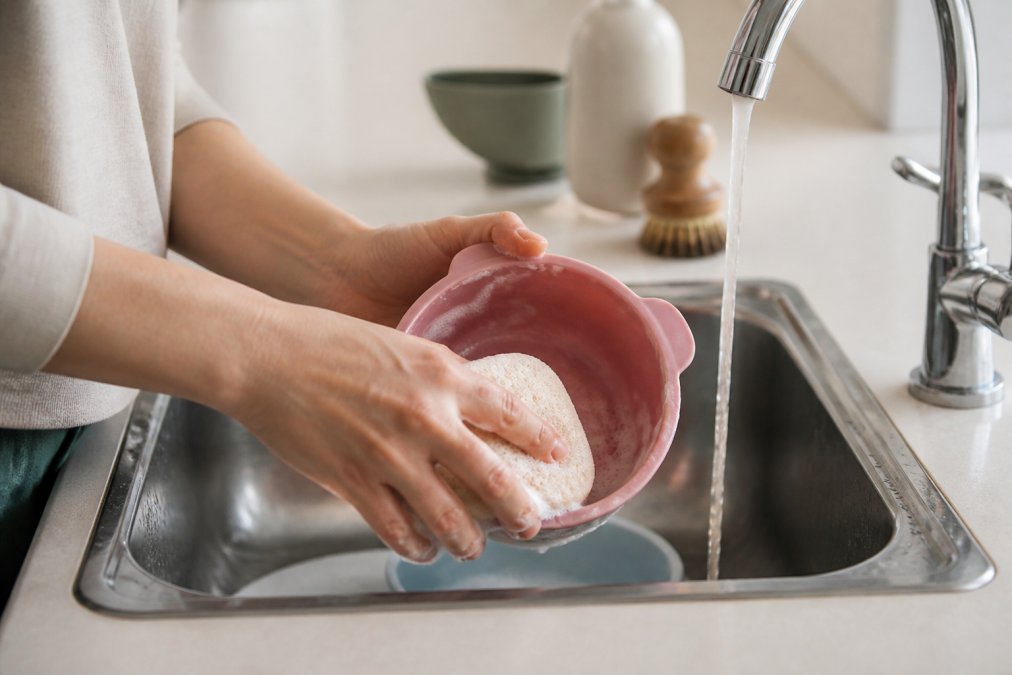
Start with the gentlest option. Fill your sink with hot water, as hot as your hands can comfortably tolerate, and add a few drops of dish soap. Submerge the stained item for 10 to 15 minutes. This soak time softens food residue and begins breaking down oils, which is why it works best on grease-based marks rather than pigment stains.
After soaking, scrub with a nonabrasive sponge or soft cloth, then rinse thoroughly with hot water. For everyday mealtime messes, this method removes most surface staining without any risk to the silicone. Air dry completely before storing to prevent mildew.
Method 2: Baking Soda Paste for Pigment Stains
For pigment-based stains that survive the soap soak, create a baking soda paste by mixing three parts baking soda with one part water. Apply the paste directly to the discoloured areas and let it sit for 5 to 10 minutes. The mild alkalinity helps break the bond between the food pigment and the silicone surface.
Gently work the paste into the stain with your fingers or a soft cloth, using circular motions. The mild abrasiveness lifts pigment without scratching the silicone surface. Rinse thoroughly and repeat if needed. This approach handles most food-based stains, including pasta sauce and berry marks. For older, set-in pigment stains, combine this method with sunlight exposure, see the tomato stain section below.
Method 3: Hydrogen Peroxide for Deep or Set-In Stains
When baking soda isn't enough, hydrogen peroxide offers a stronger option for deeply embedded pigment. Place the silicone item in a glass or ceramic container, cover the stained areas with 3% hydrogen peroxide (the standard concentration available at pharmacies), and let it soak for several hours or overnight.
Check the item periodically and rinse thoroughly once the stain lifts. Hydrogen peroxide breaks down pigment molecules through oxidation without damaging food-grade silicone, making it effective for deep-set discolouration. Always rinse well afterward to remove any residue before the item touches food again.
Method 4: White Vinegar for Mineral Buildup
If you notice a white, chalky film rather than a food-coloured mark, that's likely mineral buildup from hard water or formula residue. White vinegar dissolves these deposits through its mild acidity.
Mix equal parts white vinegar and warm water in a bowl, submerge the item for 15 to 20 minutes, then rinse and wash with dish soap. The vinegar smell dissipates completely after rinsing. This method is also effective at neutralising odours that linger after milk or fish.
A common pattern across all methods: if a stain doesn't respond to the first approach within two attempts, switch to a different method rather than repeating the same one. Stubborn stains often need a different chemical mechanism, not more of the same treatment.
How to Remove Tomato Stains from Silicone
Tomato-based foods are the most common culprit behind orange or red stains on baby feeding gear. The pigment in tomatoes binds tightly to silicone, which is why these marks often survive a standard wash.
The fastest fix is to apply a baking soda paste directly to the tomato stain and let it sit for 15 minutes before scrubbing gently. For older or set-in marks, combine the paste method with sunlight bleaching: after applying the paste, place the item in direct sunlight for a few hours. Advice on removing food pigments from silicone surfaces confirms that sunlight naturally breaks down many organic stains without chemicals.
Is Baking Soda Safe for Silicone?
Yes, baking soda is completely safe for food-grade silicone when used correctly. It's mildly alkaline and gently abrasive, which means it cleans effectively without scratching or degrading the silicone polymer.
The key is to use a soft cloth or your fingers rather than a stiff brush, and to rinse thoroughly after cleaning. Baking soda leaves no toxic residue, so it's a trusted option for kitchenware that touches food. For daily cleaning, many parents keep a small dish of baking soda paste ready in the pantry for quick stain treatment.
How to Sanitise Silicone Baby Spoons
Sanitising goes beyond stain removal and addresses bacteria, mildew, and lingering odours. Most food-grade silicone items can be washed in the dishwasher on the top rack, but for a deeper clean, boiling works well.
Place the spoons in a pot of boiling water for 2 to 3 minutes, then remove with tongs and air dry. Silicone withstands heat without leaching chemicals, so this method is safe for regular use. For everyday sanitisation between feeds, a hot water rinse with dish soap is sufficient. The Australian food safety guidance on cleaning baby feeding items recommends washing feeding equipment thoroughly after each use to prevent bacterial growth.
Preventing Stains and Keeping Silicone Looking New
Stain prevention is far easier than stain removal, and the most effective strategies happen before food ever touches the silicone. Most guides focus on cleaning after the fact, but a few simple pre-treatment habits can dramatically reduce how often you need to reach for baking soda or hydrogen peroxide.
Pre-Treatment: Create a Barrier Before Cooking
A light coating of food-grade oil, a few drops of coconut, olive, or canola oil rubbed over the surface with a paper towel, creates a thin barrier that food pigments struggle to bond with. This works particularly well for silicone baking moulds and muffin trays used with tomato-based batters or berry mixtures.
Apply the oil before adding food, then wash normally afterward. The oil layer doesn't affect baking results and rinses off completely with warm soapy water. For baby bowls and spoons used with purees, a quick rinse under hot water immediately after the meal serves a similar purpose by preventing food from drying onto the surface.
Rinse Timing Matters More Than Scrub Intensity
The single most effective habit is rinsing silicone items within 10 minutes of food contact. Food pigments bond to silicone as they dry, and once that bond forms, removal requires more effort. A quick rinse under hot running water removes most pigment before it has a chance to set.
For oily foods like curry or pasta sauce, wash with warm soapy water rather than cold, as heat helps break down oils and degreasing is more effective. Cold water can cause oils to congeal and adhere more firmly to the surface.
Storage Habits That Prevent Discolouration
Store silicone items in a dry, well-ventilated area to prevent mildew, and avoid stacking them while still damp. Moisture trapped between stacked items creates an environment where mildew can develop, which appears as dark speckles that are much harder to remove than food stains.
Direct sunlight can also cause gradual discolouration of some silicone formulations over time. While brief sun exposure helps bleach existing stains, prolonged storage in bright windows can yellow lighter-coloured items. Store feeding gear in a cupboard or drawer rather than on an open counter near a window.
Weekly Maintenance Routine
A simple weekly routine keeps silicone in top condition:
- Daily: Rinse immediately after use, wash with warm soapy water, air dry completely.
- Weekly: Soak in warm water with a splash of white vinegar for 10 minutes to address mineral buildup and odours.
- Monthly: Inspect for signs of wear, stickiness, roughness, or cracks, and deep-clean with baking soda paste if any discolouration has accumulated.
Regular maintenance keeps your feeding gear looking fresh for years. Silicone is durable, but it rewards consistent care far more than occasional intensive cleaning.
When to Replace Stained Silicone Items
Stains alone rarely mean an item needs replacing. However, certain signs indicate the silicone has degraded and should be retired. If the surface feels sticky, tacky, or rough rather than smooth, the polymer may be breaking down.
Check for tears, cracks, or chunks missing from the edges, which can harbour bacteria and pose a choking hazard. If cleaning no longer removes odours or the item has lost its shape, replacement is the safer choice. Guidance on recognising when silicone kitchenware needs replacing suggests inspecting silicone items monthly for signs of wear.
Conclusion
Cleaning stained silicone doesn't require harsh chemicals or expensive products. A few kitchen staples, some soak time, and gentle scrubbing will restore your baby's feeding gear to a clean, safe state. The stain-resistant and odour-free materials in Bub and Co feeding sets make cleanup even easier, so mealtime messes don't become permanent fixtures.

For parents who want feeding products built to handle daily use without constant worry, explore the feeding sets and individual pieces designed to support your child's development from first solids onward. Get started with Bub and Co and make mealtime cleanup as simple as possible.
Frequently Asked Questions
What gets stains off of silicone?
A paste made from baking soda and water is often the most effective first step. Apply it with a soft sponge, let it sit briefly, then rinse with hot water. For oil-based stains, dish soap helps break down the residue. For stubborn marks, soaking in hydrogen peroxide or using the sunlight bleaching method can restore the original colour.
Is it safe to use vinegar to clean silicone baby products?
White vinegar is safe for cleaning silicone and is a non-toxic option. It works well for mineral deposits and mildew. However, vinegar is acidic, so rinse items thoroughly with hot water afterward to remove any lingering smell or residue. For heavy food stains, a baking soda paste is often more effective than vinegar.
How do I get rid of stubborn orange stains from tomato-based foods?
Tomato-based foods cause orange stains because the pigment absorbs into the silicone. To remove them, make a paste with baking soda and water, apply it to the stain, and let it sit for 15-20 minutes before scrubbing and rinsing. Sunlight bleaching is also highly effective: wash the item, then place it in direct sunlight for a few hours to fade the pigment.
Can baking soda be used to clean stained silicone?
Yes, baking soda is safe for silicone and is one of the most effective cleaning agents for stains. It is a mild abrasive, so it will not scratch the surface. Mix three parts baking soda with one part water to form a paste. Apply it to the stain, let it sit, then rinse thoroughly with hot water.
This article was written using GrandRanker
Leave a comment