
Table of Contents
- Are Silicone Baby Spoons Worth It? The Short Answer
- Silicone vs Plastic Baby Cutlery: What Actually Differs
- How to Spot Non-Toxic Baby Feeding Sets
- Baby-Led Weaning Essentials: Which Spoons Help
- Spoon Shapes, Sizes and Getting the Suction to Stick
- Cleaning, Sterilising and Keeping Silicone Fresh
- The Downsides Nobody Mentions: Tackiness and Lint
- Cost, Longevity and End-of-Life: The Full Picture
- Frequently Asked Questions
Last Updated: September 16, 2026
Are Silicone Baby Spoons Worth It? The Short Answer
For most families starting solids, yes. Silicone baby spoons solve the two problems that make early feeding frustrating: hard plastic edges that bump sore gums, and handles too thick for a five-month-old fist to close around. This guide from Bub and Co weighs the real trade-offs, including the ones most reviews skip.
The case against them is thinner than it looks. Silicone is soft, flexible and heat-resistant, so it survives the dishwasher, the microwave and being thrown across the kitchen. The case for them is practical rather than dramatic: fewer mealtime battles, easier cleanup, and a utensil your baby can actually hold.
Below, we'll cover what separates food-grade silicone from cheap plastic, how to read the certifications, and whether the downsides (tackiness, lint, the occasional smell) are deal-breakers or fixable annoyances.
Silicone vs Plastic Baby Cutlery: What Actually Differs
The difference that matters is how each material behaves under heat. Silicone is a synthetic polymer built on a silicon-oxygen backbone, which makes it stable across a wide temperature range. Most rigid plastic baby cutlery is polypropylene, which softens and can degrade with repeated high-heat cycles.
That stability is why silicone spoons can go from freezer to microwave without warping. It's also why they feel different in the hand: silicone has a slight give, so a baby biting down gets resistance rather than a hard stop.
Heat, Wear and What Leaches Out
No material is perfectly inert, and honest advice means saying so. Silicone can absorb food odours over time, and low-quality silicone may contain fillers that affect how it performs. The practical test is certification, not marketing language.
Australia's consumer regulator, the ACCC product safety guidance, expects infant feeding products to meet general safety requirements, and the onus is on the supplier to prove compliance. Ask for documentation rather than trusting a label.
How to Spot Non-Toxic Baby Feeding Sets
Non-toxic baby feeding sets are products made from materials that don't release harmful substances into food under normal use, backed by third-party testing rather than a claim on the packaging. That definition matters because the phrase gets used loosely, and "non-toxic" is not a regulated term in Australia; any brand can print it.
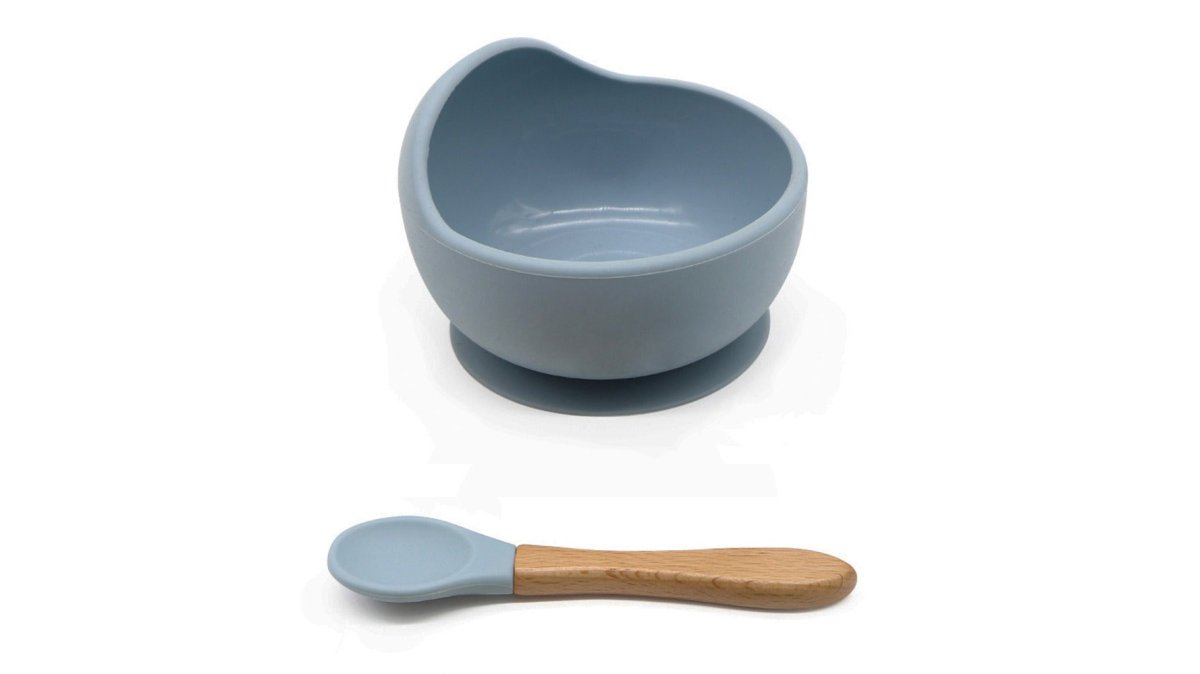
Start with the material itself. Food-grade silicone is manufactured to be safe in contact with food and is free from BPA, PVC and phthalates. Bub and Co's feeding sets are made from food-grade silicone, and the range is designed to be stain-resistant and odour-free so it holds up to daily use.

What Australian Rules Actually Require
The local framework is set by Food Standards Australia New Zealand, which maintains the Food Standards Code covering materials that come into contact with food. The Food Standards Australia New Zealand guidance on food contact materials sets out the general requirement that food-contact articles must not transfer unsafe amounts of any substance into food. Separately, the ACCC product safety guidance expects infant feeding products to meet general consumer product safety requirements, and the onus is on the supplier to prove compliance.
What this means in practice: there is no single Australian "silicone baby spoon certification" you can look for on a box. Compliance is a supplier obligation, not a sticker. That is why the test report matters more than the badge.
Certifications and Testing You Can Ask For
Two overseas standards come up constantly in this category, and they're not interchangeable.
LFGB is a German food-contact standard widely treated as a benchmark for silicone feeding products. It tests for sensory changes (odour and taste transfer) as well as migration of substances into food simulants. FDA refers to United States food-contact requirements, which focus on the material's suitability for food contact under specified conditions. Neither is an Australian standard, but both are commonly cited by suppliers as evidence of third-party testing.
| What to Ask | Good Answer | Red Flag |
|---|---|---|
| Material | Food-grade silicone | "Silicone blend", "silicone rubber" |
| Additives | Free from BPA, PVC, phthalates | "BPA-free" only |
| Testing | Named standard (e.g. LFGB), report available on request | "Meets all standards" |
| Heat rating | Stated temperature range in °C | No rating given |
| Origin | Named manufacturer | Vague or refused |
Baby-Led Weaning Essentials: Which Spoons Help
The right spoon for baby-led weaning is short-handled, soft-tipped and easy to load. Long handles look helpful to adults and are useless to a baby who hasn't developed a pincer grasp yet.
Baby-led weaning works on self-feeding, which means your baby needs to get the spoon to their own mouth. A preloaded spoon, where you scoop the food and hand it over, bridges the gap between wanting to eat and being able to scoop.
Three things make a spoon work at this stage:
- A handle short enough for a whole-fist grasp
- A soft tip that won't hurt when it hits the gums
- A shallow bowl that releases food easily rather than trapping it
Spoon Shapes, Sizes and Getting the Suction to Stick
Suction works when the base meets a clean, dry, flat surface. Most "broken" suction bowls are sitting on a textured highchair tray or a surface with a film of water underneath, which lets air back in.
Cleaning, Sterilising and Keeping Silicone Fresh
Dishwasher-safe is the default for good silicone, top rack preferred. Bub and Co's range is microwave and dishwasher friendly, with one exception worth noting: the Mini Bub Set spoon has a wooden handle and should be hand washed and kept out of the microwave.
Three habits keep silicone looking new:
- Rinse straight after strongly coloured foods like tomato or curry
- Skip abrasive scrubbers, which dull the surface
- Air dry rather than towel dry to cut down on lint pickup
The Downsides Nobody Mentions: Tackiness and Lint
Silicone attracts lint and hair. That's the honest downside, and it's a property of the material rather than a defect. A tacky surface is also what makes the spoon easy to grip, so you can't have one without the other.
Cost, Longevity and End-of-Life: The Full Picture
A silicone spoon costs more upfront than a supermarket plastic one and lasts considerably longer, which is where the maths shifts. Plastic cutlery scratches, stains and gets replaced in cycles. Good silicone holds its shape and colour for years.
The 12-Month Cost Comparison
Most guides compare the sticker price of one spoon and stop there. The more useful comparison is what you spend over the first year of solids, because that's the period when spoons get lost, chewed and thrown.
Environmental Impact and End-of-Life
The environmental angle is more nuanced than "silicone is green." Silicone is a synthetic polymer. It is not biodegradable, and it is not widely accepted through kerbside recycling in Australia; most councils treat it as general waste because it can't be processed through standard plastic streams. So end-of-life disposal is a genuine limitation.
- Pass it on to another family; silicone holds up well to a second user
- Repurpose it as a paint or playdough tool once it's out of the kitchen
- Check whether your local council's soft plastics or specialty drop-off accepts silicone, though most don't
When the Upgrade Actually Pays Off
If you already have plastic spoons and an eight-month-old is managing fine, switching isn't urgent. If mealtimes involve thrown cutlery, sore gums or a spoon your baby can't hold, the upgrade pays for itself quickly, not because the spoon is cheaper, but because you stop buying replacements.
| Set | Price | Includes | Best For |
|---|---|---|---|
| Suction Bowl and Spoon | $18.50 | Bowl, spoon | First foods |
| Bowl Set | $21.50 | Bowl, spoon, fork | Starting fork use |
| Mini Bub Set | $25.00 | Bib, bowl, spoon | Messy eaters |
| Junior Set | $44.95 | Plate, bowl, cup, spoon | Sitting independently |
| Ultimate Set | $44.95 | Plate with lid, bowl, bib, spoon, fork | Full setup |
Frequently Asked Questions
Are silicone baby spoons safer than plastic alternatives?
Food-grade silicone is free from BPA, PVC and phthalates, and it stays stable across heat and cold without leaching chemicals into food. Plastic cutlery can scratch over time, and those scratches are harder to clean thoroughly.
Do silicone spoons help with baby-led weaning?
They can. A preloaded spoon with a short, chunky handle is easier for small hands to grip, and the flexible neck bends rather than jabbing when your baby misses their mouth. Pair it with a suction bowl so the setup stays put while they practise scooping. Most babies still need a few weeks of grabbing, dropping and reloading before self-feeding clicks, so expect mess along the way.
How do I clean and sanitise silicone baby spoons?
Rinse straight after meals, then wash in warm soapy water or on the top rack of the dishwasher. Silicone handles heat well, so you can also pour boiling water over it or steam it if you want extra reassurance. Skip abrasive scrubbers, which dull the surface. If a spoon has a wooden handle, hand wash that part and keep it out of the microwave.
Are silicone feeding sets dishwasher safe?
Most food-grade silicone bowls, plates, bibs and spoons are dishwasher safe, and the top rack is the safest spot. Check the product page for any mixed-material pieces, because wooden handles and some lids need hand washing. Silicone resists stains and odours well, but rinsing off strongly coloured foods like tomato or curry soon after a meal keeps it looking newer for longer.
Leave a comment