
Table of Contents
- What Phthalate-Free Baby Spoons Are Actually Made Of
- Food Grade Silicone vs Plastic Baby Spoons: Key Differences
- Is LFGB Silicone Safe for Babies?
- How to Identify Truly Phthalate-Free Spoons
- How to Clean Silicone Baby Spoons (and Keep Them Safe)
- Lifecycle and Environmental Impact of Silicone Spoons
- Frequently Asked Questions
Last Updated: September 18, 2026
What Phthalate-Free Baby Spoons Are Actually Made Of
Phthalate-free baby spoons are made from food-grade silicone, a synthetic polymer derived from silica (sand) that contains no phthalate plasticizers. This guide from Bub and Co breaks down exactly what goes into safe infant feeding utensils, why material composition matters, and how to spot genuinely non-toxic options.
The short answer: most phthalate-free baby spoons on the market today are food-grade silicone, though some are made from stainless steel, bamboo, or plant-based composites. Each has trade-offs.
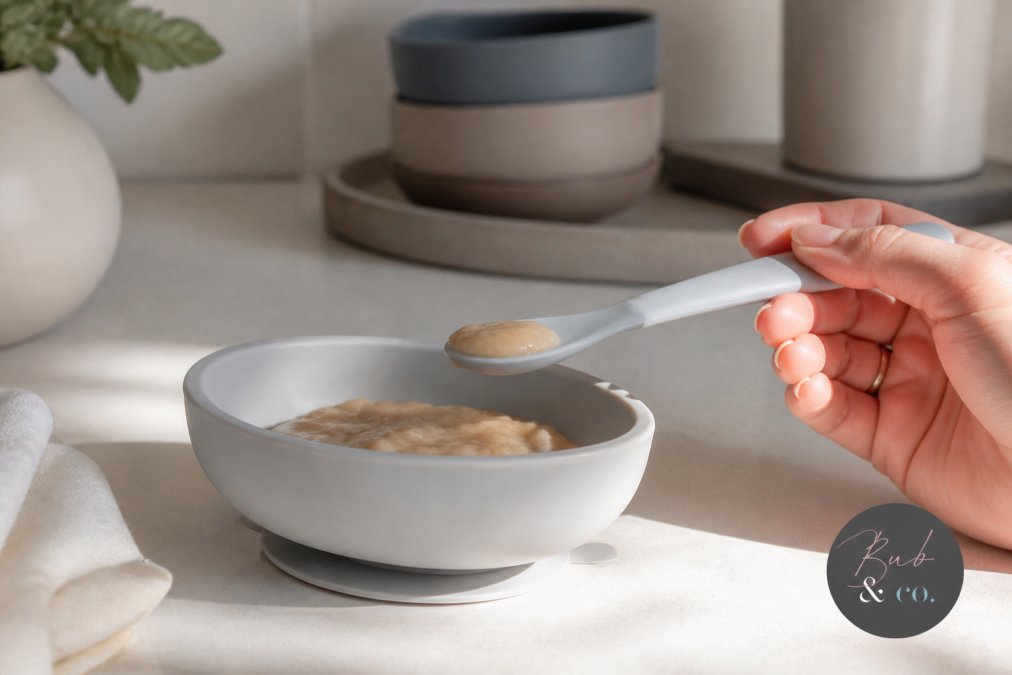
Food-Grade Silicone: The Main Material
Food-grade silicone is a synthetic rubber made from silicon, oxygen, carbon, and hydrogen. It is heat-resistant, hypoallergenic, non-porous, and free from BPA, PVC, and phthalates when manufactured correctly.
The key distinction is "food-grade." Industrial silicone can contain fillers and chemical compounds unsuitable for infant feeding. Food-grade silicone meets specific safety standards for direct food contact.
Silicone's non-porous surface resists bacteria, stains, and odours. It withstands extreme temperature changes, from freezer to microwave, without melting, cracking, or chemical leaching. That durability is why it dominates the baby feeding category.
Other Phthalate-Free Options
Silicone is not the only safe choice. Other materials include:
- Stainless steel: Durable, non-porous, and free from plasticizers. Heavier for small hands and not microwave-safe.
- Bamboo: Biodegradable and lightweight. Requires careful cleaning to prevent bacterial growth if it develops cracks.
- Plant-based composites: Made from materials like cornstarch or sugarcane. Biodegradable but often less heat-resistant than silicone.
Each option avoids phthalates. The right pick depends on your baby's age, feeding stage, and your cleaning routine.
Food Grade Silicone vs Plastic Baby Spoons: Key Differences
Food-grade silicone and plastic baby spoons differ most in their chemical composition and how they behave under heat. Plastic spoons often contain plasticizers, including phthalates, which can migrate into food. Silicone does not require these additives.
Here is how the two compare:
| Feature | Food-Grade Silicone | Plastic |
|---|---|---|
| Phthalates | Not used | Often present |
| Heat resistance | High (oven to freezer) | Limited |
| Chemical leaching risk | Minimal | Higher when heated |
| Durability | Long-lasting | Degrades over time |
| Dishwasher safe | Yes | Varies |
Chemical Leaching and Plasticizers
Chemical leaching is the migration of chemical compounds from a material into food or liquid. Plasticizers like DEHP, a common phthalate, are added to plastics to make them flexible. Heat, acidic foods, and repeated washing accelerate this process.
Silicone does not rely on plasticizers for flexibility, so it does not leach them. This is the central reason health-conscious parents switch to silicone for infant feeding safety.
Is LFGB Silicone Safe for Babies?
Yes. LFGB silicone is considered safe for babies because it meets one of the strictest food-contact testing regimes available. LFGB (Lebensmittel-, Bedarfsgegenstände- und Futtermittelgesetzbuch, or the German Food, Feed and Commodities Code) sits alongside the EU framework regulation on food-contact materials. Certification under LFGB typically requires independent laboratory testing for:
- Overall migration, the total amount of material that can transfer from the silicone into a food simulant under set time and temperature conditions.
- Specific migration, targeted testing for individual substances of concern, including heavy metals and certain organic compounds.
- Sensory neutrality, whether the material alters the taste, smell, or colour of food it contacts.
- Composition and formulation review, verifying the base polymer and any additives against permitted lists.
For Australian parents, the practical frame is this: there is no single Australian standard that says "baby spoon." Instead, food-contact materials are regulated through the Australia New Zealand Food Standards Code, in particular Standard 1.4.1, which deals with articles and materials in contact with food, and through the general consumer product safety framework administered by the ACCC. State and territory health authorities also run their own food business requirements. In practice, this means an Australian brand importing or selling silicone feeding products is expected to ensure the material is suitable for food contact and does not transfer harmful amounts of any substance into food.
Because Australia does not publish a single "phthalate-free baby spoon" certification, third-party testing to LFGB or an equivalent independent standard is often the clearest evidence a parent can look for.
LFGB vs FDA Testing Standards
LFGB and FDA both regulate food-contact materials, but they differ in scope and emphasis. FDA compliance in the United States is generally based on the material meeting the relevant food-contact notification or regulation for its intended use. LFGB testing is generally more stringent in two ways: it includes a sensory test that checks whether a material alters the taste or smell of food, and it applies migration testing across a broader set of simulants and temperature conditions.
How to Identify Truly Phthalate-Free Spoons
Identifying genuinely phthalate-free spoons comes down to three checks: the label, the certification, and the feel. A spoon that claims "BPA-free" is not automatically phthalate-free, since these are different chemical groups.
Use this checklist before buying:
- Label states "phthalate-free," "BPA-free," and "PVC-free" explicitly
- Certification named (LFGB, or independent lab testing)
- Material listed as food-grade silicone, not just "silicone"
- No strong plastic or chemical smell out of the packaging
- Soft, flexible feel with no rigid plastic core
How to Clean Silicone Baby Spoons (and Keep Them Safe)
Cleaning silicone baby spoons properly means washing with warm water and mild dishwashing detergent, or placing them on the top rack of the dishwasher. Silicone is generally dishwasher safe, but the top rack is the safer choice because the heating element at the bottom can expose the material to higher direct heat over many cycles. Hand washing spoons with wooden or bamboo handles is recommended to protect the wood from splitting and to stop water sitting in the join between handle and bowl.
A few habits keep silicone in good condition:
- Rinse soon after use. Strong-coloured foods such as pumpkin, beetroot, and tomato-based purees can stain silicone if left to sit. A quick rinse before the residue dries makes a noticeable difference.
- Avoid bleach and abrasive scrubbers. These degrade the surface over time and can leave the silicone looking cloudy or chalky. A soft sponge and mild detergent are enough.
- Check for lingering odours. Quality silicone should stay odour-free. If a spoon retains a soapy, plastic, or sour smell after washing, that is a sign the surface has degraded or the material was low-grade to begin with.
- Inspect for tackiness or tears. Silicone that feels sticky, has visible cracks, or has started to flake should be replaced. Damaged surfaces are harder to clean properly.
- Air dry or towel dry, and store away from direct sunlight. Prolonged UV exposure can shorten the life of the material.
Lifecycle and Environmental Impact of Silicone Spoons
Silicone's environmental story is more nuanced than "eco-friendly." Silicone is made from silica, a plentiful resource, and does not release toxic fumes during manufacturing or use. Unlike petroleum-based plastics, silicone can be recycled in some facilities.
Frequently Asked Questions
How can I tell if a baby spoon is truly phthalate-free?
Check for clear labelling that states 'phthalate-free' or 'free from BPA, PVC and phthalates'. Look for independent laboratory testing or certifications like LFGB. Avoid vague claims such as 'non-toxic' without specifics. If the packaging does not list the material or safety standards, contact the manufacturer directly. Reputable brands like Bub and Co provide this information upfront.
What does LFGB certification mean for baby silicone?
LFGB is a German food-contact safety standard that tests for chemical migration, sensory changes and overall material safety. It is stricter than FDA compliance in some areas, particularly around odour and taste transfer. Silicone that passes LFGB testing has been verified not to leach harmful substances when exposed to heat, acidic foods or repeated washing. For parents, it is a reliable indicator that the spoon is safe for daily feeding.
Is silicone better than stainless steel for baby spoons?
Both are phthalate-free and safe. Silicone is soft on gums, heat-resistant, and gentle for teething babies. Stainless steel is more durable and does not absorb odours, but it can be hard on sensitive mouths and is not microwave-safe. Many parents use silicone for early feeding and switch to stainless steel as toddlers grow. Bub and Co offers food-grade silicone options designed for babies from around 6 months.
How do I clean silicone baby spoons without damaging them?
Wash silicone spoons in warm soapy water or on the top rack of the dishwasher. Avoid abrasive scrubbers that can scratch the surface. For stubborn stains, a paste of baking soda and water works well. If the spoon has a wooden handle, hand wash only and keep it out of the microwave. Always check the manufacturer's care instructions.
Choosing safe feeding utensils comes down to understanding materials, not trusting labels. Bub and Co makes that easier with food-grade silicone feeding sets free from BPA, PVC, and phthalates, including stain-resistant, odour-free designs that withstand heat and cold without leaching chemicals. Our Mini Bub Set and Suction Bowl and Spoon give you a practical, non-toxic starting point for first foods. Get started with Bub and Co and give your little one a safer mealtime from day one.
Leave a comment