
Table of Contents
- Why parents switch from Brightberry to silicone baby feeding gear alternatives
- Silicone vs plastic baby plates: what the difference means for your child
- Key features to evaluate in silicone baby feeding sets
- Non-toxic baby feeding utensils: what makes them safer
- How to clean silicone baby feeding gear properly
- Best all-in-one silicone feeding bundles for your budget
- Frequently Asked Questions
Last Updated: September 1, 2026
Why parents switch from Brightberry to silicone baby feeding gear alternatives
Parents make the switch for one reason above all: they're looking for feeding gear that actually performs. Brightberry has name recognition, but that doesn't mean it's the only option, or the best one for your situation. Many families discover that alternatives to Brightberry offer better suction performance, superior material quality, or simply better value for what they're spending.
The shift away from Brightberry typically happens around the 6-8 month mark, when parents realise their chosen feeding set isn't holding up the way they expected. Suction bowls that lose grip mid-meal. Utensils that stain within weeks. Bibs that absorb odours no amount of washing removes. These aren't minor inconveniences, they're daily frustrations that compound over months of use.
What most guides about silicone baby feeding gear miss is this: the material itself matters far less than the engineering behind it. Two silicone products can feel completely different in practice. One brand's suction base might fail on your high chair tray within a month. Another's might hold firm for years. The difference isn't the silicone, it's the design, the density, and how well the manufacturer understands what actually happens in a real kitchen with a real toddler.

At Bub and Co, families arrive looking for alternatives to Brightberry because they need gear that won't let them down. They're not chasing brand names, they're chasing reliability. And that's exactly what drives the decision to explore other silicone baby feeding gear options that deliver on their promises.
The real question isn't whether alternatives exist. It's whether they're worth your time to evaluate. For most Australian parents starting solids or moving into toddler feeding, the answer is yes.
Silicone vs plastic baby plates: what the difference means for your child
Silicone plates are fundamentally safer than plastic for everyday feeding, and the distinction matters more than most parents realise. Here's the practical difference: silicone doesn't leach chemicals into food, even when heated or scratched. Plastic does, especially when it degrades over time.
Food-grade silicone, the material used in quality silicone baby feeding gear, is made from silica found in sand. It's inert. That means it doesn't interact with food, doesn't break down into microparticles, and doesn't release compounds when exposed to heat or acidic foods. Plastic, by contrast, is petroleum-based. Even BPA-free plastics can leach other endocrine-disrupting compounds, particularly when scratched or heated.
The practical consequence is straightforward: with silicone, you don't have to worry about what's actually ending up in your child's mouth alongside their purée or finger foods. With plastic, you're managing a list of chemicals to avoid and conditions that trigger leaching.
Durability tells a similar story. Silicone withstands extreme temperature swings without cracking or warping. Plastic becomes brittle over time, especially if it's been through repeated dishwasher cycles or exposed to sunlight. A silicone plate used daily for two years looks nearly identical to one used for two months. A plastic plate shows visible wear within months.
The cost difference is real, silicone typically costs more upfront. But when you calculate the actual cost per month of use, silicone feeding sets often work out cheaper because they last through multiple children or can be sold on secondhand markets in good condition. Plastic ends up in landfill within a year or two.
For parents prioritising non-toxic materials and safety standards, the choice is straightforward. Silicone wins on every practical measure: chemical safety, heat resistance, durability, and long-term value.
Key features to evaluate in silicone baby feeding sets
When you're comparing silicone baby feeding gear, most parents focus on colour or price. That's a mistake. The features that actually determine whether a feeding set works or frustrates you for months are specific and measurable.
Suction-based design and mess prevention
The suction base is where most feeding sets either succeed or fail in real life. A strong suction base means the bowl or plate stays put when your toddler grabs it, throws food, or leans on the tray. A weak one means constant refilling and mess.
Quality suction relies on two factors: the density of the silicone and the design of the base itself. Thin, flexible silicone won't create a reliable seal. The base needs to be dense enough to hold pressure without deforming. When you press down on a quality suction bowl, it should feel firm and stable, not squishy.
Test suction on a clean, dry, smooth surface. That's the condition where it works best. High chair trays vary, some are textured, some are sloped, some have grooves. A suction base that works perfectly on a flat table might struggle on your specific tray. This is why reading parent reviews about specific high chair compatibility matters more than brand promises.
The practical difference between a failing suction bowl and a reliable one is roughly 15-20 minutes of your day that you don't spend cleaning food off the floor. Over a year, that's significant.
Heat resistance and material durability
Food-grade silicone can withstand temperatures from -40°C to 200°C without degrading. That's the specification. What it means in practice is that you can microwave it, put it in the oven at low temperatures, and run it through boiling water without worrying about chemical leaching or physical damage.
Durability also means resistance to staining and odour absorption. High-quality silicone resists both. Lower-density silicone can absorb pigments from foods like beetroot, tomato, or curry, and those stains often come with lingering odours that regular washing doesn't remove.
The practical test: after six months of daily use, does the gear look fresh or does it look like it's been through a war? Quality silicone stays vibrant. Lower-grade material becomes discoloured and develops a faint smell that suggests the material itself is breaking down.
Non-toxic materials and safety standards
This is where the detail matters. Not all silicone is food-grade. Some silicone products are made from industrial-grade material that's cheaper but not designed for contact with food. The difference is in the manufacturing process and the purity of the material.
Food-grade silicone is free from BPA, PVC, and phthalates. These are endocrine disruptors, compounds that mimic or interfere with hormones in the body. They're particularly concerning for infants and toddlers whose systems are still developing.
When evaluating silicone baby feeding gear, look for explicit statements about material composition. Quality manufacturers list what their products are free from: BPA, PVC, phthalates, and heavy metals. If a product doesn't specify, that's a red flag.
The practical implication is that you're not just choosing feeding gear, you're choosing whether to introduce unnecessary chemical exposure during a critical developmental window. The margin of safety with food-grade silicone is significantly higher.
Non-toxic baby feeding utensils: what makes them safer
Non-toxic baby feeding utensils are safer because they're made from materials that don't degrade into harmful compounds during normal use. The distinction between "non-toxic" and simply "safe" is important.
A utensil labelled "BPA-free" might still contain other harmful compounds. A truly non-toxic feeding utensil is made from food-grade silicone or stainless steel, materials that are inert and don't interact with food or saliva.
Silicone utensils offer flexibility that's gentler on emerging teeth and sensitive gums. They're soft enough that a teething baby can chew them without discomfort, yet durable enough to handle repeated use and dishwasher cycles. The ergonomic design of quality silicone spoons and forks also matters, handles should be sized for small hands and textured enough to prevent slipping when wet.
Stainless steel utensils offer a different advantage: they're completely rigid, which some parents prefer for babies who've moved past the teething phase. Stainless steel doesn't absorb stains or odours and lasts indefinitely. The trade-off is that they're less forgiving if a baby bites down hard.
The practical safety consideration is this: non-toxic feeding utensils eliminate the risk of chemical leaching entirely. Your child's developing system isn't exposed to endocrine disruptors during meals. That's a meaningful reduction in chemical exposure over the course of childhood.
How to clean silicone baby feeding gear properly
Proper cleaning extends the life of silicone feeding sets and prevents staining and odour absorption. The method matters more than most parents realise.
Hand washing is the gentlest approach. Use warm soapy water and a soft cloth or sponge. Rinse thoroughly and dry immediately. For stubborn food residue, soak the pieces in warm water for 10-15 minutes before washing. Avoid abrasive scrubbers, they can damage the silicone surface and create micro-scratches where bacteria or stains can lodge.
Dishwasher washing is acceptable for most silicone feeding gear, but place pieces on the top rack only. High heat from the lower rack can degrade the material over time. Remove pieces promptly after the cycle completes and dry them by hand to prevent water spots.
For staining from pigmented foods, rinse immediately after the meal. Don't let beetroot or tomato sauce sit on silicone. If staining has already occurred, soak the pieces in a solution of baking soda and water for several hours, then wash normally.
Never use bleach or harsh chemicals on silicone. They can degrade the material and leave residues. For disinfection, boiling water works well, submerge the pieces for 5 minutes, then air dry.
The practical result of proper cleaning is that your silicone baby feeding gear stays fresh-looking and odour-free for years. Neglect this step, and the gear can develop a musty smell and visible discolouration within months, even though the material itself remains safe.
Best all-in-one silicone feeding bundles for your budget
Buying individual pieces of feeding gear is convenient until you realise you've spent $200 on mismatched items that don't coordinate and don't all work together. All-in-one bundles solve this problem by bundling everything you actually need into a single purchase.
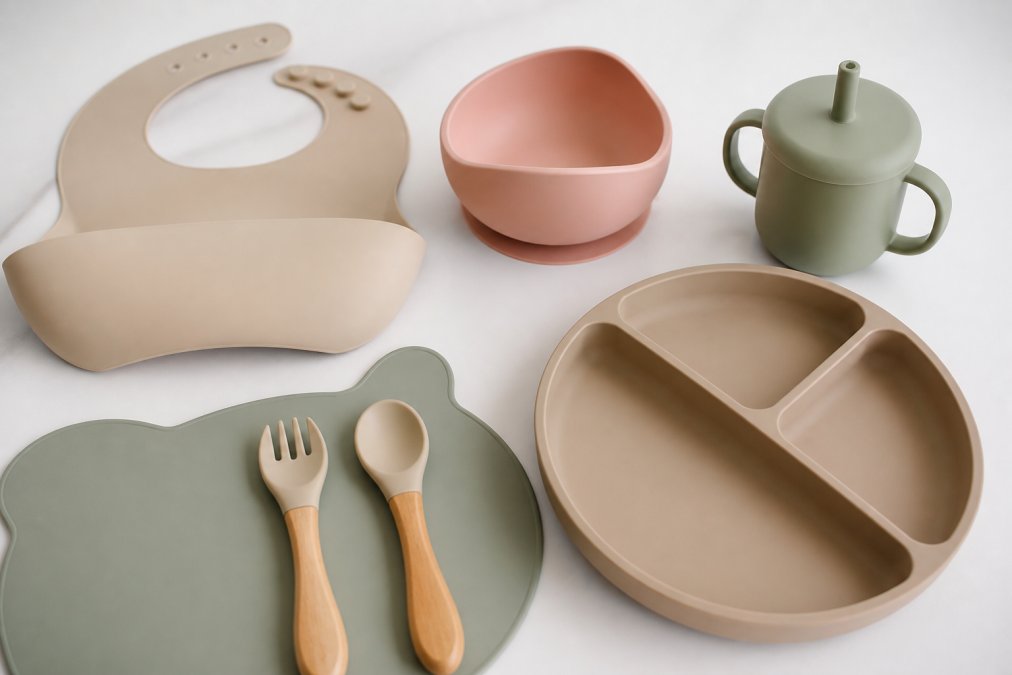
The Bub and Co Ultimate Set ($44.95) is a complete silicone feeding bundle. It includes a plate with lid, suction bowl, bib, spoon, and fork, everything needed for independent feeding. The suction bases are engineered to hold firm on most high chair trays, and the material is food-grade silicone free from BPA, PVC, and phthalates. This is a bundle that delivers on the promise of reliable, non-toxic feeding gear.

For families wanting a more comprehensive package, the My First Solid Bundle ($60.00) is a complete baby silicone feeding set designed to make mealtimes easier, safer, and less messy. This bundle is designed specifically for babies transitioning to solids and includes pieces that grow with your child through the toddler years.
The Pagi Kids Feeding Set ($39.95) offers excellent value for budget-conscious parents. It includes a pocket bib, suction bowl, ergonomic spoon, and leakproof sippy cup. The silicone is made from silica found in sand, a material that's completely inert and can be recycled at end of life. This set is particularly good for parents prioritising sustainability alongside safety.
For minimalist parents or those adding to existing gear, the Mini Bub Set ($25.00) includes a bib, suction bowl, and spoon. It's the entry point to quality silicone feeding gear and works well as a starter kit or as backup gear for travel or grandparents' houses.
The Junior Set ($44.95) is sized for toddlers who've moved past purees and are managing finger foods and small portions. It includes a suction plate, suction bowl, cup, and spoon, all scaled appropriately for independent eaters.
| Bundle | Price | Best For | Key Features |
|---|---|---|---|
| Mini Bub Set | $25.00 | Budget-conscious starters | Bib, bowl, spoon; compact |
| Pagi Kids Feeding Set | $39.95 | Sustainability focus | Recyclable silicone; sippy cup included |
| Ultimate Set | $44.95 | Most families | Complete 6-piece kit; strong suction |
| Junior Set | $44.95 | Toddler finger foods | Larger portions; independent eating |
| My First Solid Bundle | $60.00 | Comprehensive setup | Placemat, snack cup, dual suction bases |
The choice depends on your starting point and budget. If you're buying your first feeding set, the Ultimate Set delivers a good balance of features and price. If you already have some gear and want to add pieces, the Mini Bub Set works well. If you want everything covered from first purees through toddler years, the My First Solid Bundle is worth the investment.
Choosing silicone baby feeding gear that actually works means moving past brand loyalty and evaluating what matters in practice: suction reliability, material safety, and durability. Bub and Co's feeding bundles are engineered around these criteria, with food-grade silicone free from BPA, PVC, and phthalates, suction bases designed to hold firm on real high chair trays, and materials that resist staining and odour absorption. Shop the Ultimate Set, Pagi Kids Feeding Set, or My First Solid Bundle and give your child feeding gear that grows with them through multiple developmental stages.
Frequently Asked Questions
What makes silicone baby feeding gear safer than plastic alternatives?
Food-grade silicone is free from BPA, PVC, and phthalates that can leach into food when heated or over time. Silicone doesn't degrade in the dishwasher or microwave like some plastics do, meaning it maintains its integrity and doesn't release harmful chemicals. It's also hypoallergenic, making it gentle on sensitive skin and gums during the teething phase.
How do I know if a silicone feeding set will actually last with daily use?
Look for products made from high-density, food-grade silicone rated for extreme temperature changes (freezer to oven). Check that seams are reinforced and that the suction bases use durable silicone rather than cheaper rubber compounds. Stain and odour resistance is a good indicator of material quality, lower-grade silicone absorbs both quickly.
Are non-toxic baby feeding utensils worth the extra cost compared to budget plastic sets?
Non-toxic silicone utensils cost more upfront but last longer, resist staining, and don't require replacement as frequently as plastic. More importantly, they eliminate the risk of chemical exposure during critical feeding years when your baby is building their immune system. They're also easier to clean thoroughly, reducing bacterial buildup in crevices that trap food and moisture.
Can I really trust that silicone products won't stain or smell after a few weeks?
High-quality food-grade silicone naturally resists staining and odours because it doesn't have a porous structure like plastic. However, rinsing immediately after meals, especially after coloured foods like tomato or beetroot, helps preserve appearance. Hand-washing or top-rack dishwasher cleaning works best. If staining does occur, it's purely cosmetic and doesn't affect safety or function.
This article was written using GrandRanker
Leave a comment