
Table of Contents
- Why Eco Friendly Baby Plates Matter
- Quick Comparison: Our Top Eco Friendly Baby Plates
- How We Evaluated These Eco Friendly Baby Plates
- Silicone vs Bamboo Baby Plates: What to Choose
- Non-Toxic Baby Feeding Sets for Every Stage
- How to Start Baby Led Weaning With the Right Plate
- Which Eco Plate Should You Pick?
- Frequently Asked Questions
Last Updated: September 6, 2026
Why Eco Friendly Baby Plates Matter
Choosing the best eco friendly baby plates starts with a simple question: what is your child actually eating from? Many conventional plastic plates contain chemicals like BPA, phthalates, and PVC that can leach into food, especially when heated. Eco friendly baby plates made from food-grade silicone, bamboo, or plant-based fibres eliminate that risk entirely.
Bub and Co provides a range of safe, modern, and practical silicone products designed to help little ones adapt to eating. Food-grade silicone is non-porous, meaning it does not harbour bacteria, and it withstands heat and cold without breaking down, making it one of the safest materials for a toddler still learning to scoop, grip, and sometimes throw.
The best eco friendly baby plates also support sustainable living. Silicone is made from silica found in sand, and unlike petroleum-based plastics, it can be recycled at the end of its life. Below, we show you how to choose the right plate, compare the top materials, and explain which feeding sets work best at each stage of your baby's development.
Quick Comparison: Our Top Eco Friendly Baby Plates
We have narrowed the field to the feeding solutions that actually survive real-world toddler behaviour. Our top pick is the Bub and Co Rainbow Suction Plate with Lid at $17.95, because it combines a strong suction base with a three-section divider and a travel-friendly lid. For families wanting a complete setup, the Ultimate Set at $44.95 bundles a plate with lid, suction bowl, bib, spoon, and fork in one purchase.

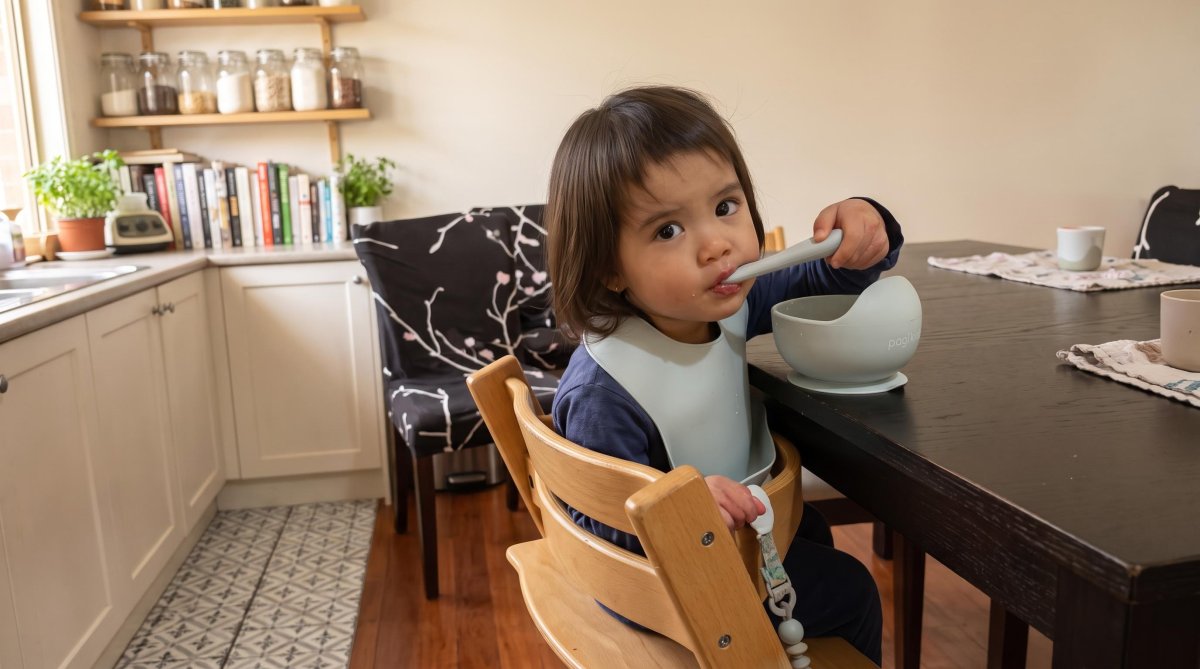
Porridge on pagi kids feeding set, suction bowl firmly secured on the table
Here is how the core options stack up against each other:
Product |
Price |
What's Included |
Best For |
|---|---|---|---|
Non Grid Suction Plate |
$14.95 |
Single plate, deep walls |
Budget-friendly self-feeding |
$17.95 |
Plate with divider and lid |
Portion control and travel |
|
$39.95 |
Bib, suction bowl, spoon, cup |
Starting solids from 6 months |
|
Junior Set |
$44.95 |
Plate, bowl, cup, spoon |
Complete everyday tableware |
$44.95 |
Plate with lid, bowl, bib, spoon, fork |
Full mealtime kit |
|
My First Solid Bundle |
$60.00 |
Bib, suction set, plate, placemat, snack cup |
All-in-one starting solids |
The single plates work well once your child is confident with self-feeding. The bundles offer better value if you are equipping a highchair for the first time, because buying pieces separately almost always costs more.
How We Evaluated These Eco Friendly Baby Plates
We assessed every plate against five criteria that matter for real mealtimes. Safety came first: every item had to be free from BPA, PVC, and phthalates, and made from food-grade materials. Durability came second, because a plate that cracks or warps after a few dishwasher cycles is not eco friendly in practice, it just ends up in landfill.
Suction strength was the third test, so we checked how firmly each plate gripped a standard highchair tray. We also looked at how easy the plates were to clean, since stain-resistant and odour-free surfaces save parents hours each week. Finally, we considered ergonomic design, including deep walls that help little ones scoop food and curved edges that are gentle on developing gums.
A common mistake is choosing a plate based on looks alone. What most guides miss is that the suction base needs a dry, non-textured surface to grip properly. If your highchair tray has ridges or a mat, even the best eco friendly baby plates will slide, so check your tray before you buy.
Silicone vs Bamboo Baby Plates: What to Choose
The silicone vs bamboo baby plates debate comes down to how you will actually use the plate. Silicone wins for babies under two because it is shatterproof, flexible, and gentle on gums. Bamboo plates look beautiful and are made from renewable resources, but they can crack if dropped and often need hand washing to maintain their finish.
But the choice is not just about durability versus aesthetics. The two materials behave very differently under Australian conditions, heat, humidity, and the daily cycle of a dishwasher, and those differences affect both safety and longevity.
Material composition and safety standards
Food-grade silicone is a synthetic polymer derived from silica (sand). In Australia, products intended for repeated food contact must comply with the Australia New Zealand Food Standards Code (Standard 3.2.2). Reputable manufacturers also test to the European standard (EC 1935/2004). "100% food-grade silicone" should mean no fillers, no BPA, no phthalates, and no lead. Cheaper blends often include fillers that can leach odours, stain easily, and break down faster in the dishwasher.
Bamboo, on the other hand, is a natural material, but the plate itself is rarely just bamboo. Most bamboo baby plates are made from bamboo fibre mixed with a binding resin, often melamine-formaldehyde. Melamine is not microwave-safe, and it can leach melamine and formaldehyde into food if heated above 70°C or used with acidic foods. The ACCC has issued recalls on melamine-containing tableware due to migration risks. If you choose bamboo, check whether it is 100% bamboo (rare and usually not dishwasher-safe) or a bamboo composite, and treat the latter like melamine: no microwave, no hot liquids, no acidic foods.
Thermal and mechanical properties
Silicone is stable from -40°C to 220°C, making it safe for boiling water, the microwave, and the freezer. It is non-porous, so it does not absorb moisture, bacteria, or food odours, making it the most hygienic option for daily feeding. A high-quality silicone plate will not warp, crack, or discolour with normal use, and it can be sterilised in boiling water or a steam steriliser.
Bamboo composite plates are rigid and can chip or crack if dropped onto a hard floor. They are porous, so they can absorb oils and strongly coloured foods like turmeric or beetroot, leaving permanent stains. Most bamboo plates are not dishwasher-safe; the heat and moisture can degrade the resin and cause warping or splitting. Hand washing with mild detergent and immediate drying is the recommended care routine.
Weight and grip
Silicone plates are lightweight but have a high-friction surface, which helps them stay put on a highchair tray even without a suction base. Bamboo plates are heavier and more rigid, which gives them a stable feel on a table, but they slide more easily on a smooth tray. If your child is still learning to scoop, a silicone plate with a suction base is far more forgiving.
Environmental impact beyond the purchase
Silicone is not biodegradable, but it is recyclable through specialised programs. In Australia, you can send clean silicone to commercial recyclers like Terracycle or check with your local council for drop-off points. Bamboo composite plates are often labelled "biodegradable," but the resin binder means they will not break down in a home compost bin. They need a commercial composting facility that can handle the resin, and those are not widely available in Australia, so most end up in landfill.
The verdict for Australian families
For most families, silicone is the practical choice for everyday feeding. It is dishwasher-safe, microwave-safe, steriliser-safe, and survives being hurled onto a tiled floor. If you want a natural material for serving bread or fruit at the table, a bamboo plate is a lovely addition, but check the label for melamine content and treat it with care.
Non-Toxic Baby Feeding Sets for Every Stage
Non-toxic baby feeding sets should match your child's developmental stage, not just their age. From around 6 months, when babies start solids, a suction bowl and an ergonomic spoon help them learn to scoop without frustration. The Pagi Kids Feeding Set at $39.95 covers this stage well, with a bib, suction bowl, spoon, and cup.
Between 8 and 12 months, most babies want to feed themselves entirely. This is where a suction plate with deep walls earns its keep. The Non Grid Suction Plate at $14.95 has no internal dividers, which suits babies who prefer to graze across a single surface, while the Rainbow Suction Plate with Lid offers three compartments for parents who like to separate foods.
Once your toddler is eating three meals a day, a complete set prevents the scramble of mismatched bowls and cups. The Junior Set and Ultimate Set, both at $44.95, give you everything needed for breakfast, lunch, and dinner. The Ultimate Set adds a bib and fork, which becomes useful as your child's pincer grip develops and they start attempting cutlery.

A question many parents ask is whether silicone is worth the switch if their 8-month-old already manages fine with plastic spoons. The answer is yes, because silicone does not contain the chemical additives found in some plastics, and it is softer on emerging teeth and sensitive gums. You are paying for peace of mind and a product that will outlast several plastic alternatives.
How to Start Baby Led Weaning With the Right Plate
Starting baby led weaning is about letting your child explore food at their own pace, and the right plate makes that possible without constant anxiety about mess. Begin with soft finger foods cut into strips that are easy for small hands to grip. Place two or three items directly on a suction plate anchored to the highchair tray, and let your child lead the interaction.
Success depends on three things: the right texture of food, a plate that stays put, and patience. Foods should be soft enough to squish between your fingers but firm enough for your baby to hold. A suction base is non-negotiable, because a sliding plate turns mealtime into a frustrating chase.
The My First Solid Bundle at $60.00 is designed specifically for this transition. It includes a silicone bib, a suction feeding set, a suction plate, a placemat, and a snack cup, covering every surface your baby will touch.

Which Eco Plate Should You Pick?
If you want a single, versatile plate that works from first solids through the toddler years, the Rainbow Suction Plate with Lid is our top recommendation. It anchors firmly to the highchair, separates foods into three sections, and the lid makes it practical for storing leftovers or packing meals for outings.
For families who prefer to buy a complete system rather than assemble pieces over time, the Ultimate Set delivers the best value at $44.95. You get a plate with lid, a suction bowl, a bib, a spoon, and a fork, everything required for successful mealtimes, in one purchase. The My First Solid Bundle at $60.00 is the better choice if you want the full suite including a placemat and snack cup from day one.
The best eco friendly baby plates are the ones that fit your routine and survive your child. Consider how many meals you prepare each day, whether you need portability, and how much storage you have. A single suction plate suits minimalist families, while a bundle suits households where grandparents, daycare, or a second carer also need feeding gear.
Choosing the right eco friendly baby plates does not need to be complicated, but it does require looking past cute designs to the material and construction underneath. Prioritise food-grade silicone that is free from BPA, PVC, and phthalates, check that the suction base suits your highchair tray, and buy a set that matches your child's current feeding stage. Bub and Co designs every plate and feeding set with these principles in mind, using stain-resistant, odour-free silicone that is dishwasher and microwave friendly for busy families. Explore the full range of feeding sets and bundles to find the setup that makes your next mealtime calmer, cleaner, and safer for your little one.
Frequently Asked Questions
What is the best non-toxic dinnerware for babies?
Food-grade silicone is the standout choice for non-toxic dinnerware. It is free from BPA, PVC and phthalates, and does not leach chemicals when heated or chilled. Silicone plates like the Rainbow Suction Plate with Lid are also shatterproof, dishwasher-safe and gentle on gums. Bamboo plates are another non-toxic option, but they can be less durable and sometimes contain binding adhesives, so check the label carefully before buying.
Are bamboo plates better than silicone for babies?
Silicone generally wins for babies still learning to self-feed. Food-grade silicone plates have a strong suction base that sticks to highchair trays, reducing tipped plates and thrown food. Bamboo plates are harder and lighter, which makes them easier for toddlers to pick up, but they do not suction down and can crack if dropped. For durability, easy cleaning and mess control, silicone is the more practical eco friendly choice.
Are silicone baby plates considered eco friendly?
Yes. Silicone starts as silica found in sand, and high-quality food-grade silicone is free from the petroleum-based fillers used in many plastics. It is highly durable, so it lasts through multiple children, and it can be recycled at specialised facilities at the end of its life. Unlike plastic, silicone does not break down into microplastics during normal use, making it a safer and more sustainable option for everyday feeding.
What should I look for in an eco friendly baby plate?
Check the material first: food-grade silicone that is BPA-free, phthalate-free and PVC-free is the safest bet. Look for a strong suction base to stop spills, deep walls so little ones can scoop food easily, and dishwasher and microwave safety for busy days. A divided plate helps with portion control and introducing new foods. For travel, a snap-on lid keeps leftovers fresh and mess-free.
Leave a comment