
Table of Contents
- What to Look for in Baby Spoons for Solids
- How to Start Baby Led Weaning with the Right Spoon
- Top Silicone Baby Feeding Sets for Starting Solids
- How to Introduce Cutlery to Babies: A Practical Approach
- Cleaning, Sterilisation and Long-Term Care
- Benefits of Silicone Utensils for Weaning
- Frequently Asked Questions
Last Updated: August 31, 2026
What to Look for in Baby Spoons for Solids
Choosing the right spoon supports developing motor skills, protects sensitive gums, and makes mealtimes safer. A shallow bowl design lets your baby scoop easily, while a soft, flexible tip protects emerging teeth and reduces gagging. Material safety is non-negotiable: food-grade silicone that's BPA-free, PVC-free, and phthalate-free ensures nothing harmful leaches into your baby's mouth.
At Bub and Co, we've designed our feeding sets with these principles front and centre. Our silicone products are made from food-grade materials that withstand heat and cold without degrading, stay stain-free after weeks of use, and make cleanup easier for busy parents.
Material Safety: BPA-Free and Food-Grade Silicone
Food-grade silicone is the gold standard for baby feeding utensils. Unlike polypropylene or melamine plastics, silicone doesn't leach endocrine-disrupting chemicals when heated or used with acidic foods. It's naturally non-porous, so bacteria can't harbour in microscopic cracks.
Confirm the spoon is free from PVC and phthalates. Food-grade silicone certified to standards like LFGB (German food safety standards) provides independent verification that the material has been tested for food contact safety. Silicone doesn't stain or retain odours the way plastic does, meaning your spoon will look and smell fresh after weeks of use and last through multiple children.
Ergonomic Handle and Shallow Bowl Design
A baby's hand is tiny, around 2-3 centimetres across at six months, so a handle designed for adult fingers will frustrate rather than help. Look for spoons with handles that are 10-12 centimetres long and thin enough for your baby's grasp to develop naturally.
A shallow, curved bowl lets your little one access food more easily and reduces the amount of puree that slides off before reaching their mouth. Soft-tip spoons made from quality silicone flex slightly, reducing discomfort and making the experience less overwhelming.
Self-Feeding vs. Parent-Led Feeding
In parent-led feeding, you control the spoon and pace, which works well for younger babies (around 4-6 months). Self-feeding, the foundation of baby-led weaning, requires a spoon your baby can grip independently, typically starting around 6-8 months once they've developed the pincer grasp and can sit upright with minimal support. For self-feeding, prioritise lightweight spoons with thin, easy-to-grip handles and shallow bowls. Many families use both approaches simultaneously.
How to Start Baby Led Weaning with the Right Spoon
Baby-led weaning (BLW) is an approach where babies self-feed from the start of solids, rather than being spoon-fed purees by a parent. It develops independence, fine motor skills, and a more adventurous relationship with food. The right spoon transforms this process from frustrating to genuinely enjoyable.
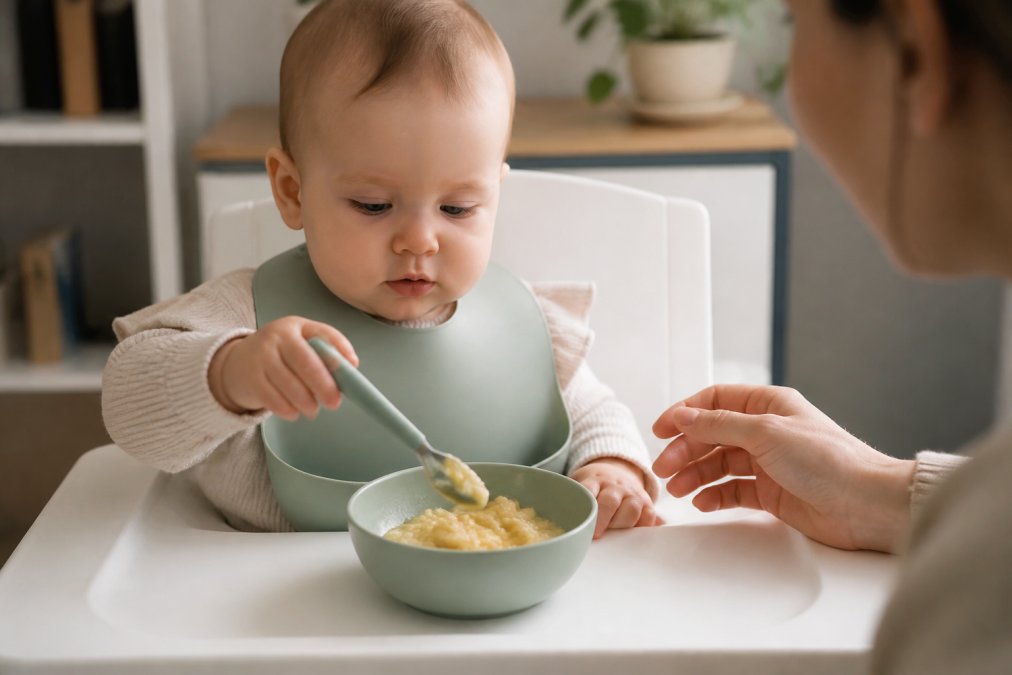
A spoon lets your baby practice the pincer grasp, develop hand-eye coordination, and experience the satisfaction of getting food into their own mouth. This builds confidence and reduces pressure on you to ensure they eat enough.
Developmental Readiness and Motor Skills
Babies show readiness for solids around 6 months, but readiness for self-feeding with a spoon develops gradually. Look for these signs: your baby can sit upright with minimal support, they've lost the tongue-thrust reflex, and they show interest in food by reaching for it or watching others eat.
Fine motor skills develop in stages. Around 5-6 months, babies develop the raking grasp. By 7-8 months, the pincer grasp emerges, where thumb and fingers work together for more precise control. Grasping a spoon, dipping it into food, and bringing it to the mouth involves coordination that takes weeks to master. The right spoon, lightweight with a shallow bowl and flexible tip, makes the learning curve gentler.
First Stage vs. Second Stage Spoons
First-stage spoons are designed for babies just starting solids (around 6 months). They're typically smaller, lighter, and have softer tips with shallow bowls that prevent overwhelming your baby.
Second-stage spoons are for babies around 8-12 months who've developed more confidence and coordination. They're slightly larger with a deeper bowl and often include a fork alongside the spoon. Watch your baby's confidence and coordination, not just their age, to determine when to progress.
Top Silicone Baby Feeding Sets for Starting Solids
The best baby spoons for solids come as part of coordinated feeding sets. A complete set removes the guesswork and ensures every piece works together to make mealtimes easier.
| Product | Price | Best For | Key Features |
|---|---|---|---|
| My First Solid Bundle | $60.00 | Complete starter kit | Includes bib, suction plate, placemat, sip cup |
| Mini Bub Set | $25.00 | Budget-conscious parents | Compact 3-piece set with wooden spoon handle |
| Pagi Kids Feeding Set | $39.95 | Ergonomic design focus | 6-piece set with soft pocket bib, leak-proof cup |
| Ultimate Set | $44.95 | Full mealtime coverage | 6-piece set with plate, bowl, bib, spoon, fork |
| Junior Set | $44.95 | Growing toddlers | Sized for independent eaters 6-12 months |
My First Solid Bundle: Complete Starter Kit
The My First Solid Bundle at $60.00 includes the Pagi Kids Feeding Set (a 6-piece silicone set with bib, suction bowl, spoon, and sippy cup), a Non-Grid Suction Plate, a Silicone Cloud Placemat, and a Sip & Snack Cup.

This bundle eliminates the need to buy pieces separately and ensures everything coordinates visually and functionally. The suction bowl and plate stick firmly to clean, dry high-chair trays, preventing flipped bowls. The silicone bib catches spills before they reach clothes, and the placemat contains mess on the table surface. Everything is dishwasher-safe and microwave-friendly.
Mini Bub Set: Compact and Affordable
The Mini Bub Set at $25.00 is the entry point for families on a tighter budget. It includes a silicone bib, suction bowl, and a matching spoon with a wooden handle.
The wooden handle provides a different tactile experience than all-silicone spoons and gives the utensil a slightly warmer feel. The spoon itself is soft silicone, so it's safe for gums, but the wooden handle requires hand-washing rather than dishwasher cleaning.
Pagi Kids Feeding Set: Ergonomic and Durable
The Pagi Kids Feeding Set at $39.95 is engineered specifically for ergonomic self-feeding. Made from food-grade silicone derived from sand (rather than petroleum-based plastics), it's completely non-toxic and can be recycled at end of life.
The set includes a pocket bib, a suction bowl with curved design for easier scooping, an ergonomic spoon, and a leak-proof sippy cup with detachable lid and internal straw. The silicone can withstand extreme temperature changes from freezer to oven without melting or cracking.
Ultimate Set: Full Mealtime Solution
The Ultimate Set at $44.95 delivers a 6-piece solution: plate with lid, suction bowl, bib, spoon, and fork. The plate with lid is practical for storing prepared meals or keeping food warm between courses. The suction base on both plate and bowl prevents flipped dishes.
This set bridges the gap between first foods and independent toddler meals. The fork is sized for toddler hands, introducing the two-utensil concept around 9-10 months. All pieces are BPA-free, food-grade silicone, dishwasher and microwave safe.
Junior Set: Growing with Your Toddler
The Junior Set at $44.95 is designed for babies moving into more independent eating (typically 8-12 months and beyond). It includes a suction plate, suction bowl, cup, and spoon, all sized for toddler hands and appetites.
The larger plate and bowl accommodate bigger portions as your baby's appetite grows. The cup is a transitional design that supports independent drinking skills. The spoon is slightly larger than first-stage versions, with a deeper bowl that holds more food per bite.
How to Introduce Cutlery to Babies: A Practical Approach
Introducing cutlery isn't about forcing your baby to use a spoon perfectly. It's about offering the tool and letting them explore at their own pace.
Timing: When Babies Are Ready for Utensils
Babies can start exploring spoons around 6 months, once they're sitting upright with minimal support and showing interest in food. At this age, you'll do most of the feeding, but letting them hold a spoon while you use another one teaches them what the tool is for. By 7-8 months, many babies will grab the spoon and attempt to bring it to their mouth. By 9-10 months, successful self-feeding with a spoon becomes more consistent, though spills remain frequent until around 12-15 months.
Progression: From Spoon to Fork and Independent Eating
The progression from parent-led feeding to independent eating happens gradually. In the first weeks, you'll load the spoon and guide it to your baby's mouth while they hold the handle. Gradually, your baby takes more control.
Around 8-9 months, introduce a second spoon or fork. Your baby uses theirs (getting food everywhere), while you use yours to ensure they're actually eating. By 12 months, many babies can self-feed with a spoon for most of a meal. By 18 months, a spoon and fork become genuine tools rather than toys. The timeline varies enormously; this is normal variation.
Cleaning, Sterilisation and Long-Term Care
One of the best baby spoons for solids is one that stays clean and fresh through weeks of daily use. Silicone's non-porous nature makes this easier than with plastic, but proper care extends the life of your feeding sets significantly.
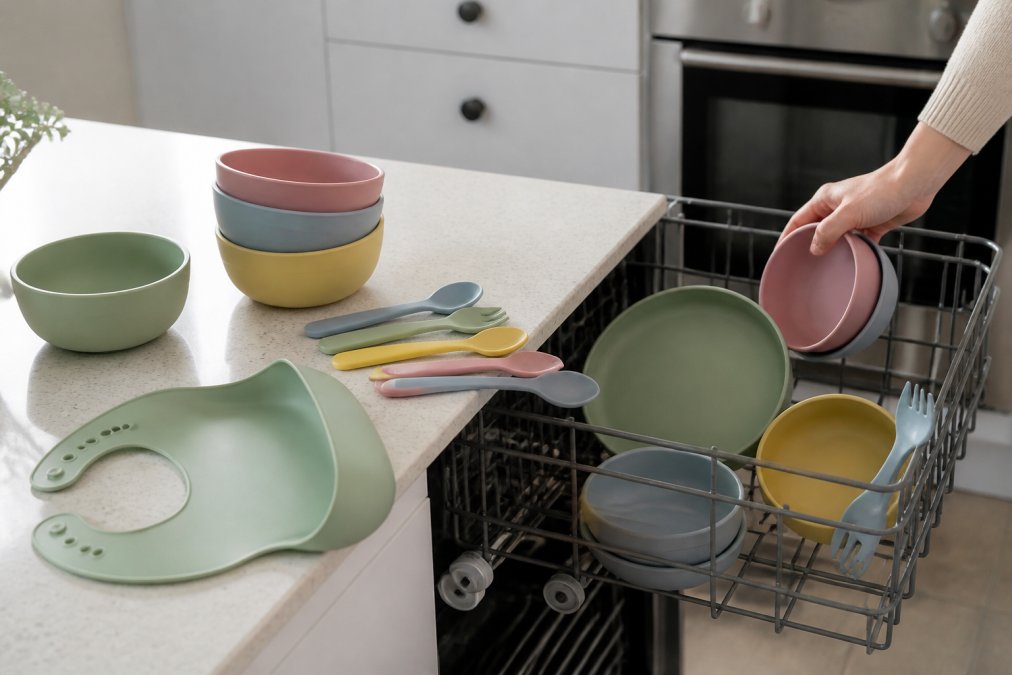
Dishwasher and Microwave Safety
Most Bub and Co silicone feeding sets are dishwasher-safe on the top rack. You can rinse after a meal and load directly into the dishwasher without hand-washing. Wooden-handled spoons (like those in the Mini Bub Set) require hand-washing to preserve the wood.

You can warm purees directly in the silicone bowl, making meal prep faster. The silicone won't leach chemicals when heated and won't melt or warp at typical microwave temperatures. Always check the temperature of the food before serving. Avoid abrasive scrubbers or scouring pads; a soft sponge and warm soapy water is sufficient for hand-washing.
Preventing Stains and Odours
Silicone resists stains and odours far better than plastic, but certain foods (tomato-based purees, beetroot, turmeric) can temporarily discolour the material. This is cosmetic, not a safety issue.
To minimise staining, rinse immediately after meals, especially after colourful foods. If staining occurs, soaking in warm water with a small amount of white vinegar for 30 minutes often lightens the discoloration. If a spoon retains a smell, soak it in baking soda and water overnight, then rinse thoroughly.
Sustainability and End-of-Life Disposal
Unlike plastic utensils that persist in landfills for centuries, silicone is genuinely sustainable at end of life. When incinerated, silicone breaks down into amorphous silica, carbon dioxide, and water vapour, inert, harmless substances.
Many silicone products, including Pagi Kids Feeding Sets, are recyclable. Check your local recycling guidelines, as acceptance varies by region. The durability of quality silicone also contributes to sustainability. A set used by multiple children over 5-10 years has a far lower environmental impact per use than cheaper plastic alternatives replaced every 2-3 years.
Benefits of Silicone Utensils for Weaning
Silicone utensils transform the weaning experience in practical, tangible ways. The stain-resistant and odour-free properties mean your feeding set looks fresh and hygienic week after week. The flexibility of silicone reduces gagging and discomfort, making mealtimes less stressful for babies with sensitive gag reflexes. The suction bases on bowls and plates genuinely prevent spills and flipped dishes, reducing mess and frustration.

Silicone utensils support your baby's independence. A lightweight spoon with a shallow bowl and soft tip is genuinely easier for a baby to use than a rigid plastic alternative. This encourages self-feeding, which builds confidence and motor skills faster than parent-led feeding alone.
Choosing the best baby spoons for solids means prioritising safety, durability, and design that actually supports your baby's development. Silicone feeding sets from Bub and Co tick every box: food-grade materials free from harmful chemicals, ergonomic designs that grow with your baby, and practical features like suction bases and stain-resistant surfaces that make daily mealtimes manageable.
Start with a set that matches your family's needs, the My First Solid Bundle if you want everything in one box, or the Mini Bub Set if you're testing the approach before committing. SHOP Feeding Sets and discover why thousands of Australian families trust Bub and Co to support their baby's weaning journey.
Frequently Asked Questions
What kind of baby spoon is best for starting solids?
The best baby spoon for starting solids is made from food-grade silicone, has a shallow bowl to prevent gagging, and features a soft, flexible tip that's gentle on developing gums. Look for spoons with ergonomic handles designed for small hands, whether you're introducing parent-led feeding or baby-led weaning. Silicone spoons are non-toxic, BPA-free, and won't break if dropped, making them ideal for messy mealtimes.
Are silicone spoons better than plastic for babies starting solids?
Yes, silicone spoons are generally better than plastic for babies. Food-grade silicone is hypoallergenic, completely non-toxic, and free from BPA and phthalates. Unlike plastic, silicone doesn't leach chemicals when heated and resists staining and odours over time. Silicone is also more durable and flexible, making it gentler on developing teeth and gums during the weaning journey.
When should a baby start using a spoon?
Babies can begin exploring spoons around 6 months when they show signs of developmental readiness: sitting upright with minimal support, showing interest in food, and developing hand-to-mouth coordination. Initially, babies may simply hold and mouth the spoon. Self-feeding with a spoon typically develops between 8-12 months as motor skills improve. Parent-led feeding with a spoon can start earlier if you're introducing purees.
How do I know if silicone baby products are microplastic-free?
Look for products made from 100% food-grade silicone that are certified free from BPA, PVC, and phthalates. Quality silicone is derived from sand (silica) rather than petroleum-based plastics, making it naturally resistant to microplastic shedding. Reputable brands provide transparency about their sourcing and manufacturing processes. When disposed of through incineration, high-quality silicone breaks down into harmless inorganic ingredients rather than releasing microplastics.
Can I buy individual spoons or do I need to purchase a full feeding set?
You can purchase individual spoons like the Suction Bowl and Spoon ($18.50) if you prefer flexibility. However, feeding bundles like the My First Solid Bundle ($60) offer better value by combining a spoon, bowl, plate, bib, and placemat in one package. Complete sets ensure all pieces coordinate, making mealtimes easier and more mess-free, though individual purchases work well if you already have other feeding essentials.
This article was written using GrandRanker
Leave a comment