
Table of Contents
- Quick Comparison: Top 5 Travel Feeding Essentials
- 1. Silicone Bib with Catch Pocket
- 2. Portable Suction Plate or Bowl
- 3. Sip-N-Snack Cup for On-the-Go Hydration and Snacks
- 4. Collapsible Silicone Lunch Box and Food Storage Containers
- 5. Insulated Bottle Bag and Portable Bottle Warmer
- Easy Clean High Chair Tray Solutions for Travel
- How to Clean Baby Bottles While Travelling
- Tips for Feeding Baby on a Plane
- Frequently Asked Questions
Last Updated: September 10, 2026
Quick Comparison: Top 5 Travel Feeding Essentials
Packing for a trip with a baby in 2026 means planning mealtimes as carefully as sleep. The best travel feeding essentials are lightweight, seal properly, and clean up without a kitchen sink. This guide from Bub and Co covers the five items that earn their place in your nappy bag, plus the cleaning and safety routines that keep travel days calm.
| Essential | Best For | Approx. Price | Key Feature |
|---|---|---|---|
| Silicone bib with catch pocket | Messy self-feeding | $14.95 | Wide scooped base |
| Portable suction plate or bowl | Wobbly café tables | $14.95-$18.50 | Strong suction base |
| Sip-N-Snack cup | Snacks and hydration | $14.95 | Two interchangeable lids |
| Collapsible silicone lunch box | Portioning and storage | $19.95 | Airtight, collapsible |
| Insulated bottle bag | Milk temperature control | Varies | Keeps bottles cool |
Buy the five items above as a set and you have covered almost every travel feeding scenario, from a domestic flight to a weekend at the grandparents'.
1. Silicone Bib with Catch Pocket
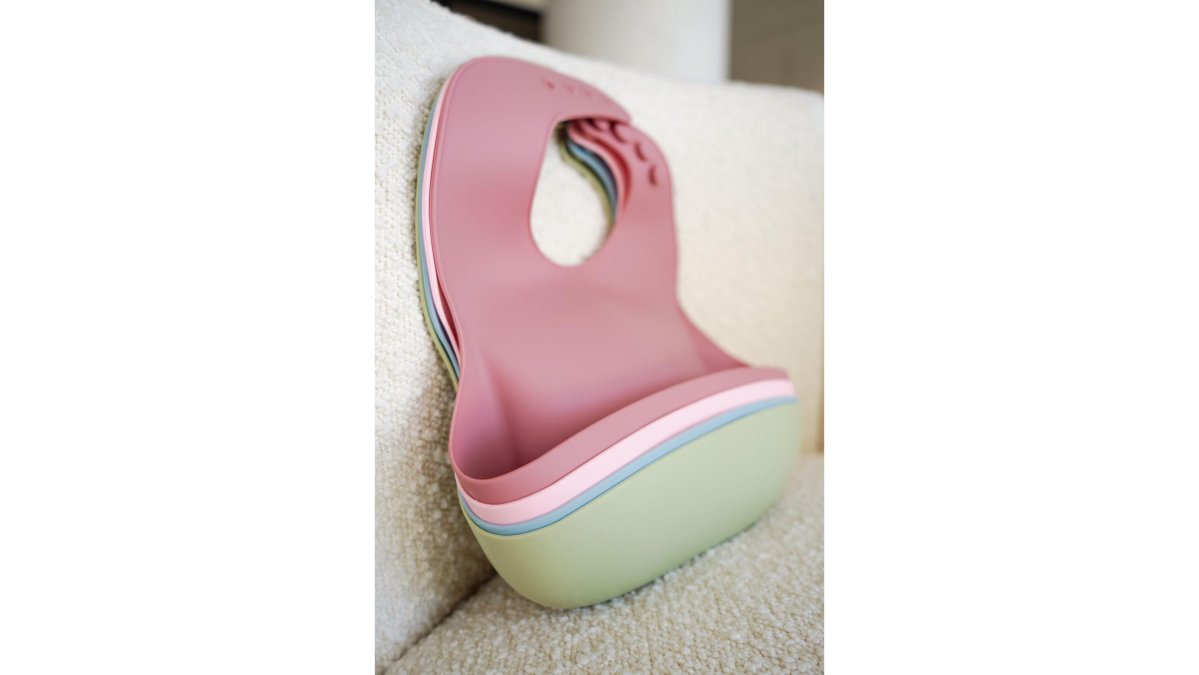
A silicone bib with a catch pocket is the highest-value travel feeding item you can pack. It replaces disposable bibs, wipes clean in seconds, and folds flat into a pocket of your bag.
What most guides miss is the collar: an adjustable one fits a four-month-old and a two-year-old on the same trip. Look for a wide scooped base rather than a shallow one, because the scoop catches dropped food instead of letting it slide onto the lap.
The Bub and Co Silicone Bib uses food-grade silicone and is free from BPA, PVC and phthalates. It wipes clean with a baby wipe on the go, goes into the dishwasher at day's end, and at $14.95 costs less than a few weeks of disposable bibs.
2. Portable Suction Plate or Bowl
A portable suction plate or bowl keeps food on the table when your baby eats from a café high chair or picnic rug. The suction base grips smooth surfaces and stops the tipping and throwing that turns every meal into a cleanup job.
Two things decide whether suction works: the surface (clean, smooth, non-textured) and the press (push down in the centre of the base on a dry surface, not the rim). Parents who skip that step conclude suction "doesn't work" when the real problem was a wet or textured table.
Deep walls matter too: deep sides make it easier for little hands to scoop food, reducing frustration and throwing. The Bub and Co Non-Grid Suction Plate is designed around both points, and the Suction Bowl and Spoon set at $18.50 is microwave and dishwasher friendly for reheating on the road.

3. Sip-N-Snack Cup for On-the-Go Hydration and Snacks
A Sip-N-Snack cup solves two problems with one item: hydration and snacks. The best versions have interchangeable lids that convert the same cup from sippy cup to snack container, cutting down on what you pack and wash.
For flights and long drives, this buys you quiet time: fill the snack side with low-mess finger food and the drink side with water. A straw lid with an anti-spill valve slows the flow, supporting straw-drinking skills and reducing gagging in babies still learning to coordinate swallowing.
The Bub and Co Sip-N-Snack Cup comes with two interchangeable lids and a removable internal silicone straw for thorough cleaning. At $14.95, it is one of the most useful items in a travel feeding kit because it works at home and away.
4. Collapsible Silicone Lunch Box and Food Storage Containers
A collapsible silicone lunch box saves space in an already-full bag. It flattens when empty and expands to hold a full meal, so you are not carrying rigid containers that take up the same room whether full or not.
Food storage containers also matter for portioning: away from home you rarely have a kitchen, so you prep at the start of the day and portion meals as you go. An airtight seal keeps food fresh and stops puree leaking into the rest of your bag.
The Bub and Co Silicone Lunch Box is made from food-grade silicone with an airtight seal, and it adjusts to different portion sizes as your baby's appetite grows. Pair it with the Sunbowl with Lid at $20.00, which has a snap-on lid for storing leftovers in a hotel fridge.
5. Insulated Bottle Bag and Portable Bottle Warmer
An insulated bottle bag keeps expressed breast milk or prepared formula at a safe temperature in transit. It is the least glamorous item on this list and the one parents most often leave behind, then regret.
The practical reality of milk on the move: keep expressed breast milk cold until needed and use it within the timeframe your health service recommends. For ready-made formula, follow the manufacturer's storage instructions on the tin. Do not improvise.
For warming, a portable bottle warmer or a thermos of hot water is far more reliable than asking a café for hot water, which arrives at unpredictable temperatures. If you are flying, check the current security screening rules for baby liquids and powders before you pack, because liquid restrictions apply to baby food and drink as well as adult liquids, with allowances for what you reasonably need for the journey.
Easy Clean High Chair Tray Solutions for Travel
Easy clean high chair tray solutions for travel come down to one principle: cover the surface before the meal, not after. A silicone placemat with a catch pocket turns any café tray or restaurant table into a food-safe, wipe-clean surface in seconds.
The Bub and Co Silicone Placemat is non-slip, made from food-grade silicone, and PVC and BPA free. It protects the table and contains the mess, which matters in someone else's space. At $14.95, it weighs almost nothing and rolls up in the bag.
If a high chair tray is textured or grooved, suction will not hold. Place the mat or plate on a smooth section, or hold the plate steady with one hand while your baby eats with the other. Not elegant, but it works.
How to Clean Baby Bottles While Travelling
Cleaning baby bottles while travelling is the part most parents underestimate. You will not always have a sink, microwave or steriliser, so the routine has to work in a hotel bathroom, service station or plane seat, and it has to change with local water quality and temperature, the two variables most guides ignore.
The travel bottle cleaning routine:
- Rinse immediately after each feed with hot water where available. Dried milk is far harder to remove than fresh milk.
- Wash with a travel-sized bottle brush and a small bottle of mild dishwashing liquid.
- If you have access to a microwave, sterilise using a microwave steam bag or a microwave-safe container following the manufacturer's instructions.
- If you have no heat source, use cold-water sterilising tablets or solution, mixed to the strength on the pack and used for the time stated on the label.
- Air dry on a clean cloth or a dedicated drying mat, upside down, away from bathroom surfaces.
- Store dry bottles assembled and sealed until the next feed.
When the water is not safe to drink
This is the gap most packing-list articles leave open. If local tap water is not safe to drink, you cannot assume it is safe to wash a bottle in, and you certainly cannot use it to mix formula.
A workable approach:
- Use bottled water for mixing formula, and check the label for the sodium and sulphate levels, because some mineral waters are not suitable for babies. Low-mineral bottled water is the safer choice where available.
- If bottled water is not available, boil water and let it cool to no more than 70°C before mixing formula, which is the temperature most manufacturers specify for killing bacteria in the powder. Let it cool further before feeding.
- For washing, use bottled or boiled-and-cooled water rather than untreated tap water, and rinse the bottle with the same water after washing.
- Cold-water sterilising tablets work with any clean water, but the water itself still needs to be safe, so use bottled or boiled water as the base.
- If you are staying somewhere with unreliable water, a small supply of ready-to-feed formula in sealed cartons removes the mixing step entirely and is worth the luggage space.
Keeping food and milk safe in hot climates
Heat changes the maths on how long anything can sit out: the warmer the environment, the shorter the safe window, and a car or beach bag in summer can sit well above ambient temperature.
- Carry milk and prepared food in an insulated bag with a frozen gel pack, and keep the bag out of direct sun and out of the boot of a car.
- Do not rely on a bottle feeling cool to the touch. If you are unsure how long it has been out, discard it rather than risk it.
- For solids, choose foods that tolerate heat well, such as plain rice, oat or vegetable purees in sealed pouches, and avoid anything with dairy or egg that has been sitting out.
- Wash hands before handling food and bottles, and carry hand sanitiser for the moments when a sink is not available. Hand hygiene is the single biggest lever on food safety when you are away from a kitchen.
- In humid conditions, dry bottles thoroughly before sealing them. Trapped moisture is where mould and odour start, and a bottle that smells musty should be rewashed and resterilised rather than used.
For sterilising advice specific to your baby's age and health needs, follow the guidance from your maternal and child health service rather than a general rule of thumb, since recommendations differ for premature babies and babies with certain medical conditions.
Tips for Feeding Baby on a Plane
Feeding a baby on a plane is manageable with the right setup. Book a window or aisle seat where you can reach your bag, pack a small feeding kit in one pouch, and keep the bib, cup and a wipe within arm's reach before takeoff.
A few things make a real difference. Offer a feed or a drink during takeoff and landing, because swallowing helps equalise pressure in little ears. Pack snacks that do not crumble, since cabin cleaning between flights is limited. And bring a spare top for yourself, because the one thing that reliably goes wrong on a flight is a spill on the adult.
Getting baby milk and food through security
This is the part most guides skip and the part that causes the most stress at screening. Baby milk, formula, breast milk, sterilised water and baby food are an exception to the standard 100 mL liquid limit, but only up to what is reasonably needed for the journey. You can carry more than 100 mL, but expect to declare it separately and have it screened.
What that looks like in practice:
- Take the milk, formula and baby food out of your carry-on and present it separately, the same way you would a laptop.
- Expect screening officers to test the liquid or ask you to open containers. In most Australian airports, officers use a non-invasive test that does not require you to open the container, but this varies by airport and by the equipment in use.
- Powder formula is generally screened separately from liquids. Pre-measured powder in a dispenser is easier to present than a full tin.
- If you are carrying expressed breast milk, you are not required to taste it, and you can ask for a private screening area if you prefer not to be screened in the open queue.
- Frozen breast milk or gel ice packs are usually permitted to keep milk cold, but they will be screened and may be subject to the same reasonable-quantity test.
Rules are set by the screening authority and applied by each airport, and airlines can add their own cabin limits on top. Confirm the current position with the official guidance on travelling with baby food and formula before you fly, and check your airline's own carry-on policy, because a carrier can restrict quantities even where screening allows them.
Mixing and storing formula in the air
If travelling with formula, pre-measure the powder into separate containers and add water when ready to feed, rather than mixing in advance, pre-mixed formula sitting at cabin temperature for hours is the scenario to avoid. To mix on board, ask cabin crew for hot water and let it cool to a safe temperature before adding powder, or carry a small thermos of cooled boiled water.
For ready-made formula, follow the manufacturer's storage instructions on the tin. Do not improvise with cabin temperatures or leftover bottles. If a feed is started and not finished within the time stated on the packaging, discard the remainder rather than saving it for later in the flight.
If you want to skip the piecemeal shopping, the My First Solid Bundle at $60.00 brings the bib, suction plate, placemat and snack cup together in one box, which is the simplest way to have a complete travel feeding kit ready before your next trip. The Ultimate Set at $44.95 covers the same ground for families who want utensils included.


Frequently Asked Questions
What are the top 5 travel feeding essentials for babies?
The five essentials are a silicone bib with a catch pocket, a portable suction plate or bowl, a 2-in-1 snack and sip cup, a collapsible silicone lunch box, and an insulated bottle bag. These cover mess control, safe feeding surfaces, hydration, food storage, and temperature control. Brands like Bub and Co offer these as individual pieces or in bundles, so you can build a kit that suits your trip length and destination.
How do I clean baby bottles while travelling?
Pack a small bottle brush, travel-sized dish soap, and a few sterilising tablets or a microwave steriliser bag. Rinse bottles immediately after use with hot water, then scrub with soap and a brush. If you do not have access to a microwave, use cold-water sterilising tablets in a clean container. Silicone bottles and accessories are easier to clean because they resist stains and odours, and many are dishwasher safe when you have access to one.
Are silicone feeding sets better for travel than plastic?
Silicone is often better for travel because it is flexible, lightweight, and withstands heat and cold without leaching chemicals. It also resists stains and odours, so it stays clean-looking trip after trip. Plastic can crack or retain smells, especially after repeated washing in different water conditions. Food-grade silicone, like the sets from Bub and Co, is free from BPA, PVC, and phthalates, making it a safer choice for your baby.
How do I keep baby feeding gear clean while travelling?
Pack a small wet bag or waterproof pouch for dirty items, and carry travel-sized dish soap and a bottle brush. Rinse items immediately after use when possible, and use sterilising tablets or a microwave bag for bottles. Silicone bibs and placemats can be wiped down with a baby-safe wipe between proper washes. At your accommodation, wash everything with hot soapy water and let it air dry completely before the next use.
What should I pack for feeding a baby on a long-haul flight?
Pack a silicone bib, a suction bowl or plate, a snack cup with a lid, ready-made formula or expressed breast milk in insulated bags, and a few disposable or reusable pouches. Include a change of clothes for baby and a burp cloth. Check airline rules for liquid restrictions before you fly. Feed during takeoff and landing to help with ear pressure, and keep everything in one easy-to-reach bag for quick access.
Leave a comment