
Table of Contents
- What Baby-Led Weaning Looks Like at Six Months
- Signs of Readiness for Solids Before You Start
- Choking vs Gagging in Babies: What Every Parent Needs to Know
- Is Baby-Led Weaning Actually Safe? What the Evidence Says
- First Foods for Baby-Led Weaning and How to Prepare Food for a 6 Month Old
- The Downsides Parents Should Weigh Up
- Gear That Makes Early Self-Feeding Safer and Easier
- Conclusion
- Frequently Asked Questions
Last Updated: October 1, 2026
What Baby-Led Weaning Looks Like at Six Months
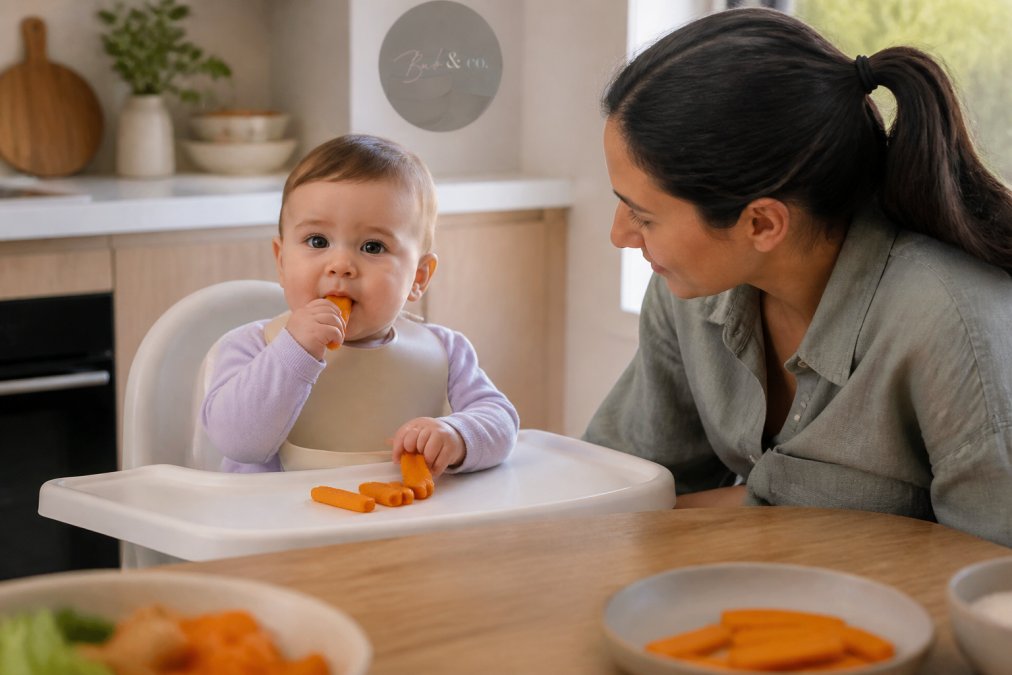
Baby led weaning is a method of introducing solid food where babies feed themselves soft, appropriately sized finger foods rather than being spoon-fed purees. At six months, your baby sits upright at the family table and explores real food with their hands, at their own pace.
How It Differs From Spoon-Feeding Purees
Spoon-feeding puts the parent in control of what goes in and how fast. Baby led weaning hands that control to your baby, who chooses what to pick up, how much to mouth, and when to stop.
- Texture: Soft finger foods from day one, rather than a gradual progression through purees
- Control: Your baby sets the pace instead of you steering the spoon
- Skills: Self-feeding builds hand-eye coordination and chewing practice early
- Mealtime: Your baby joins the family meal rather than eating separately
Signs of Readiness for Solids Before You Start
The signs of readiness for solids matter more than your baby's age on the calendar. Six months is the usual starting point, but developmental cues tell you your baby is actually ready.
Watch for all of these together:
- Sits upright with minimal support and holds their head steady
- Reaches for food and brings objects to their mouth
- Has lost the tongue-thrust reflex that pushes food back out
- Shows genuine interest in what you are eating
Why Six Months, Not Four
Around six months, most babies can sit upright, control their head, and coordinate hand-to-mouth movement well enough to manage soft food. Before that, swallowing and oral motor skills are still developing and choking risk is higher.
Choking vs Gagging in Babies: What Every Parent Needs to Know
Gagging and choking are not the same thing, and knowing the difference makes baby-led weaning feel manageable rather than terrifying. Gagging is a loud, protective reflex that pushes food forward when it gets too close to the airway. Choking is silent and means the airway is blocked.
Here is how to tell them apart:
| Sign | Gagging | Choking |
|---|---|---|
| Sound | Loud coughing or retching | Silent or squeaky |
| Face | Red, eyes watering | Pale or blue-tinged |
| Action | Baby recovers on their own | Baby cannot breathe or cry |
| Your move | Stay calm, let them work it out | Act immediately |
What to Do If a Choking Incident Happens
If your baby is silent, cannot cry, and their face is changing colour, that is choking and needs immediate action. Call emergency services on 000 and start first aid.
Is Baby-Led Weaning Actually Safe? What the Evidence Says
For most healthy, full-term babies who show the signs of readiness, baby-led weaning is considered safe when food is prepared and supervised correctly. The main concern is choking, and the evidence so far does not show that baby-led weaning increases choking risk when done properly.
Why the Choking Risk Is Lower Than It Looks
First, the gag reflex in a six-month-old sits much further forward on the tongue than in an adult. When food touches that forward zone, the baby gags and pushes it out before it reaches the airway. That is why gagging is so common early on and looks more alarming than it is.
What the Evidence Base Actually Shows
Most formal research on baby-led weaning comes from observational studies rather than randomised controlled trials, so the evidence is promising but not definitive. The consistent finding is that babies following a baby-led approach are not more likely to choke than spoon-fed babies, provided food is prepared appropriately and the baby is supervised.
The Three Non-Negotiables
- Upright posture: Your baby must sit upright with their head steady and feet supported. A reclined or slumped baby cannot manage food safely. If your highchair reclines, bring it fully upright before any food goes on the tray.
- Texture and shape: Food must be soft enough to squash between your thumb and forefinger, and cut into finger-length pieces your baby can grip with their whole fist. Round, firm, or sticky foods need modifying or avoiding.
- Active supervision: Stay within arm's reach for the entire meal. No leaving the room, no scrolling your phone, no eating at the other end of the table. Your full attention is the safety equipment.
When Baby-Led Weaning May Not Be the Right Fit
Baby-led weaning is not recommended for every baby. Speak with your child health nurse, GP, or paediatrician before starting if your baby was born prematurely, has a developmental delay, low muscle tone, feeding or swallowing difficulties, or failure to thrive or slow weight gain.
A Note on Iron and Growth
One safety consideration that gets less attention than choking is nutrition. Breast milk and formula remain the main source of nutrition at six months, but a baby's iron stores from birth begin running low around then, so iron-rich foods need to be offered deliberately.
First Foods for Baby-Led Weaning and How to Prepare Food for a 6 Month Old
First foods for baby-led weaning should be soft enough to squash between your thumb and forefinger, and cut into pieces large enough to grip with a whole fist. Preparing food for a 6 month old comes down to two rules: soft texture and a holdable size.
My First Solid Bundle – Baby Silicone →
Good starting options include:
- Soft-cooked vegetable sticks: pumpkin, sweet potato, carrot, zucchini
- Ripe fruit: banana, avocado, pear, mango
- Iron-rich foods: slow-cooked meat strips, soft-cooked lentils, well-cooked egg
- Toast fingers with a thin spread of nut butter or avocado
Texture, Size and Shape: The Safety Basics
Size and shape do more for safety than almost anything else. Aim for finger-length pieces, roughly the size of your own finger, so your baby can grip a portion with some sticking out to mouth.
The Downsides Parents Should Weigh Up
Baby-led weaning is not the right fit for every family. The mess is real, the early meals are slow, and it asks more of you at the table than spoon-feeding does.
- Mess: Expect food on the floor, the walls, and your baby's hair for months
- Wasted food: A lot of what you offer will not be eaten at first
- Iron and nutrient intake: Self-feeding makes it harder to be sure your baby gets enough iron-rich food, so offer it deliberately
- Supervision: Every meal requires your full attention, which is harder with more than one child
What to Do When Your Baby Refuses Food
Refusal is one of the most common reasons parents abandon baby-led weaning in the first month, and one of the most misunderstood. A six-month-old who turns their head away, drops food, or mouths a piece and spits it out is not rejecting the method, they are doing what a six-month-old does while learning a new skill.
- Offer, do not push. Put two or three pieces on the tray and let your baby decide. Do not hold food to their mouth or coax them.
- Eat alongside them. Babies learn by watching; if you eat the same food, they are more likely to copy you.
- Keep offering rejected foods. It can take ten or more exposures before a baby accepts a new food. Rejection on day one means nothing.
- Check the timing. An overtired, teething, or recently milk-fed baby is far less likely to engage. Try a different time of day.
Handling Early Picky Eating
Picky eating at six months is not the same as at two years, but the habits you build now matter. The goal in the first few months is not a wide range of foods, it is positive mealtimes and variety without pressure.
- Serve one familiar food alongside one new food. This gives your baby something they recognise and something to explore.
- Do not bribe, reward, or bargain. These tactics backfire and make food a battleground.
- Keep the meal short. Ten to twenty minutes is plenty at this age. If your baby is done, end the meal.
- Avoid labelling foods as "good" or "bad." Your baby is learning what food is, not learning to diet.
Budget-Friendly Baby-Led Weaning
One underrated advantage of baby-led weaning is that it can cost less than jars and pouches, because your baby eats a modified version of the family meal. Plan the family meal with the baby in mind rather than cooking separately.
- Cook once, serve twice. Roast a tray of pumpkin, sweet potato, and zucchini. The family eats it as a side; your baby gets finger-length sticks.
- Use what is in season. Seasonal vegetables and fruit are cheaper and often softer, making them easier to prepare safely.
- Freeze portions. Cooked vegetable sticks, meat strips, and lentil patties freeze well. Weekend batch cooking cuts midweek preparation.
- Skip the specialist baby food aisle. You do not need baby-specific products to do baby-led weaning safely. A soft-cooked carrot is a soft-cooked carrot.
The Emotional Load Nobody Mentions
The practical downsides are easy to list. The emotional ones are harder to talk about. Many parents find the first month of baby-led weaning genuinely stressful, not because anything is going wrong, but because the method asks you to trust your baby with a process you cannot control.
Gear That Makes Early Self-Feeding Safer and Easier
The right setup reduces frustration for both of you. A stable highchair that supports upright sitting is the foundation, because a slumped baby cannot manage food safely. The gear that helps most stays put and cleans up fast.
Conclusion
Starting solids raises a hundred small worries, and choking tops the list for most parents. The reassuring part is that baby-led weaning is well within reach when your baby is ready, the food is prepared safely, and you stay close at every meal.
Frequently Asked Questions
Can a 6 month old do baby-led weaning?
Yes, if your baby shows the signs of readiness for solids: sitting upright with minimal support, steady head control, reaching for food, and bringing objects to their mouth. Most babies reach these developmental milestones around six months. If your baby was born prematurely, check with your child health nurse or GP before starting, as readiness may come later. Starting before these signs appear raises the risk of choking and means your baby is not yet able to move food around their mouth safely.
What are the main safety concerns with baby-led weaning?
Choking is the concern parents raise most, but the evidence does not show baby-led weaning causes more choking than spoon-feeding when parents follow safety basics. The real risks come from the wrong food shapes, such as whole grapes, raw hard vegetables and round chunks, plus babies starting before they can sit upright. Gagging is common and normal in the early weeks as babies learn to move food forward. Always supervise meals, seat your baby upright, and never leave them alone with food.
How can I minimise the risk of choking during baby-led weaning?
Cut food into finger-length strips about the size of your adult finger so your baby can grip it with a fist and gnaw the end. Cook hard vegetables until soft enough to squash between your thumb and forefinger. Avoid round, firm foods like whole grapes, raw carrot and nuts. Seat your baby upright at the table, never reclined or moving around, and stay within arm's reach for the whole meal. Learning infant choking first aid before you start is worth the hour it takes.
How does baby-led weaning differ from traditional spoon-feeding?
Traditional spoon-feeding starts with purees and parents controlling the spoon, moving to lumpier textures over months. Baby-led weaning skips purees and offers soft finger foods from the start, letting your baby pick up and chew food at their own pace. Both approaches can work, and many families combine them. The main practical differences are mess, meal length and how much your baby controls. Self-feeding from six months supports hand-eye coordination and pincer grasp development as your baby practises picking food up.
What are the negatives of baby-led weaning?
Expect more mess, longer meals and some food waste in the early months. Iron intake can lag if you rely only on fruit and vegetables, so include iron-rich foods like well-cooked meat, lentils and fortified cereals. Some babies gag more visibly at first, which worries parents even though it is normal. Growth tracking matters too, since it is harder to see how much your baby has eaten. Weigh these against the benefits with your child health nurse if you are unsure.
Leave a comment