
Table of Contents
- 10 Healthy Baby Food Meal Ideas for 8 Months
- 1. Iron-Rich Oat Porridge with Peanut Butter
- 2. Sweet Potato and Chickpea Mash
- 3. Soft Chicken and Broccoli Pieces
- 4. Egg Noodles with Pureed Vegetables
- 5. Mild Macaroni and Cheese with Cauliflower
- 6. French Toast Fingers with Yogurt
- 7. Lamb and Quinoa Balls
- Quick Reference: The 10 Meals at a Glance
- Building an 8-Month Meal Plan Around These Ideas
- Making Mealtimes Easier with the Right Gear
- Frequently Asked Questions
Last Updated: October 5, 2026
10 Healthy Baby Food Meal Ideas for 8 Months
By eight months, most babies are ready for more than smooth purees. This guide from Bub and Co walks through 10 healthy baby food meal ideas for 8 months, each built around soft textures, iron-rich ingredients and easy self-feeding.
Eight months is a sweet spot. Your baby can likely sit up with support, grab things with a whole-hand grip, and bring food to their mouth. That means lumpy mashes, soft finger foods and meals they can mostly handle themselves are now on the table. The 10 meals below take minutes to prepare from everyday ingredients, and each one works for both spoon-feeding and baby-led weaning.
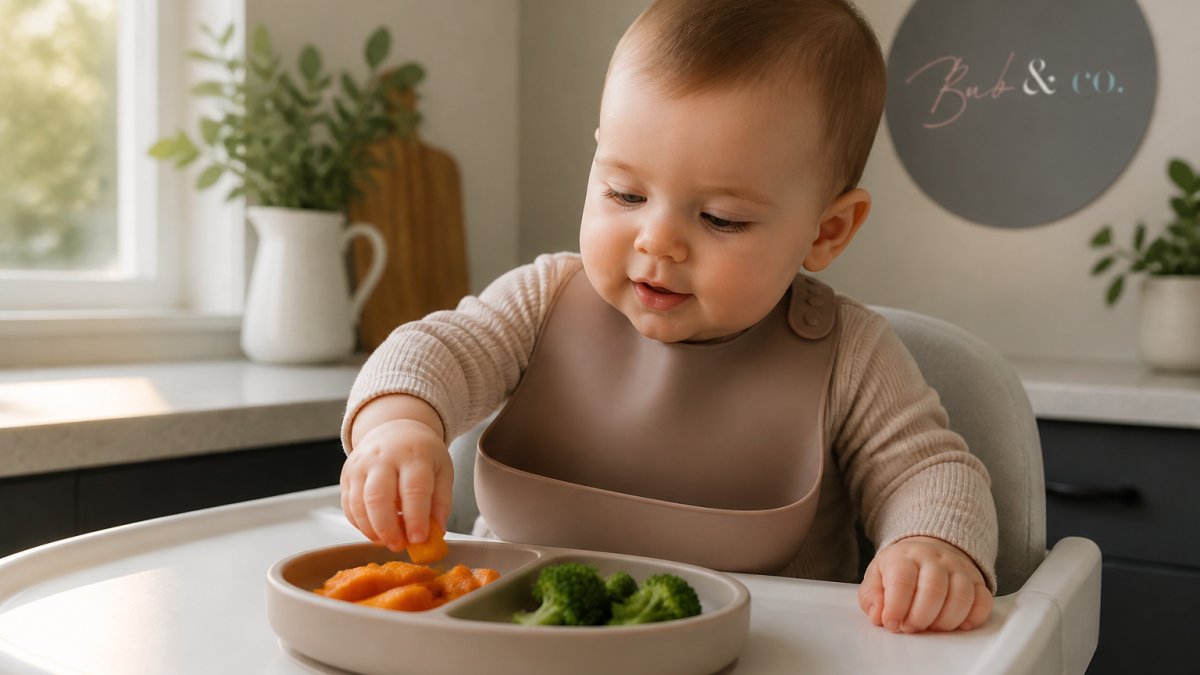
What Changes at 8 Months
Texture and independence are the two big shifts. Your baby's tongue now moves food side to side for chewing, and their pincer grasp is starting to develop, so they can pick up smaller pieces than they could a month ago.
Three things to keep in mind:
- Texture: Move from smooth puree to mashed, lumpy and soft finger foods. Aim for food you can squash easily between your thumb and forefinger.
- Iron: Iron stores from birth start running low around six months, so include an iron-rich food at most meals. Raising Children Network on introducing solids outlines what to offer and when.
- Milk feeds: Solids complement milk, not replace it. Breast milk or formula stays the main drink until around 12 months.
1. Iron-Rich Oat Porridge with Peanut Butter
Porridge is the easiest iron vehicle at breakfast. Cook rolled oats in water or full-fat milk until soft, then stir through a spoon of smooth peanut butter while it's still warm so it melts through.
Peanut butter is one of the allergens worth introducing early. Offer a thin smear rather than a thick blob, and watch your baby for the first few minutes. If your family has a history of allergy, talk to your GP or child health nurse first.
Thin the porridge with extra milk if it's too stiff for your baby to manage. For older appetites, leave it thicker so they can practise scooping.
2. Sweet Potato and Chickpea Mash
Sweet potato and chickpea mash is soft, naturally sweet and rich in iron and plant protein. Roast or steam sweet potato until it collapses under a fork, then mash with well-cooked, skinless chickpeas and a splash of olive oil.
Chickpeas need to be very soft. If you're using canned chickpeas, rinse them well and squash each one between your fingers before serving. Leave some lumps for texture practice.
This mash freezes well in ice-cube trays, so make a double batch and reheat portions through the week.
3. Soft Chicken and Broccoli Pieces
Poached or slow-cooked chicken shredded into small, soft strands gives your baby protein and iron in a self-feeding format. Steam broccoli florets until the stems bend, then cut them into pieces small enough to grip.
Chicken can dry out quickly. Poaching it in unsalted stock or water keeps it moist, which matters when little gums are doing the chewing.
Serve the chicken and broccoli side by side rather than mixed, so your baby can explore each texture on its own.
4. Egg Noodles with Pureed Vegetables
Egg noodles are a handy finger food once cooked past al dente. Cook them until soft, then toss with a pureed vegetable sauce made from pumpkin, carrot or zucchini.
The sauce clings to the noodles, which helps your baby get vegetables in without needing a spoon. Cut longer noodles into short lengths so they're easy to pick up.
5. Mild Macaroni and Cheese with Cauliflower
Macaroni and cheese works for babies when you keep it simple. Cook small pasta shapes until very soft, then fold through a mild cheese sauce with steamed cauliflower mashed into it.
Skip added salt. Cheese already brings plenty of flavour, and a baby's kidneys don't need extra sodium. A little grated cheese stirred through warm pasta melts without needing a heavy sauce.
Cauliflower disappears into the sauce, which makes this a quiet way to keep offering a vegetable your baby may have pushed away before.
My first solid bundle - FREE Shipping →
6. French Toast Fingers with Yogurt
French toast fingers are a breakfast and lunch crossover that babies can hold themselves. Whisk an egg with a splash of milk, dip strips of soft bread, and cook in a lightly oiled pan until set through.
Cut the strips about the width of two adult fingers so they're easy to grip. Serve with plain, full-fat yogurt for dipping, which adds protein and healthy fats.
Check the egg is fully cooked, and let the strips cool before serving so they don't burn small hands.
7. Lamb and Quinoa Balls
Lamb and quinoa balls deliver iron, protein and healthy fats in one bite-sized package. Combine cooked quinoa with minced lamb, a grated vegetable and a beaten egg, then bake until firm.
Quinoa is a useful grain for babies because it's soft and holds together well in patties. Lamb brings haem iron, which the body absorbs more easily than plant sources.
Make them ahead and freeze. They defrost overnight and can be served warm or cold, which makes them a practical lunchbox option later on.
Quick Reference: The 10 Meals at a Glance
Use this table as a planning shortcut. The texture column assumes an eight-month-old who is comfortable with lumps; drop back a rung on the texture ladder if your baby is still mostly on smooth purees. Portion guidance is a starting point, not a target, follow your baby's cues.
| # | Meal | Key Nutrient | Texture | Typical Portion to Start | Make-Ahead |
|---|---|---|---|---|---|
| 1 | Oat porridge with peanut butter | Iron, healthy fats | Thick mash | 2-3 tbsp | Cook fresh; porridge does not freeze well |
| 2 | Sweet potato and chickpea mash | Iron, plant protein | Soft lumps | 2-3 tbsp | Freezes well in ice-cube trays, up to 1 month |
| 3 | Soft chicken and broccoli | Protein, haem iron | Finger food | A small fistful of each | Cook and shred; refrigerate 1-2 days or freeze |
| 4 | Egg noodles with vegetable puree | Carbohydrates, veg | Soft strands | 2-3 tbsp | Sauce freezes; noodles best fresh |
| 5 | Mild macaroni and cheese with cauliflower | Calcium, veg | Soft pasta | 3-4 tbsp | Sauce freezes; pasta best fresh |
| 6 | French toast fingers with yogurt | Protein, fats | Finger food | 2-3 fingers | Cook fresh; batter does not store |
| 7 | Lamb and quinoa balls | Iron, protein | Firm patties | 1-2 balls | Freeze cooked, up to 1 month |
| 8 | Lentil and pumpkin dhal with soft rice | Iron, plant protein | Thick mash | 3-4 tbsp | Freezes well, up to 1 month |
| 9 | Salmon and potato patties | Omega-3, protein | Firm patties | 1-2 patties | Freeze cooked, up to 1 month |
| 10 | Mashed avocado on soft toast fingers | Healthy fats | Finger food | 1 slice of soft bread | Assemble fresh |
How to adapt any meal for texture
If your baby is still on smooth purees, blend or mash the same recipe until it drips off the spoon. If they are managing lumps, leave small soft pieces. If they are self-feeding confidently, shape the mixture into patties or strips they can grip. The recipe does not change, only the form does.
Storage and reheating basics
Cool cooked food quickly, then refrigerate within two hours. Most cooked baby meals keep 1-2 days in the fridge and up to 1 month in the freezer. Freeze in ice-cube trays for purees and mashes, or in small lidded containers for patties and portions. Reheat until piping hot throughout, then let it cool to a safe temperature before serving. Reheat only once, and never refreeze thawed food.
Building an 8-Month Meal Plan Around These Ideas
A simple 8-month meal plan rotates the meals above across three meals and one or two snacks. Milk feeds continue on demand around them.
- Breakfast: Oat porridge or French toast fingers
- Morning snack: Soft fruit pieces or yogurt
- Lunch: Egg noodles or lamb and quinoa balls
- Afternoon snack: Mashed avocado on soft toast
- Dinner: Sweet potato mash, chicken and broccoli, or macaroni and cheese
Cook once, portion, and refrigerate or freeze. Most of these meals reheat in under a minute, which keeps weeknights manageable.
Making Mealtimes Easier with the Right Gear
Self-feeding is messy by design, and the right setup cuts down on cleanup without getting in your baby's way. Bub and Co makes food-grade silicone feeding sets that are free from BPA, PVC and phthalates, with suction bases that grip smooth highchair trays.
The Pagi Kids Feeding Set ($39.95) covers the basics: a pocket bib, a suction bowl, a soft ergonomic spoon and a leakproof sippy cup. For families starting out, the My First Solid Bundle ($60 delivered) adds a suction plate, placemat and snack cup. Everything is dishwasher safe, stain-resistant and built to last from first tastes into the toddler years.


Introducing solids at eight months brings its own challenges: new textures, unpredictable appetites and a highchair that looks like a crime scene by the end of lunch. Bub and Co makes that stage easier with food-grade silicone feeding sets that are free from BPA, PVC and phthalates, stain-resistant and dishwasher safe, so cleanup takes minutes instead of scrubbing. Shop the range and get free Australia-wide shipping on the bundle, with soft, durable pieces designed to help your little one adapt to eating.
Frequently Asked Questions
What meals should my 8-month-old be eating?
At 8 months, your baby can eat a variety of soft, manageable foods three times a day plus small snacks. Offer iron-rich options like oat porridge, pureed meats, and mashed chickpeas. Include fruits, vegetables, and healthy fats such as avocado or full-fat yogurt. Texture should be soft enough to squash between your fingers. Always supervise meals and avoid added sugar or salt.
What finger foods can an 8-month-old eat?
Soft finger foods cut into strips or small pieces work well: cooked sweet potato, broccoli florets, banana, avocado, soft chicken, egg noodles, and toast fingers. Avoid round, hard foods like whole grapes or raw carrot. For baby-led weaning meals at 8 months, aim for pieces about the size of your adult finger so they are easy to grip and gum.
How many meals a day should an 8-month-old have?
Most 8-month-olds eat three meals a day plus one or two snacks. Milk feeds (breastmilk or formula) remain the main source of nutrition, so offer solids after milk. Start with small portions and increase as your baby's appetite grows. A baby meal plan 8 months can help you balance iron, protein, and healthy fats across the day.
Can you give Weet-Bix to an 8-month-old?
Plain Weet-Bix can be offered from 8 months if softened with milk or warm water and cut into manageable pieces. Choose the original low-sugar variety and avoid added honey or sugar. Many parents mix it with fruit puree or yogurt for extra flavour and nutrition. Always supervise and ensure the texture is soft enough to prevent choking.
How should food be cut for an 8-month-old doing baby-led weaning?
Cut food into finger-length strips (about 5-7 cm) for easy gripping, or small pea-sized pieces for pincer grasp practice. Soft foods like banana can be halved and peeled partway. Avoid coin-shaped rounds. For meats, serve shredded or in soft meatballs. Always test that food squashes easily between your fingers before serving.
Leave a comment