
Table of Contents
- Why Silicone Stains and What You Need Before You Start
- How to Clean Silicone Baby Spoons and Everyday Kitchenware
- Natural Ways to Remove Stains from Silicone
- Tackling Stubborn Grease and Odours
- Preventing Food Stains on Silicone Feeding Sets
- Material Degradation Risks and Visual Troubleshooting
- Frequently Asked Questions
Last Updated: September 21, 2026
Why Silicone Stains and What You Need Before You Start
Silicone stains because its surface is slightly porous at a microscopic level, and food pigments from sauces like tomato and turmeric settle into those tiny gaps. The good news: in most cases you can remove stains from silicone with items already in your kitchen.
This guide from Bub and Co walks through every method that works, plus the ones that quietly ruin your gear.
Before you start, grab a few basics:
- A soft sponge or microfibre cloth
- Mild dish detergent
- Bicarbonate soda (baking soda)
- Hydrogen peroxide (3% solution)
- A soft-bristled brush, like a clean toothbrush
- A bowl for soaking
Skip anything abrasive. Steel wool and scouring pads scratch the surface, which makes future staining worse.
How to Clean Silicone Baby Spoons and Everyday Kitchenware
Cleaning silicone baby spoons takes about two minutes if you do it straight after a meal. Rinse under warm water, then wash with mild detergent and a soft sponge. That daily habit prevents most discoloration from ever setting in.
For everyday kitchenware, the routine is the same:
- Scrape off leftover food with a silicone spatula, not a knife.
- Soak in warm soapy water for 10 minutes.
- Wipe with a soft sponge.
- Rinse thoroughly and air dry.
Heat resistance matters here. Food-grade silicone handles dishwasher and microwave use without leaching chemicals, so a dishwasher cycle on a normal setting is fine for most pieces. Just avoid the heated drying cycle if you want to extend the life of thinner items.
Natural Ways to Remove Stains from Silicone
Natural cleaners handle most stains without harsh chemicals, but the two methods below work on different principles and suit different stains. Knowing which to reach for saves you repeat scrubbing.
Baking Soda and Water Paste
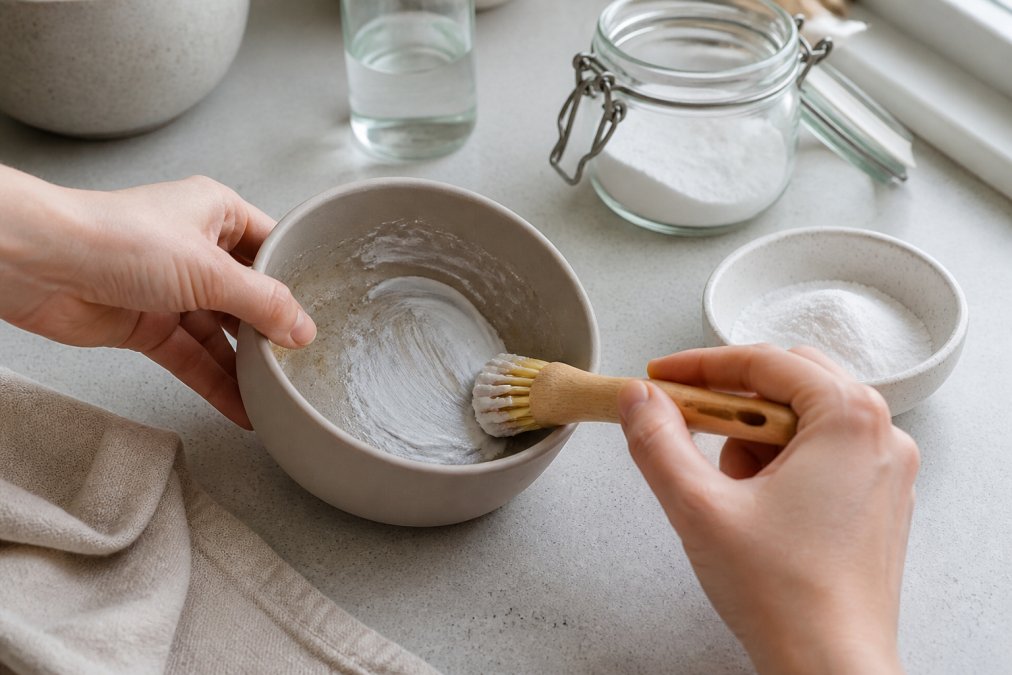
Bicarbonate soda works two ways: the fine crystals provide a gentle abrasive action that lifts pigment from the surface, while its mild alkalinity helps break down acidic food dyes like tomato and berry. Mix two parts bicarbonate soda with one part water until you get a thick paste, roughly the consistency of toothpaste. Too runny and it slides off; too thick and it won't spread into the microscopic pores where pigment sits.
Apply the paste to the stained area with your fingers or a soft brush. Let it sit for 15 to 30 minutes. The waiting time matters more than the scrubbing, because the paste needs contact time to draw pigment out of the surface. Then scrub gently in circles, rinse well, and check the result. For light stains, one round is usually enough. For deeper ones, repeat up to three times before trying a different method.
A common mistake is scrubbing hard with a dry brush and no paste. That abrades the surface without lifting the stain, and it creates micro-scratches that trap more pigment next time.
Hydrogen Peroxide Soaking Method
Hydrogen peroxide works differently. It releases oxygen as it breaks down, and that oxygen attacks the coloured compounds in the stain, bleaching them out. This is why it handles turmeric and curry, which baking soda struggles with, far better than an abrasive ever could.
Dilute 3% hydrogen peroxide with equal parts warm water in a bowl. Submerge the stained item and soak for 30 minutes to two hours, depending on how deep the stain goes. Check every 30 minutes. Rinse thoroughly afterwards. Never mix hydrogen peroxide with vinegar in the same container, and keep it away from anything metal, because it reacts and degrades.
According to health and safety guidance on household chemicals, hydrogen peroxide should always be stored away from children and used in a ventilated space.
Which Method for Which Stain
| Stain Type | Best Method | Why |
|---|---|---|
| Tomato, berry, beetroot | Bicarbonate paste | Acidic dye lifts with mild alkaline abrasive |
| Turmeric, curry, mustard | Hydrogen peroxide soak | Oxygen bleaching breaks down the pigment |
| Grease or oil film | Warm detergent wash first | Removes the oil layer so other methods can reach the stain |
| Mixed food stains | Detergent wash, then paste | Degrease before treating colour |
If you're unsure, start with the gentler bicarbonate paste. It's safe to repeat and won't degrade the surface, whereas peroxide is a chemical treatment that should be used sparingly.
Tackling Stubborn Grease and Odours
Grease buildup and lingering smells need a different approach from colour stains. Warm water alone won't shift oil that has settled into the surface, and odours often cling long after the visible mess is gone.
Start with a degreasing wash:
- Mix a few drops of mild detergent with warm water.
- Add a spoonful of bicarbonate soda to lift the oil.
- Rub the surface with your fingers or a soft brush for one minute.
- Rinse with hot water.
For odours, soak the item in a bowl of warm water with a splash of white vinegar for 20 minutes. Rinse and air dry in direct sunlight, which helps neutralise smells naturally. Sunlight exposure also acts as a mild sanitiser, though it should be brief to avoid long-term fading.
If a smell persists after two rounds, the odour has likely absorbed into the polymer itself. At that point, replacement is the safer call, especially for anything your baby eats from.
Preventing Food Stains on Silicone Feeding Sets
Prevention beats scrubbing every time. A few small habits keep silicone feeding sets looking new for far longer, and they take seconds to build into your routine.
- Rinse immediately after each meal, before food dries.
- Avoid leaving tomato, turmeric, or curry residue overnight.
- Skip abrasive sponges and harsh chemical cleaners.
- Store pieces dry, not stacked while damp.
- Rotate items so no single piece takes all the wear.
The same logic applies to everyday maintenance. A quick daily wash and a deep clean once a week is all most families need. Stain-resistant and odour-free designs make this easier, which is exactly what we build into every Bub and Co feeding set.
Our Silicone Bib and Silicone Placemats are both $14.95 and wipe clean in seconds, so there's less to scrub later.


Material Degradation Risks and Visual Troubleshooting
Not all silicone is the same, and not all stains are equal. Knowing the difference saves you from scrubbing a problem that cleaning can't fix, and from throwing away gear that's perfectly fine.
Why Silicone Degrades
Silicone is a polymer chain, and that chain can break down. Heat, repeated chemical exposure, and abrasive scrubbing all accelerate the process. When the polymer cross-links break, the surface loses its smooth finish and becomes tacky. A tacky surface attracts and holds grease and pigment far more aggressively than a smooth one, which is why a degraded item seems to stain faster no matter how well you clean it.
Surface Stain vs Absorbed Stain
A surface stain sits on or just below the silicone surface and responds to cleaning. An absorbed stain has migrated into the polymer matrix itself, usually after the item sat dirty for days or was exposed to a strong pigment like turmeric under heat. Absorbed stains fade over time but rarely disappear completely.
Here's a quick troubleshooting guide:
| What You See | Likely Cause | What To Do |
|---|---|---|
| Light orange or red tint | Tomato or pasta sauce | Bicarbonate paste, 15-30 min |
| Deep yellow patch | Curry or turmeric | Hydrogen peroxide soak |
| Grey or cloudy film | Grease buildup | Warm detergent wash |
| Tacky or sticky feel | Surface degradation | Replace the item |
| Persistent smell | Absorbed odour | Vinegar soak, then replace if it stays |
| Stain that fades but returns | Absorbed pigment | Accept it or replace; cleaning won't fix it |
Frequently Asked Questions
Will vinegar damage silicone?
White vinegar is generally safe for food-grade silicone when used as a diluted soak. Its mild acidity helps break down residue and odours without harming the material. However, avoid prolonged soaking in undiluted vinegar, as this can affect the surface over time. For best results, mix equal parts water and vinegar, soak for 30 minutes, then wash thoroughly with mild detergent and warm water before use.
Is it safe to use baking soda on silicone baby spoons?
Yes, baking soda is a safe and effective cleaner for silicone baby spoons. It is non-toxic and mildly abrasive, making it ideal for lifting stains without scratching the surface. Mix baking soda with water to form a paste, apply it to the stained area, and let it sit for 15 to 20 minutes. Gently scrub with a soft brush, then rinse well. This method works particularly well on turmeric and tomato-based stains.
Why does silicone absorb food colours?
Silicone is a porous material, meaning it has tiny openings that can trap pigments from colourful foods like pasta sauce, curry, and turmeric. This is why silicone feeding sets sometimes develop orange or yellow tints over time. While this discoloration is usually harmless, it can be minimised by rinsing promptly after meals and using natural stain removal methods like baking soda paste or hydrogen peroxide soaks.
How do I prevent future stains on silicone feeding sets?
Prevention starts with quick action. Rinse silicone items immediately after use to stop pigments from setting. Avoid leaving them in direct sunlight, which can cause yellowing. For oily foods, wash with warm water and mild detergent before stains dry. Regularly deep clean with a baking soda paste or a diluted vinegar soak. Choosing stain-resistant products, like those from Bub and Co, also helps reduce discoloration over time.
Leave a comment