
Table of Contents
- Why Cleaning Silicone Teething Toys Matters
- How to Clean Silicone Teething Toys with Warm Soapy Water
- Can Silicone Teethers Go in the Dishwasher
- How to Disinfect Baby Toys That Go in the Mouth
- How Often to Clean Baby Teething Toys
- When to Replace a Silicone Teether
- Safe Cleaning Products and What to Avoid
- Frequently Asked Questions
Last Updated: October 10, 2026
Why Cleaning Silicone Teething Toys Matters
Silicone teething toys go directly into your baby's mouth multiple times daily, collecting saliva, food particles, and bacteria. Keeping them clean protects your baby's health during this vulnerable developmental stage.
Babies aged 3 months and up use teething toys to soothe sore gums while their immune systems are still developing.
Regular cleaning prevents staining and odour buildup, extending the lifespan of clean silicone teething toys. This guide covers methods from warm water rinses to thorough disinfection.
How to Clean Silicone Teething Toys with Warm Soapy Water
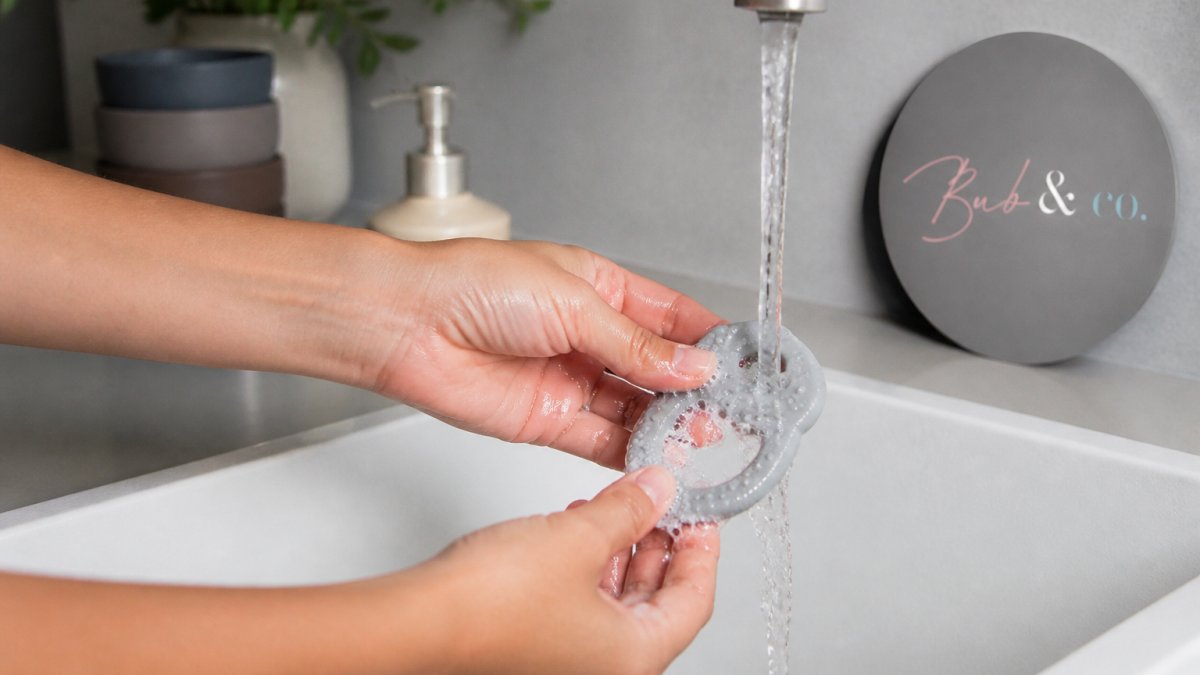
Warm soapy water is the safest daily cleaning method, removing food residue, saliva, and surface bacteria without harsh chemicals or heat damage.
Step-by-step cleaning process
Follow these steps each time your baby finishes using the teether:
- Rinse under warm running water for 10-15 seconds to loosen debris.
- Apply mild, fragrance-free dish soap and avoid antibacterial soaps.
- Scrub gently with your fingers, including textured areas and seams.
- Rinse thoroughly until all soap is gone.
- Air-dry completely on a clean cloth or drying rack to prevent mould.
Drying your teether properly
Never store a wet teether; moisture causes mould and mildew. Air-dry upright on a clean cloth or drying rack. If your teether has a wooden handle, dry the wood separately from the silicone to prevent water damage.
Can Silicone Teethers Go in the Dishwasher
Dishwasher safety depends on your teether's construction. Always check the manufacturer's care label before placing any teether in the dishwasher.
Material-specific dishwasher rules
Solid silicone teethers are generally dishwasher-safe on the top rack, which operates at lower temperatures and gentler pressure than the bottom rack.
Teethers with wooden handles should not go in the dishwasher; water causes swelling, warping, and splitting.
Teethers with fabric, ribbon, or attached toys have seams that weaken in the dishwasher. Hand-wash instead.
Fluid-filled or gel-filled teethers risk seal compromise and leakage. Always hand-wash.
Teethers with internal joints or moving parts trap water, creating mould pockets. Hand-wash instead.
How to safely use the dishwasher
If your teether's label confirms dishwasher safety: place on the top rack only, select air-dry (not heat-dry), use a mesh bag for small teethers, run a standard or eco cycle, and remove and air-dry immediately after.
Dishwasher versus hand-washing: when to choose each
Dishwasher cleaning removes residue but doesn't disinfect as thoroughly as boiling. Hand-washing is gentler on mixed-material teethers and gives you control over drying.
Use the dishwasher for solid silicone teethers when the label permits and you can air-dry immediately. Always hand-wash if the label advises against it, or if the teether has wood, fabric, or internal filling.
How to Disinfect Baby Toys That Go in the Mouth
Cleaning removes visible dirt; disinfecting kills bacteria that cleaning may miss. For toys in your baby's mouth, occasional disinfection adds extra protection.
Boiling water sterilisation
Boiling is the most effective way to sanitise silicone teethers without chemicals. The high heat kills most bacteria and viruses.
To sterilise by boiling:
- Fill a pot with water and bring it to a rolling boil.
- Carefully place the teether in the boiling water using tongs or a slotted spoon.
- Leave it submerged for 5 minutes.
- Remove with tongs and place on a clean cloth to cool and air-dry completely.
Check your teether's care instructions before boiling; most solid silicone teethers tolerate it, but fluid-filled or delicate ones may not. Never boil longer than 5 minutes, as extended heat damages silicone.
When to sanitise versus when to simply wash
Daily warm soapy water cleaning is sufficient for most situations. Sanitise by boiling when your baby has been ill, the teether was dropped on a dirty surface, multiple babies will use it, or your baby has a weakened immune system. Over-sterilising wears out teethers faster.
How Often to Clean Baby Teething Toys
Clean your teether every time your baby finishes using it to prevent bacteria buildup. For active teething, this may mean 4-6 times daily. If unused for more than a day or two, rinse and dry before use again. Establish a simple routine: rinse with warm water and mild soap after each use, then air-dry.
When to Replace a Silicone Teether
Even durable silicone teethers have a finite lifespan. Knowing when to replace yours prevents your baby from using a damaged or contaminated toy. The key is regular inspection and understanding the difference between cosmetic wear and genuine safety concerns.
How to inspect your teether weekly
During each cleaning session, spend 30 seconds on a thorough inspection:
- Hold it up to bright light and look for any cracks, splits, or thin patches in the silicone. Cracks create crevices where bacteria hide and multiply, and they can expand with use.
- Feel the entire surface with your fingers, paying attention to seams, joints, and textured areas. Rough edges, soft spots, or areas where the silicone feels sticky or slimy indicate degradation.
- Check for discolouration that won't wash away. Permanent yellowing, browning, or dark spots may indicate mould growth inside the material or bacterial colonisation.
- Squeeze gently (if it's a squeaky toy or has moveable parts). If it feels weak, loses its bounce, or makes a different sound, the silicone is breaking down.
- Look for chunks missing or pieces broken off. Even small fragments are a choking hazard and a sign the teether is failing.
Signs that replacement is necessary
Replace immediately if you see:
- Visible cracks, tears, or splits, These are entry points for bacteria and can widen during use, creating a choking risk.
- Chunks missing or pieces broken off, A choking hazard and a sign of structural failure.
- Holes or punctures, Water and bacteria can enter and become trapped inside.
- Seams separating or peeling, The teether is coming apart and pieces may detach.
- Persistent staining that won't wash away, Indicates mould or bacterial growth embedded in the silicone. A single soak in warm water with white vinegar (1 part vinegar to 3 parts water for 15-20 minutes) followed by gentle scrubbing may help; if the stain remains, the teether should be replaced.
- Sticky, slimy, or tacky residue after cleaning, Suggests the silicone is degrading or harbouring trapped moisture and bacteria that cleaning cannot remove.
- Permanent odour that persists after washing and drying, Often indicates bacterial or mould growth that has penetrated the material.
- Loss of shape or deformation, If the teether no longer holds its original form, it may not be safe for your baby to grip, and the silicone structure is compromised.
Normal wear versus replacement triggers
Light staining or discolouration from food, formula, or use is cosmetic and does not require replacement. Silicone naturally yellows slightly over time with exposure to light and heat.
Minor surface scratches from normal use are not a safety concern, provided they are shallow and the silicone underneath is intact.
Slight odour that appears after storage and disappears after a thorough wash is normal and not a sign of damage.
Expected lifespan and replacement timeline
With daily use and proper cleaning, most high-quality solid silicone teethers last 6-12 months before showing significant wear. Teethers with wooden handles, fabric, or internal filling typically have a shorter lifespan of 3-6 months, as these materials degrade faster.
Factors that shorten lifespan:
- Frequent boiling, Repeated heat exposure degrades silicone faster. Reserve boiling for occasional disinfection, not daily cleaning.
- Storage in warm, damp environments, Bathrooms and nappy bags create conditions for mould growth and material breakdown.
- Exposure to direct sunlight, UV light accelerates silicone degradation and yellowing.
- Aggressive scrubbing or abrasive cleaners, Scratches and damage weaken the material.
- Teething intensity, Babies who chew heavily or for extended periods wear teethers faster than light users.
Teethers used less frequently (a few times per week) may last 12-18 months or longer.
Storage to extend lifespan
Store teethers in a cool, dry place away from direct sunlight. A clean, breathable container (not an airtight plastic bag, which traps moisture) helps prevent mould and odour. If you refrigerate teethers for soothing, remove them promptly after use and allow them to air-dry fully before storage.
Safe Cleaning Products and What to Avoid
Stick to warm water and mild, fragrance-free dish soap for daily cleaning. This is the safest approach and all you need for routine maintenance.
Avoid these products:
- Antibacterial soaps, Unnecessary for baby toys and can leave harmful residue
- Bleach or harsh chemicals, Can damage silicone and leave toxic residue your baby ingests
- Scented soaps or lotions, Fragrances can irritate your baby's mouth and gums
- Abrasive scrubbers or scouring pads, Can scratch and damage the silicone surface
- Boiling for extended periods, More than 5 minutes can degrade the material
For disinfection, boiling water is your safest chemical-free option. If you want an alternative, a dilute white vinegar soak (1 part vinegar to 3 parts water for 15-20 minutes) can help remove stubborn residue, though it's not a true disinfectant.
Always rinse thoroughly after any cleaning method to ensure no residue remains on the toy before your baby uses it.
| Cleaning Method | Best For | Frequency | Time Required |
|---|---|---|---|
| Warm soapy water | Daily cleaning | After each use | 2 minutes |
| Dishwasher (top rack) | Batch cleaning | 2-3 times weekly | 1 hour |
| Boiling water | Disinfection | After illness or contamination | 10 minutes |
| Vinegar soak | Stubborn stains | As needed | 20 minutes |
Keeping your baby's teething toys clean is straightforward when you know the right methods. At Bub and Co, we design our silicone teethers, including the Ring Teether and Koala Teethers, to withstand regular cleaning and maintain their safety and durability throughout your baby's teething journey.

Frequently Asked Questions
How often should you wash silicone teething toys?
Clean your silicone teething toys after each use with warm soapy water. This removes food residue, saliva, and bacteria that accumulate during teething. If your baby drops the teether on a surface, rinse it immediately before returning it. A daily deep clean or sanitisation with boiling water is recommended if your baby is unwell or you want extra assurance, though regular washing with mild soap is sufficient for daily use.
Can silicone teethers go in the dishwasher?
Yes, most silicone teethers are dishwasher-safe and can be placed on the top rack with your regular dishes. Check the manufacturer's care instructions on your product's package label first, as some may have specific temperature limits. The top rack is gentler than the bottom and avoids exposure to the heating element. Dishwasher cleaning is effective for removing food and bacteria, though hand-washing with warm soapy water works equally well for daily cleaning.
Do I need to sanitise teething toys, or is washing enough?
Regular washing with warm soapy water and mild soap removes food residue and germs from daily use. Sanitising with boiling water is optional but recommended if your baby is unwell, recovering from illness, or if you want extra reassurance. Boil the teether for 5 minutes to sterilise it. For healthy babies with no signs of infection, daily hand-washing or dishwasher cleaning is sufficient to keep the toy clean and safe.
When should you replace a silicone teether?
Replace your silicone teether if you notice cracks, tears, or visible damage that could pose a choking risk. If the teether develops persistent staining or odour that doesn't wash away, it's time for a new one. Also inspect the surface regularly for any signs of wear. Most quality silicone teethers last several months with proper care, but individual toys may need replacing sooner depending on how heavily they're used and whether damage occurs.
Leave a comment