
Table of Contents
- Quick Comparison: Top Teething Toys at a Glance
- When Do Babies Start Teething and Show Readiness
- How to Soothe a Teething Baby: Materials That Work
- 1. Teether Bundle: Mix and Match Relief at $30
- 2. Ring Teether: Lightweight Grip for Sensory Play
- 3. Silicone and Wood Teethers: Dual-Material Comfort
- Teething Toys for Baby Led Weaning: Preparing Gums
- Safety, Cleaning, and Care for Teething Toys
Last Updated: August 28, 2026
Quick Comparison: Top Teething Toys at a Glance
Choosing the right teething toy matters: the wrong material leaches chemicals, poor design frustrates tiny hands, and toys that can't be properly cleaned become breeding grounds for bacteria. The right teether soothes inflamed gums, supports sensory development, and stays clean.
This guide from Bub and Co covers the best teething toys for infants, focusing on safety, durability, and genuine relief. We've analysed what makes certain materials superior, why design matters for motor skill development, and how to avoid hidden pitfalls.
| Teether Type | Best For | Key Feature | Price Range |
|---|---|---|---|
| Teether Bundle (Mix & Match) | Multiple relief options | Pick any 3, save instantly | $30.00 |
| Ring Teether | Lightweight grip & sensory play | Easy-grip design for tiny hands | $14.95 |
| Silicone & Wood Teethers | Dual-material comfort | Wood handle + silicone chewing surface | $14.95 |
| Single Silicone Teethers | Budget-conscious parents | Food-grade silicone in fun shapes | $9.95-$14.95 |
When Do Babies Start Teething and Show Readiness
Most babies show signs of teething between 4 and 7 months, though some don't start until closer to 12 months (aap.org). What matters is recognising readiness signs, not hitting a specific age.

Signs include increased drooling, swollen or tender gums, chewing on fingers or objects, and mild discomfort affecting feeding or sleep. Some babies become irritable; others sail through with minimal fussiness. Watch for gum sensitivity itself, not age-based assumptions.
Food-grade silicone teethers work best once your baby shows readiness signs. Starting around 3-4 months aligns with when most babies develop the motor control to hold and manipulate a teether independently, supporting both relief and motor skill development.
How to Soothe a Teething Baby: Materials That Work
Not all teething toy materials are created equal. Your choice determines whether your baby gets genuine relief, whether the toy leaches chemicals, and how long it lasts.
Food-grade silicone is the gold standard. It's soft enough to protect emerging teeth and tender gums, yet durable enough to withstand constant chewing without degrading. Unlike plastic alternatives, silicone doesn't leach BPA, PVC, or phthalates, chemicals linked to endocrine disruption (peer-reviewed research). It resists staining and odour, staying fresh after weeks of daily use. Textured surfaces provide gentle gum massage, which many parents report reduces discomfort more effectively than smooth alternatives.
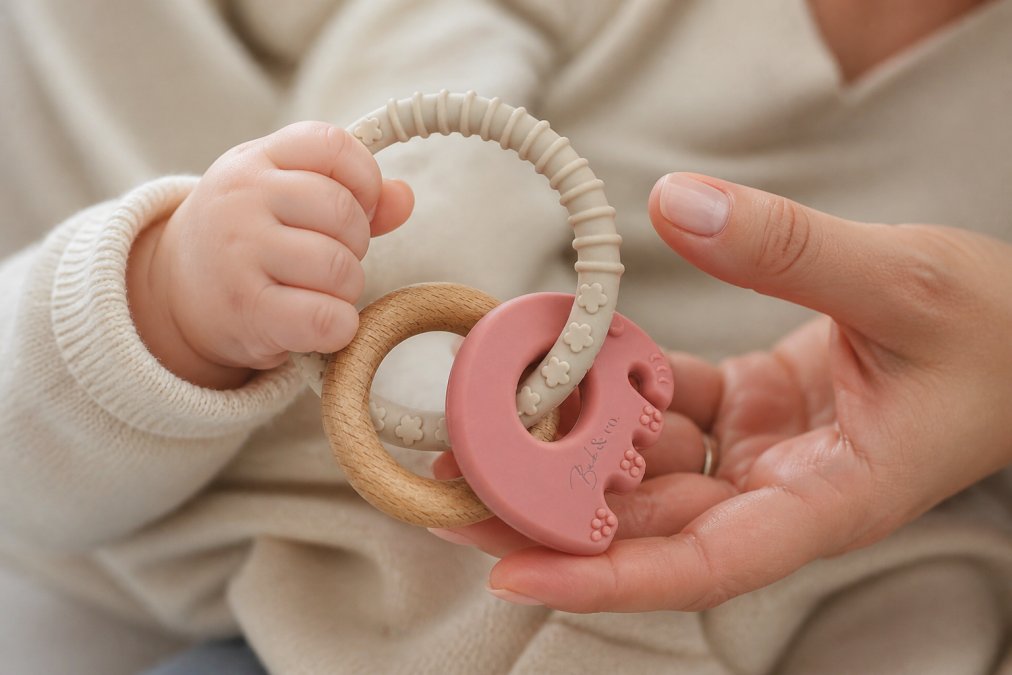
Natural rubber (from rubber trees, not synthetic) is another solid option. It's hypoallergenic, biodegradable, and free from synthetic chemicals. However, it's softer than silicone and degrades faster with heavy chewing. Natural rubber teethers work well for babies preferring a softer feel or parents prioritising sustainability, but typically don't last as long as silicone.
Untreated wood paired with silicone combines the best of both materials. The wood handle helps babies grip and develop fine motor control, while the silicone chewing surface provides safe, effective gum relief. This dual-material approach supports oral development by encouraging different grasping patterns. Wood handles also feel different in the mouth, stimulating sensory exploration during this critical developmental window.
Avoid plastic teethers unless explicitly food-grade silicone. Many contain phthalates or softeners that leach into saliva with repeated chewing. Gel-filled teethers pose a different risk: if the gel leaks, babies ingest unknown substances. Stick with solid materials you can verify.
1. Teether Bundle: Mix and Match Relief at $30
The Teether Bundle from Bub and Co lets you pick any 3 food-grade silicone teethers for $30, instantly saving compared to buying individually.
This matters because babies' preferences change. What soothes one week might frustrate the next. Having multiple options means you're never caught without relief, and your baby gets variety that supports sensory development.
Each teether is made from 100% food-grade silicone, free from BPA, PVC, and phthalates. The collection includes fun shapes, stars, flowers, koalas, paw prints, appealing to different sensory preferences. Some have textured ridges for gum massage; others have smoother surfaces for lighter relief. Ergonomic design ensures tiny hands can grip and hold independently, building fine motor skills while soothing.
What works: The mix-and-match model means you're not locked into one design. You can test what your baby prefers before committing to full-price individual purchases. Dishwasher-safe construction makes cleaning effortless. The $30 price point for three teethers is genuinely competitive.
What to consider: You're choosing blind if you haven't handled the different shapes. Some babies prefer ring designs; others like varied textures of shaped teethers. Ordering the bundle means committing to three without seeing them in person first, though returns are straightforward.
2. Ring Teether: Lightweight Grip for Sensory Play
The Ring Teether from Bub and Co prioritises what matters most: an easy grip that tiny hands can actually hold independently. The simple ring design is functional. Babies as young as 3-4 months can grasp and manipulate a ring without frustration, building hand-eye coordination while getting genuine gum relief.
Made from 100% food-grade silicone, it's soft enough for emerging teeth yet durable enough to withstand months of daily chewing. The textured surface provides gentle massage for sore gums. At $14.95, it's one of the most affordable individual teethers without sacrificing safety or quality.
What works: The lightweight design means even very young babies can hold it without tiring. The simple shape appeals to sensory exploration. Dishwasher safe and fridge-safe, it's genuinely convenient. Bright colours stimulate visual development.
What to consider: The ring design offers less textural variety than shaped teethers. If your baby prefers complex surfaces or different shapes, a single ring might not hold their attention as long. It's ideal as a first teether or as part of a collection.
3. Silicone and Wood Teethers: Dual-Material Comfort
Teethers combining untreated wood handles with 100% silicone chewing surfaces represent smarter design. The wood gives babies something substantial to grip, supporting the grasping reflex and fine motor development, while the silicone provides safe, effective gum relief. This dual-material approach encourages different hand positions and grip strengths, supporting oral development in ways single-material teethers can't.
Bub and Co offers several wood-and-silicone combinations: the Koala Teether, Paw Print Teether, Silicone & Wood Flower Teether, and the Helm Silicone Teether. Each combines the same material philosophy with different shapes, all priced at $14.95.


The wood is untreated (no varnish, stain, or chemical finish), making it safe for constant chewing. The silicone portions are food-grade and free from BPA, PVC, and phthalates. The contrast between materials provides sensory variety that stimulates exploration.
What works: Babies naturally prefer having something to grip. The wood handle satisfies this instinct while the silicone chewing surface delivers relief. The variety of shapes appeals to different sensory preferences. These teethers are durable.
What to consider: The wood requires care. Dishwasher safe, but prolonged soaking can damage wood. Hand washing is often better for longevity. If your baby prefers all-silicone toys, the wood component might feel foreign.
Teething Toys for Baby Led Weaning: Preparing Gums
Teething toys serve double duty once you're introducing solid foods. They relieve gum discomfort while preparing your baby's mouth for the varied textures of real food. This connection between teething relief and feeding readiness is often overlooked but critical for smooth baby-led weaning.
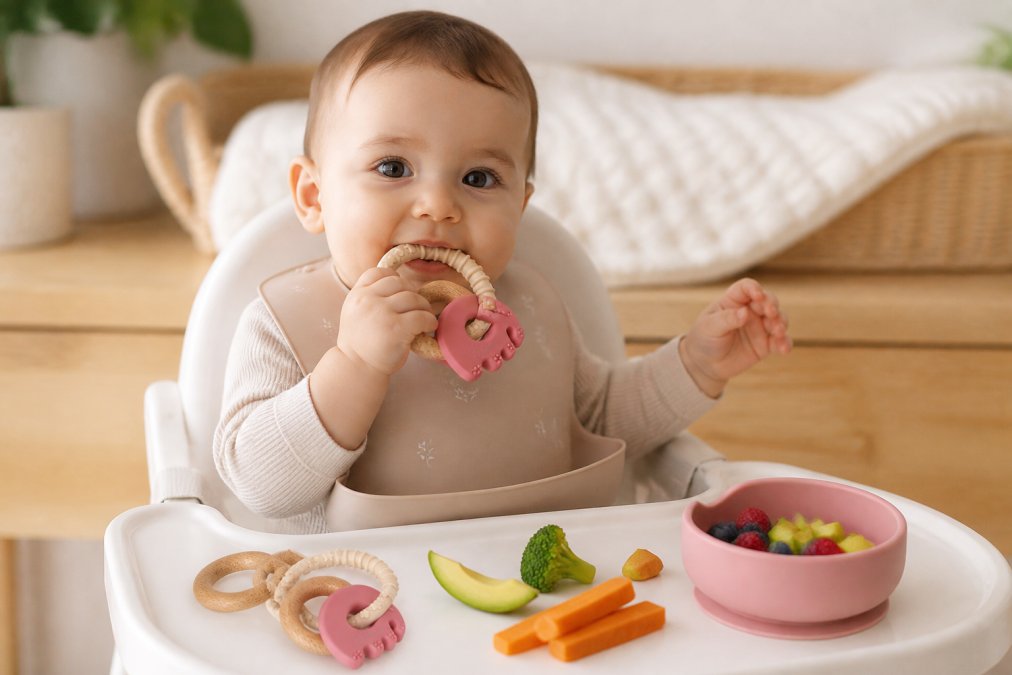
Babies who've spent weeks chewing teethers have already learned to manipulate objects in their mouths, control their gag reflex to some degree, and explore different textures. This experience makes the transition to solid foods less overwhelming. A baby comfortable holding and chewing a silicone teether is more likely to confidently grasp and explore food.
Textured surfaces on quality teethers, ridges, bumps, and varied firmness, mirror the textures babies encounter when eating. Soft vegetables, firmer fruits, and grainy textures all feel different in the mouth. Teethers with varied surface textures prepare gums and mouth muscles for this sensory range.
For baby-led weaning, choose teethers with ergonomic handles that encourage independent holding. Shaped teethers (stars, flowers, wheels) work better than smooth rings because they give babies multiple grip points and encourage different hand positions.
The Teether Bundle becomes particularly valuable here. Having multiple shapes means your baby experiences different textures and grip challenges, all translating directly to feeding skills.
Timing matters: start teethers around 3-4 months, introduce solid foods around 6 months. By the time you're ready for baby-led weaning, your baby has months of experience manipulating objects orally, smoothing the feeding transition.
Safety, Cleaning, and Care for Teething Toys
Safety starts with material choice, which is why food-grade silicone and untreated wood matter. But material alone isn't enough. How you clean, store, and monitor teethers determines whether they remain safe over months of daily use.
Cleaning teething toys properly prevents bacterial growth and mould. Food-grade silicone teethers are dishwasher safe (top rack, usually). Hand washing with warm soapy water works equally well and is gentler on wood-and-silicone combinations. Thorough drying is key; moisture trapped in crevices can encourage mould growth.
Sterilisation isn't necessary for older babies (4+ months), but many parents sterilise teethers before first use or if a baby has been unwell. Steam sterilisers work well for silicone teethers. Avoid boiling, which can damage the material over time.
Storage matters. Keep teethers in a clean, dry place. Open-air drying after washing is fine; storing damp teethers in a closed container encourages mould. If chilling in the fridge, store in a sealed container to prevent cross-contamination with food.
Inspect regularly. Even quality teethers can develop small tears or cracks with heavy use. Check weekly for damage. If you notice splitting silicone or splintering wood, retire that teether. Damaged toys pose choking hazards.
Choking prevention is non-negotiable. All teethers sold in Australia must meet AS/NZS ISO 8124 toy safety standards, which includes choking hazard testing. Always supervise teething. Never leave a baby alone with a teether, and remove any toy if your baby shows signs of distress.
Temperature safety. Chilling teethers in the fridge (10-15 minutes) provides soothing relief. Freezing solid is unnecessary and can damage teeth. Never use boiling water to heat teethers; extreme heat can damage silicone and wood.
Choosing the right teething toy comes down to three factors: safe materials, thoughtful design, and honest assessment of what your baby actually needs. Food-grade silicone teethers from Bub and Co tick all three boxes. The Teether Bundle at $30 gives you flexibility to discover your baby's preferences without overspending, whilst individual options like the Ring Teether and wood-and-silicone combinations provide targeted solutions for different ages and preferences. Start early, supervise consistently, and clean thoroughly, and your baby's teething phase becomes manageable rather than miserable.
Frequently Asked Questions
Q: What teething toys are safest for infants?
A: The safest teething toys are made from 100% food-grade silicone that is BPA-free, phthalate-free, and non-toxic. Look for products tested to AS/NZS ISO 8124 safety standards for toys. Avoid items with small detachable parts, and always supervise use. Silicone teethers like those from Bub and Co are specifically designed with soft, flexible surfaces that are gentle on delicate gums while remaining durable for emerging teeth.
Q: When do babies start teething and need relief?
A: Most babies begin teething between 4 and 6 months of age, though some start as early as 3 months or as late as 12 months. Early signs include increased drooling, swollen gums, chewing on fingers or objects, and mild discomfort. Having teething toys on hand from around 3 months means you're prepared when sore gums appear. Food-grade silicone teethers provide safe gum massage and sensory relief during this developmental phase.
Q: Are silicone teething toys safe for infants?
A: Yes, food-grade silicone teething toys are safe when they meet safety standards and are used under supervision. Food-grade silicone does not leach chemicals and withstands heat and cold without breaking down. Products free from BPA, PVC, and phthalates offer additional peace of mind. The Teether Bundle from Bub and Co ($30) lets you choose three non-toxic silicone teethers, each tested for safety compliance.
Q: How do I clean and maintain teething toys?
A: Most food-grade silicone teethers are dishwasher safe on the top rack or can be hand-washed with warm soapy water. They can also be sterilised in a steam steriliser. Unlike toys with hidden crevices, solid silicone designs have no places for mould to hide. You can chill teethers in the fridge for soothing relief, but avoid the freezer to protect delicate gums. Stain-resistant silicone resists discolouration and odour over time.
Q: What teething toys work best for baby-led weaning?
A: Teething toys for baby-led weaning should support gum massage while encouraging grasping and self-feeding skills. Silicone and wood combination teethers (like the Koala or Paw Print Teethers at $14.95) give babies a handle to hold independently while chewing on soft silicone. Ring-shaped teethers promote finger grip and sensory exploration. These designs help prepare gums for solid food introduction while building fine motor skills and oral development.
This article was written using GrandRanker
Leave a comment