
Table of Contents
- Why Breakfast Matters in Baby Led Weaning
- Iron-Rich Breakfast for Toddlers: What to Serve and Why
- Easy Finger Food Breakfast Recipes for Self-Feeding
- Toddler Breakfast Meal Prep Ideas for Busy Mornings
- Safe Serving and Choking Prevention at Breakfast
- Breakfast for Picky Eaters and Budget-Friendly Swaps
- Frequently Asked Questions
Last Updated: September 13, 2026
Why Breakfast Matters in Baby Led Weaning
A baby led weaning breakfast is the most reliable meal of the day for establishing a routine. Your toddler wakes up hungry, alert, and willing to try new textures, which makes the first meal a natural training ground for self-feeding.
A baby led weaning breakfast does more than fill a small stomach. It sets the tone for the day's iron intake, introduces routine around the table, and gives your toddler repeated practice with the pincer grasp, chewing, and the gag reflex that protects them during meals. The Raising Children Network guide to starting solids notes that offering a variety of textures early helps children accept a wider range of foods later.
Morning is also when most toddlers are least tired. Attempting a new food at 6pm, after a long day, rarely goes well. Attempting it at 7am usually does.
Iron-Rich Breakfast for Toddlers: What to Serve and Why
Iron is the nutrient that matters most at breakfast. By around six months, a baby's stored iron from birth begins to run low, and breastmilk or formula alone no longer covers the gap. An iron-rich breakfast for toddlers should include at least one of these at most morning meals: egg, iron-fortified infant cereal, well-cooked legumes, smooth nut paste, or finely shredded meat.
Pairing iron with a source of vitamin C improves how much the body absorbs. This is not a small detail. A breakfast of plain oats and milk delivers iron, but adding mashed berries, a few segments of soft orange, or cooked tomato shifts the equation meaningfully.
| Iron Source | Easy Breakfast Format | Vitamin C Partner |
|---|---|---|
| Egg | Scrambled or soft-cooked strips | Cooked capsicum strips |
| Iron-fortified cereal | Porridge with fruit puree | Mashed berries |
| Lentils or chickpeas | Soft patties or hummus on toast | Tomato slices |
| Nut paste | Spread thinly on toast fingers | Orange segments |
| Shredded meat | Slow-cooked and shredded | Cooked broccoli florets |
Combining Iron with Vitamin C for Better Absorption
Serving iron and vitamin C in the same meal is the simplest nutritional upgrade you can make at breakfast. A common mistake is offering fruit hours after the iron-rich food, which misses most of the benefit. Put them on the plate together and let your toddler decide what to eat first.
Easy Finger Food Breakfast Recipes for Self-Feeding
Easy finger food breakfast recipes work best when they follow one rule: the food must hold its shape in a small fist. If it crumbles on contact, it becomes frustration rather than food. Below are three formats that work reliably from around six months, adapted as grip develops.
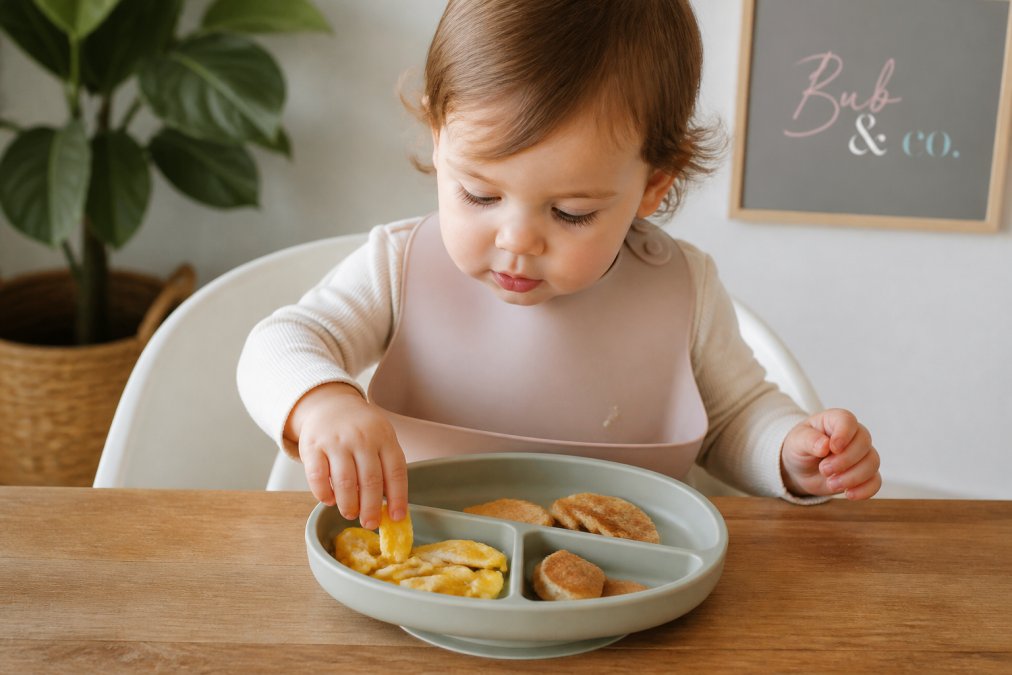
Soft-Cooked Egg and Vegetable Strips
Whisk one egg with a tablespoon of finely grated zucchini or sweet potato. Cook in a lightly oiled pan over low heat until set, then slice into strips roughly the width of two adult fingers. The strips should be soft enough to squash between your thumb and forefinger. Egg is one of the most efficient iron sources for this age group, and the vegetable adds fibre without changing the texture.
Whole Grain Pancakes and Muffin Tin Meals
Whole grain pancakes made with mashed banana, one egg, and wholemeal flour hold together well and freeze cleanly. Cut them into strips for younger babies and small squares once the pincer grasp arrives. Muffin tin meals follow the same logic: whisk eggs with finely chopped vegetables, pour into a greased tin, and bake until firm. They portion neatly, travel well, and reheat in seconds.
Toddler Breakfast Meal Prep Ideas for Busy Mornings
Toddler breakfast meal prep ideas only save time when they are built around a repeatable system, not a one-off Sunday bake. The goal is to have three or four components ready in the fridge or freezer so that any given morning is assembly, not cooking. Most parents who stick with baby led weaning long term are not cooking breakfast fresh, they are reheating and combining.
The Three-Component Framework
Build every breakfast from three slots: a base (the iron or protein anchor), a binder or carrier (something the toddler can grip), and a fresh top-up (fruit, yoghurt, or a dip added at the table). If you batch the base and the carrier, the fresh top-up takes thirty seconds.
| Slot | Batch on the weekend | Fridge life | Freezer life |
|---|---|---|---|
| Base | Egg and vegetable muffins, mini frittatas | 3 days | 2 months |
| Carrier | Whole grain pancakes, oat fingers, toast strips | 3 days | 2 months |
| Top-up | Berries, yoghurt, nut paste, soft fruit | 2-3 days | Berries freeze well |
A Realistic Weekly Rhythm
- Weekend (about 45 minutes): Bake one tray of egg and vegetable muffins and one batch of whole grain pancakes. Cool completely on a wire rack before storing, trapping steam is what makes them soggy.
- Weekend: Freeze in a single layer on a tray first, then transfer to a bag or container once solid. This stops everything fusing into one block.
- Midweek (about 10 minutes): Cook a pot of oats and portion into small lidded containers. Oats keep three days in the fridge and reheat in under a minute.
- Daily (under two minutes): Reheat one base and one carrier, add a fresh top-up, and put it down.
Reheating and Storage Mechanics That Actually Matter
- Reheat egg muffins and pancakes in the microwave for 20-30 seconds, or in a low oven if you are doing several at once. Overheating rubberises egg.
- Let frozen pancakes thaw in the fridge overnight if you can; a direct freezer-to-microwave hit leaves the middle cold while the edges dry out.
- Label containers with the date. A permanent marker on masking tape is faster than any app.
- Keep the fresh top-up separate until serving. Yoghurt and berries added the night before turn pancakes into mush.
A divided plate makes the assembly step faster because you are not hunting for separate bowls. The Rainbow Suction Plate with Lid ($17.95) keeps components apart so a toddler can see what is on offer, and the lid means leftovers go straight into the fridge rather than into the bin.

The Australian Dietary Guidelines recommend variety across the week rather than perfection at every meal, which is exactly what a rotating three-component system delivers without daily decision fatigue.
Safe Serving and Choking Prevention at Breakfast
Choking prevention at breakfast comes down to shape, texture, and supervision. A gag reflex is not choking. Gagging is loud, involves pushing food forward, and is a normal part of learning to eat. Choking is silent. Knowing the difference keeps you calm and keeps mealtimes safe.
Follow these rules for every breakfast:
- Cut round foods into quarters lengthways. Whole grapes, cherry tomatoes, and large blueberries are the classic culprits.
- Spread nut pastes thinly. A thick blob of peanut butter can block an airway.
- Cook hard vegetables until they squash easily between your fingers.
- Avoid whole nuts, popcorn, raw apple chunks, and hard raw carrot until well past three years.
- Seat your toddler upright, never reclined or walking, and stay within arm's reach for the whole meal.
The Raising Children Network on choking and gagging is a useful reference to keep on your phone. If your child has a strong gag reflex and brings food back up often, a shallow bowl with a wide rim can help them manage portion size. The Sun bowl with lid ($20.00) has a suction base that stops the bowl tipping mid-scoop, which reduces the rushed grabbing that often triggers gagging.

Breakfast for Picky Eaters and Budget-Friendly Swaps
Most BLW breakfast guides stop at recipes. The two problems parents actually search for at 6am are a toddler who refuses everything and a grocery bill that keeps climbing. This section tackles both, because the solutions overlap more than you would expect.
Why Toddlers Refuse Breakfast (and What Actually Helps)
Picky eating at breakfast is a developmental stage, not a verdict on your cooking. Between roughly 12 and 36 months, growth slows, appetite drops, and neophobia, fear of new foods, peaks. The most effective response is repeated, low-pressure exposure. Offer the food, eat alongside your toddler, and say nothing about whether they eat it. Pressure, bribes, and "just one bite" negotiations tend to extend the phase rather than shorten it.
A common pattern practitioners describe is the division of responsibility: you decide what, when, and where; the toddler decides whether and how much. At breakfast that means one plate, no short-order cooking, and no replacement meal if the first offer is refused.
Nutrient-Dense Upgrades for Toddlers Who Refuse Textures
When a toddler rejects a whole food, the fix is usually to change the format, not the ingredient. Lean on foods they already accept and add nutrition quietly:
- Iron: Stir a spoon of smooth nut paste or tahini into porridge they already like, or blend cooked lentils into a pancake batter. Iron-fortified infant cereal can be folded into muffins.
- Healthy fats: Add full-fat yoghurt, avocado, or a drizzle of olive oil. Fat carries flavour and calories in a small volume, which matters for toddlers who eat tiny amounts.
- Vegetables: Grate rather than serve separately. Zucchini, carrot, and sweet potato disappear into pancakes and egg muffins without changing the texture.
- Protein: Egg is the easiest anchor. If egg is refused, try it scrambled, as a strip, as a muffin, or folded into a pancake, the same food in a new shape lands differently.
- Format shifts: A pancake cut into stars or strips is often accepted when a square is not. This is not trickery; it is novelty, and novelty drives acceptance.
Budget-Friendly Swaps That Do Not Cut Nutrition
Inflation-conscious parents are looking for nutritious meals built from pantry staples rather than specialty baby products. The swaps below stretch the same nutrition further:
| Instead of | Use | Why it works |
|---|---|---|
| Packaged toddler cereal | Rolled oats | Cheaper per serve, no added sugar, iron can be added via nut paste |
| Fresh berries out of season | Frozen berries | Same vitamin C, a fraction of the price, and they thaw into porridge |
| Specialty baby yoghurt pouches | Full-fat plain yoghurt in a bowl | Lower cost per serve, no added sugar, toddler practises spoon skills |
| Boxed pancake mix | Wholemeal flour, egg, mashed banana | You control the ingredients and the cost per serve drops sharply |
| Pre-made egg bites | Home-baked muffin tin eggs | Eggs remain one of the cheapest complete proteins available |
Buying wholemeal flour and baking your own pancakes costs less per serve than any boxed alternative, and you control what goes in. Frozen vegetables, peas, spinach, corn, are as nutritious as fresh and can be blitzed into batters straight from the freezer.
A suction bowl with a spoon makes independent eating easier for toddlers who want to do it themselves, which in turn reduces the resistance that comes from being fed. The Suction Bowl and Spoon ($18.50) is microwave and dishwasher friendly, which matters on mornings when you are reheating yesterday's oats and need one less thing to wash by hand.

Healthdirect on toddler feeding and fussy eating offers practical guidance if picky eating persists or affects growth.
Frequently Asked Questions
What are some good breakfast ideas for baby-led weaning?
Soft-cooked egg strips, whole grain pancakes cut into fingers, oatmeal fingers, and mashed avocado on toast strips all work well for baby led weaning breakfast. Pair iron-rich foods like eggs or fortified oats with vitamin C sources such as mashed berries or orange segments to help iron absorption. Aim for a mix of protein, healthy fats, and whole grains to keep toddlers full through the morning.
How do I ensure my toddler gets enough iron at breakfast?
Include an iron-rich breakfast for toddlers most mornings. Eggs, iron-fortified whole grain cereals, and nut butters spread thinly on toast are practical options. Serve alongside vitamin C foods like strawberries, kiwi, or capsicum strips, which help the body absorb plant-based iron. If your toddler is a picky eater, offer small portions of two iron sources rather than one large serving.
What is the 4 day rule for baby led weaning?
The 4 day rule means introducing one new allergen at a time and waiting four days before adding another. This makes it easier to spot a reaction and know which food caused it. Common breakfast allergens include egg, dairy, wheat, and peanut. If your baby has eczema, existing allergies, or a family history of allergy, speak with your GP or a paediatric dietitian before starting allergen introduction.
How can I make breakfast less messy for my toddler?
Use a suction bowl or plate that grips the highchair tray, add a silicone bib with a scooped base to catch dropped food, and place a non-slip silicone placemat underneath. Serving finger foods in manageable sizes also reduces the amount that ends up on the floor. Bub and Co's feeding sets are made from food-grade silicone free from BPA, PVC, and phthalates, and are dishwasher safe for quick cleanup.
Leave a comment