
Table of Contents
- Why Parents Are Switching to Silicone Baby Plates
- Silicone vs Stainless Steel Baby Plates: Which Is Right for Your Baby
- Baby-Led Weaning Feeding Essentials: Getting Started With Silicone
- How to Clean Silicone Feeding Sets for Long-Lasting Use
Why Parents Are Switching to Silicone Baby Plates
Silicone baby plates have become a practical choice for parents transitioning to solid foods. Unlike traditional plastic or ceramic options, silicone feeding sets offer safety, durability, and ease of use. The material is naturally non-toxic, free from BPA, PVC, and Phthalates, allowing parents to focus on their child's development rather than worry about chemical exposure during mealtimes.
Silicone's heat resistance and stain-resistant properties make cleanup simpler than expected. A suction base keeps plates firmly in place during self-feeding, reducing spills and frustration for busy parents managing multiple daily mealtimes.
Silicone vs Stainless Steel Baby Plates: Which Is Right for Your Baby
When comparing silicone to stainless steel, the choice depends on your family's specific needs. Stainless steel offers superior durability and a sleek aesthetic, but it lacks the non-slip suction base that helps younger babies grip food independently. Silicone excels at encouraging self-feeding through its ergonomic design and tactile feedback, which supports sensory development during baby-led weaning (peer-reviewed research).
Stainless steel conducts heat differently, cooling food more quickly, a practical consideration for temperature-sensitive meals. However, silicone's heat resistance allows direct microwaving without transferring heat to the plate's exterior, making it safer for little hands.
| Feature | Silicone | Stainless Steel |
|---|---|---|
| Suction base | Yes | No |
| Self-feeding support | Excellent | Limited |
| Heat resistance | High (microwave safe) | High (conducts heat) |
| Stain resistance | Excellent | Good |
| Durability | 5+ years | 10+ years |
| Cost | $14-$60 | $20-$50 |
Baby-Led Weaning Feeding Essentials: Getting Started With Silicone
Baby-led weaning requires feeding equipment that supports independence and safety. A divided silicone plate lets your child explore different foods at their own pace, developing fine motor skills and learning portion awareness early. The non-slip suction base keeps the plate steady as your baby learns to scoop, grab, and self-feed.
Silicone provides gentle tactile feedback that helps babies understand texture and consistency. The ergonomic design includes a deep scoop edge, making it easier for developing hands to gather food. At Bub and Co, our feeding sets combine these design features with food-grade materials that support confident self-feeding from the earliest stages.
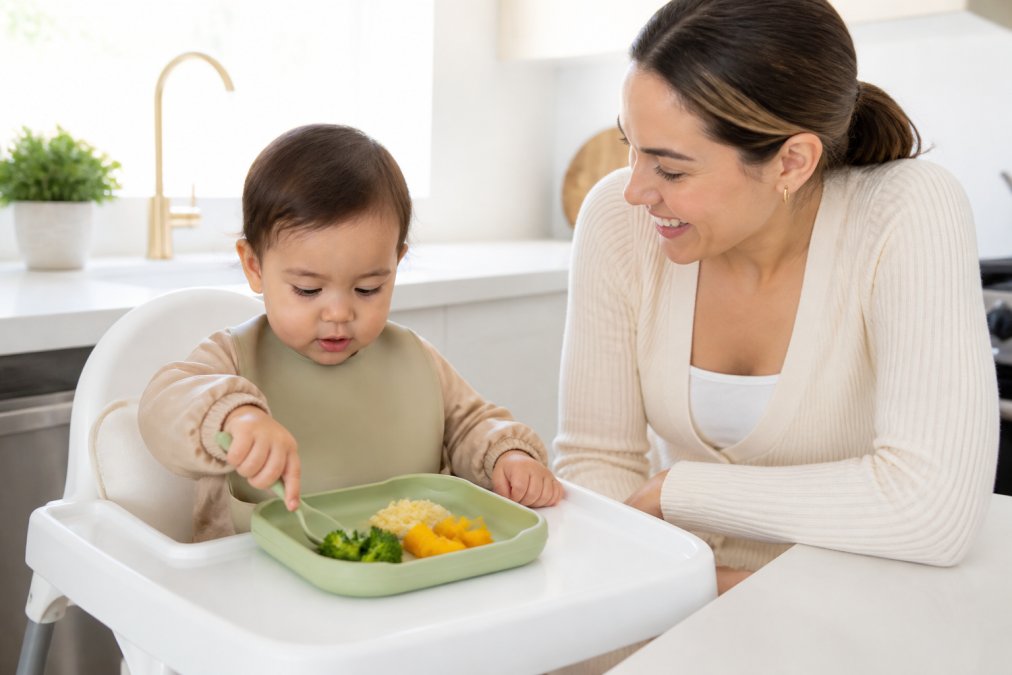
Many parents find that investing in a complete bundle, such as the My First Solid Bundle, simplifies the transition by providing plate, bowl, utensils, and protective bib in coordinated designs.

How to Clean Silicone Feeding Sets for Long-Lasting Use
Maintaining silicone feeding sets properly ensures they remain odour-free and stain-resistant for years. Hand wash with warm soapy water immediately after meals to prevent food residue from setting. For stubborn stains, apply a paste of baking soda and water directly to the affected area.
Dishwasher cleaning is safe and effective, place silicone items on the top rack to avoid prolonged exposure to the heating element. For odour concerns, soak plates in a solution of water and white vinegar for 30 minutes.
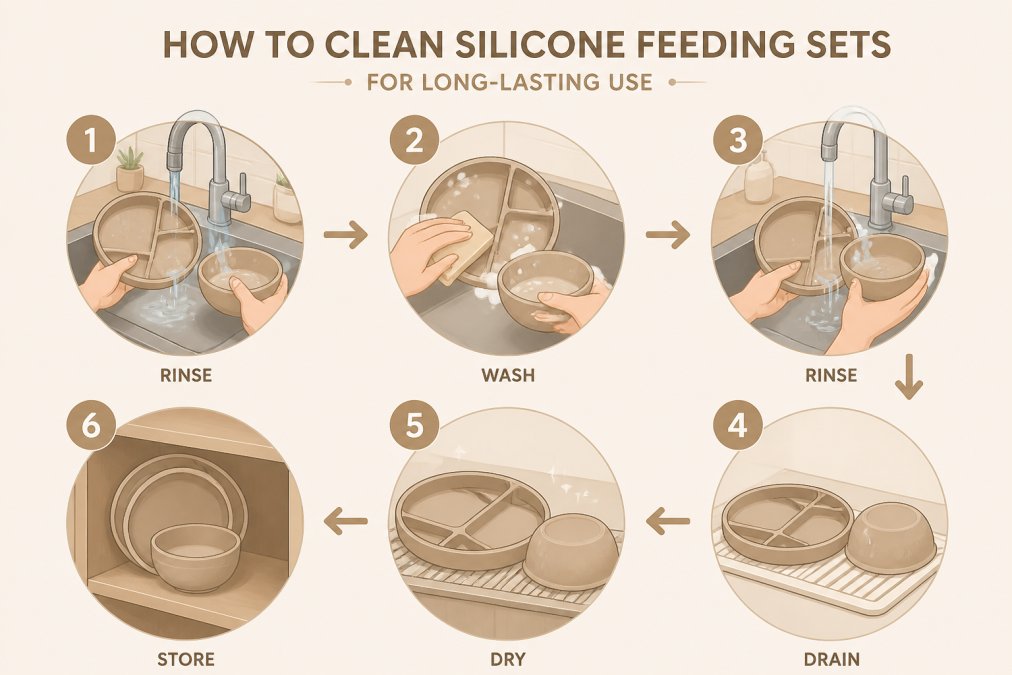
Keep silicone items in a cool, dry cupboard away from direct sunlight, which can cause colour fading. Avoid stacking heavy objects on top, as this can distort the suction base's seal.
Frequently Asked Questions
Q: Is it safe to use silicone plates for babies?
A: Yes. Silicone baby plates from reputable manufacturers are food-grade, BPA-free, and non-toxic. Bub and Co's silicone products are free from BPA, PVC, and Phthalates, making them safe for babies and toddlers starting solids. Always choose silicone designed specifically for baby feeding to ensure material quality and durability.
Q: Are silicone plates better than stainless steel for baby-led weaning?
A: Both have strengths. Silicone is lighter, has suction bases to prevent spilling, and is gentler on developing gums during self-feeding. Stainless steel is more durable long-term and doesn't retain odours. For baby-led weaning, silicone's non-slip design and portion-control sections make it ideal for babies learning to self-feed. Stainless steel works better if durability through multiple children is your priority. Many parents use both.
Q: How do I prevent staining and odour in silicone feeding sets?
A: Rinse silicone plates immediately after meals to prevent food staining. Soak in warm water with baking soda for stubborn stains. Avoid leaving silicone in direct sunlight for extended periods, as this can cause discolouration. Store in a cool, dry place. Quality food-grade silicone like Bub and Co's resists staining and odour retention better than lower-grade materials. Hand-washing rather than dishwasher drying can extend the life and appearance of your plates.
Feeding time should feel manageable, not stressful. Switching to silicone baby plates removes many common frustrations, staining, odour retention, and safety concerns, while supporting your child's developmental milestones. Bub and Co's feeding sets, including the Non Grid Suction Plate and Junior Set, are crafted from food-grade silicone that withstands daily use and grows with your family. Start with confidence, knowing your choice supports both safety and independence.
This article was written using GrandRanker
Leave a comment