
Table of Contents
- Silicone Suction Plates for Babies: The Easy-Clean Foundation
- Why High Chair Tray Material Matters for Cleaning
- 1. Removable Tray Inserts: The Quick-Release Solution
- 2. Dishwasher-Safe Tray Compatibility Guide
- 3. How to Clean High Chair Straps and Harness
- 4. Daily Wipe-Down Routine for Busy Parents
- 5. Deep Clean: Removing Stubborn Stains and Odours
- 6. Eco-Friendly DIY Cleaning Solutions for High Chair Trays
- 7. Mess-Reduction Accessories That Cut Cleaning Time
- 8. Maintenance Tips for Long-Term Hygiene
- Frequently Asked Questions
Last Updated: September 15, 2026
Silicone Suction Plates for Babies: The Easy-Clean Foundation
The biggest upgrade to your cleanup routine isn't a better sponge, it's what you put on the tray. Silicone suction plates for babies are the foundation of an easy-clean high chair tray setup, holding food in place instead of letting it migrate into every crevice.
This guide from Bub and Co breaks down eight practical solutions for keeping a high chair tray clean, from quick-release inserts to eco-friendly DIY sprays, what works, what wastes your money, and the habits that cut cleanup from twenty minutes to two.
Silicone suction plates for babies are food-grade silicone plates with a suction base that grips a smooth tray surface, holding the plate in place while your baby eats. The material resists stains and odours, handles heat and cold without leaching, and wipes clean faster than textured plastic.
Even if your baby eats well from a standard plastic bowl, the switch is worth it: the problem isn't the food, it's the tray underneath. A plate that stays put means less scraping, fewer stains, and no scrubbing dried porridge out of grid lines.
Why High Chair Tray Material Matters for Cleaning
Tray material decides how much work you do after every meal. Plastic trays scratch, and those scratches trap food debris and bacteria. Silicone and smooth, sealed surfaces wipe clean in seconds.
The surface finish matters more than most parents realise. A glossy, non-porous tray releases food easily. A textured or grid-patterned tray looks nice in photos and turns into a nightmare at 7pm.
Plastic vs Silicone: Which Tray Surface Cleans Easier?
Silicone cleans easier than plastic in almost every real-world scenario: it doesn't absorb colours from tomato or turmeric, doesn't hold onto smells, and flexes so dried food pops off instead of needing to be chipped away.
Plastic trays are cheaper and lighter, but they scratch, hold onto food debris, and are harder to sanitise fully. If you're using a plastic tray, a removable insert is the practical fix.
| Surface | Stain Resistance | Scratch Risk | Cleaning Time | Best For |
|---|---|---|---|---|
| Glossy plastic | Low | High | 3-5 min | Budget setups |
| Textured plastic | Very low | High | 5-10 min | Rarely worth it |
| Silicone insert | High | None | 1-2 min | Daily use |
| Sealed bamboo | Medium | Medium | 2-4 min | Aesthetic setups |
1. Removable Tray Inserts: The Quick-Release Solution
A removable insert is the highest-return purchase you can make for mealtime cleanup: lift it off, rinse it, and the tray underneath stays clean, no scraping, scrubbing, or crouching over a high chair with a cloth.
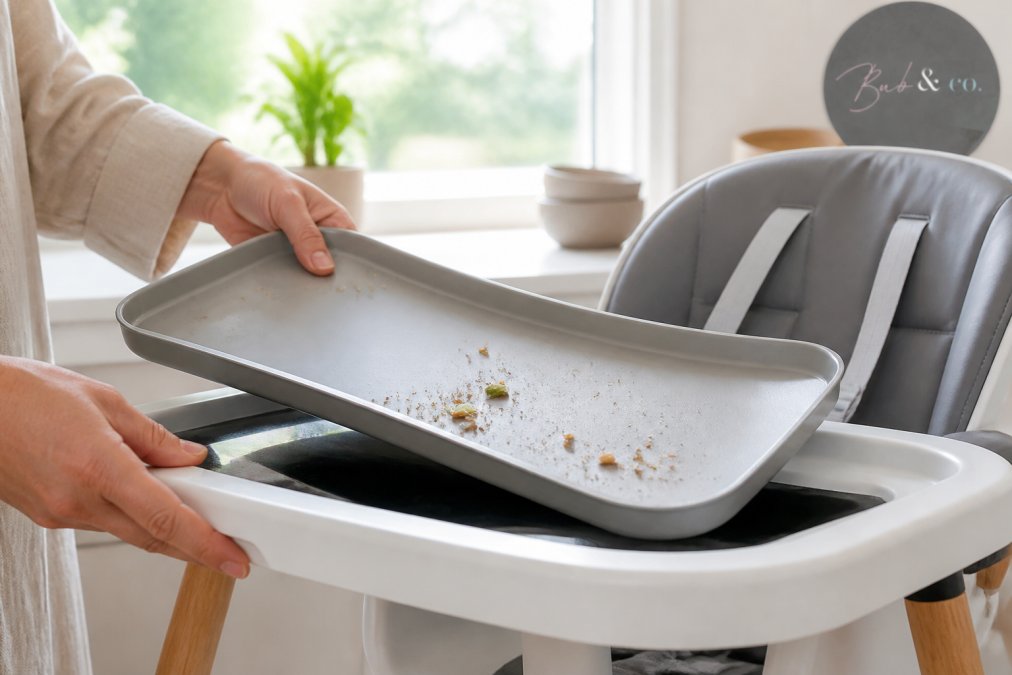
Look for a quick-release design that lifts with one hand; if you need two hands and a firm tug while your baby is strapped in, it's the wrong insert.
Silicone inserts from Bub and Co, like the Silicone Placemats at $14.95, double as a tray liner with a catch pocket. The non-slip base keeps it in place, and it's free from BPA, PVC and phthalates.

2. Dishwasher-Safe Tray Compatibility Guide
Not every tray or insert belongs in the dishwasher, and the wrong one can warp permanently. Check the manufacturer's care instructions before the first wash.
Here's the practical rule set:
- Top rack only for silicone inserts and plates. The heating element at the bottom of most dishwashers runs hot enough to distort thin silicone.
- No heated drying cycle for anything with a suction base. Heat softens the base and reduces how well it grips.
- Hand wash anything with a wooden handle, including spoons. Wood cracks and splinters in a dishwasher.
- Avoid bleach-based dishwasher tablets if you want to keep colours bright.
The Rainbow Suction Plate with Lid at $17.95 is dishwasher safe, microwave safe and freezer safe, so it moves from fridge to high chair to dishwasher without a second thought.

3. How to Clean High Chair Straps and Harness
Harness straps are the most neglected part of any high chair, and they're where mould and odour build up first. You can't just wipe them down and hope.
Here's how to clean high chair straps properly:
- Check the manual first. Some harnesses unclip completely, others don't.
- Remove the straps if possible. If they detach, this becomes a ten-minute job instead of an hour.
- Soak in warm soapy water for 15 to 20 minutes to loosen dried food.
- Work a soft brush along the webbing to lift food debris out of the weave.
- Rinse thoroughly and press out excess water with a towel. Never wring or twist.
- Air dry completely before refitting. Damp straps grow mould within days.
- If the straps don't detach, sponge them in place with a damp cloth and mild soap, then wipe with a clean damp cloth and dry with a towel.
4. Daily Wipe-Down Routine for Busy Parents
Most guides tell you to wipe the tray after every meal but not the order to do it in, which is the part that saves time. A fixed sequence turns cleanup into muscle memory and stops the twenty-minute deep clean from ever being necessary.
Here is a five-minute post-meal workflow that works whether your tray is glossy plastic, silicone, or sealed bamboo.
Minute 0-1: Clear and catch. Lift your baby out and into the bath or playpen. Remove the bib and tip caught food into the bin, not the sink, so you don't clog the drain. Lift off any removable insert now, while the food is still wet.
Minute 1-2: Rinse the insert. Hold it under warm running water and use your hand, not a sponge, to push food off silicone, it releases wet food almost instantly, and the mistake is letting it dry first. For plastic inserts, use a soft brush, since the surface holds residue more stubbornly.
Minute 2-3: Wipe the tray surface. Spray a diluted dish soap mix (one teaspoon to one cup of warm water) onto a damp cloth, not the tray. A damp rather than soaked cloth stops water running into hinge and bracket areas, where rust and mould start on metal-framed chairs.
Minute 3-4: Hit the high-touch zones. Run the cloth along the harness webbing, crotch post, seat edges, and the underside lip of the tray, these four spots account for most of the dried food parents find later.
Material-specific adjustments to the same five minutes:
5. Deep Clean: Removing Stubborn Stains and Odours
6. Eco-Friendly DIY Cleaning Solutions for High Chair Trays
7. Mess-Reduction Accessories That Cut Cleaning Time
8. Maintenance Tips for Long-Term Hygiene
Check monthly for:
Frequently Asked Questions
What is the 90-90-90 rule for high chairs?
The 90-90-90 rule is a positioning guideline for high chairs: hips, knees, and ankles should each be at a 90-degree angle. This posture helps babies stay comfortable and supported during feeding. While not directly about cleaning, it's a common search query for parents setting up high chairs. For easy-clean high chair tray solutions, look for adjustable trays and removable inserts that make cleanup faster.
How do you remove stubborn stains from a plastic high chair tray?
For stubborn stains on a plastic high chair tray, make a paste of bicarbonate of soda and water. Apply it to the stain, let it sit for 10-15 minutes, then scrub gently with a soft cloth or sponge. For tougher stains, try a vinegar solution (equal parts white vinegar and water). Avoid abrasive scrubbers that can scratch the plastic, as scratches harbour bacteria. Rinse thoroughly and dry.
Can you put high chair trays in the dishwasher?
Many high chair trays are dishwasher-safe, but always check the manufacturer's instructions. Plastic trays are often top-rack safe, while silicone trays and inserts are generally dishwasher-safe on any rack. Avoid high heat for plastic to prevent warping. If your tray isn't dishwasher-safe, hand wash with warm soapy water and a non-abrasive sponge. For quick cleanup, removable silicone inserts like those from Bub and Co are a convenient option.
How often should you deep clean a high chair tray?
A quick wipe-down after every meal is essential, but a deep clean should happen at least once a week. If your baby is unwell or the tray has had raw meat or eggs, clean it immediately. Deep cleaning involves removing the tray (if possible), washing with hot soapy water, and sanitising with a baby-safe solution. Regular deep cleaning prevents bacterial growth and keeps mealtimes hygienic.
Are silicone suction plates for babies compatible with all high chair trays?
Silicone suction plates work best on smooth, flat, non-porous surfaces. Most high chair trays are compatible, but textured or curved trays may reduce suction. Clean the tray and the suction base before each use, then press down firmly in the centre to create a seal. Brands like Bub and Co offer silicone suction plates designed for everyday use, but always test on your specific tray.
Leave a comment