
Table of Contents
- Why Silicone Baby Feeding Sets Matter for Starting Solids
- Silicone Suction Bowl Benefits and How They Reduce Mess
- Baby Feeding Set Checklist: What You Actually Need
-
Top Baby Feeding Sets to Buy Online
- My First Solid Bundle: Complete Starter Kit for New Eaters
- Ultimate Set: Six-Piece Bundle for Everyday Feeding
- Pagi Kids Feeding Set: Ergonomic Design for Self-Feeding
- Breakfast Lunch Dinner Bundle: Triple Sets with Free Plate
- Mini Bub Set: Compact Starter for Smaller Appetites
- Bowl Set and Junior Set: Flexible Options for Growing Eaters
- Rainbow Suction Plate with Lid: Portion Control and Storage
- How to Start Baby-Led Weaning with the Right Feeding Set
- Safety Standards and Material Quality: What Makes Silicone Safe
- Cleaning, Maintenance, and Durability: Long-Term Value
- Frequently Asked Questions
Last Updated: September 4, 2026
Why Silicone Baby Feeding Sets Matter for Starting Solids
Starting solids is messy and joyful. This guide from Bub and Co explains what to look for when you buy baby feeding sets online, so you can skip the trial-and-error phase.
Food-grade silicone is the standard for modern weaning: soft on gums, durable, and free from harmful chemicals. Unlike plastic, high-quality silicone is non-toxic, hypoallergenic, and heat resistant from freezer to microwave. When you buy baby feeding sets online, checking the material is the single most important step.
Silicone Suction Bowl Benefits and How They Reduce Mess
A suction bowl with a strong base stays anchored to the highchair tray, letting your baby focus on eating rather than chasing a sliding dish.
When a bowl stays put, your baby practises the pincer grasp and scooping motions that build fine motor skills. Curved walls help food gather toward the edges, making it easier for small spoons to load successfully.
Baby Feeding Set Checklist: What You Actually Need
A baby feeding set checklist helps you avoid over-purchasing. Here is what genuinely earns its place at the table:
- A suction bowl with curved edges for easy scooping
- A soft-tip spoon that is gentle on gums but firm enough to load food
- A pocket bib with reinforced eyelets to catch spills
- A suction plate with divided sections for portion control
- A transition cup or sippy cup with an anti-spill valve
- A placemat to protect surfaces and contain the mess
This is the core kit. When you buy baby feeding sets online, multi-piece bundles almost always offer better value than buying items separately.

| Checklist Item | Why It Matters | When to Introduce |
|---|---|---|
| Suction bowl | Stays anchored while baby learns to scoop | From first solids |
| Soft-tip spoon | Gentle on gums, supports self-feeding | 6 months onward |
| Pocket bib | Catches spills, protects clothes | From first solids |
| Divided suction plate | Encourages portion control and food exploration | 6-9 months |
| Transition cup | Builds straw-drinking skills safely | 6-9 months |
Top Baby Feeding Sets to Buy Online
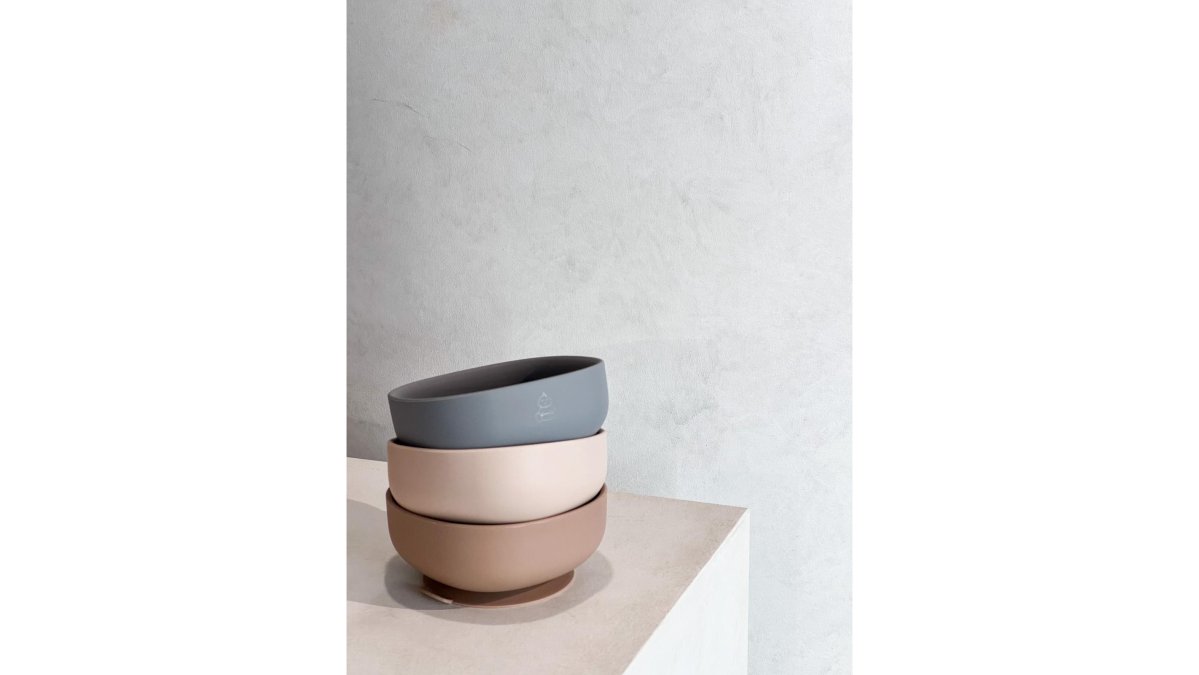
The sets below cover different stages, appetites, and budgets. Our top pick overall is from Bub and Co, made from food-grade silicone that is free from BPA, PVC, and phthalates, with stain-resistant and odour-free materials.
My First Solid Bundle: Complete Starter Kit for New Eaters
The My First Solid Bundle at $60.00 includes the six-piece Pagi Kids Feeding Set with bib, suction bowl, spoon, sippy cup with removable straw, Non-Grid Suction Plate, silicone placemat, and Sip and Snack Cup.
The anti-spill sippy cup with slow-flow straw supports straw-drinking skills while reducing gagging and choking risk, and costs less than assembling pieces separately.
Ultimate Set: Six-Piece Bundle for Everyday Feeding
The Ultimate Set at $44.95 includes a lidded plate, suction bowl, bib, spoon, and fork. Ideal for babies from six months onward; every piece is dishwasher and microwave safe.

Pagi Kids Feeding Set: Ergonomic Design for Self-Feeding
The Pagi Kids Feeding Set at $39.95 includes a pocket bib with reinforced eyelets, curved suction bowl, ergonomic spoon, and leakproof sippy cup with detachable lid and inner straw.
Made from food-grade silicone that is hypoallergenic and non-toxic, it withstands extreme temperature changes and is recyclable.
Breakfast Lunch Dinner Bundle: Triple Sets with Free Plate
The Breakfast Lunch Dinner Bundle at $79.00 includes three complete Pagi Kids Sets plus a free silicone plate and free shipping across Australia, ideal for multiple children or having a fresh set for each meal.
Mini Bub Set: Compact Starter for Smaller Appetites
The Mini Bub Set at $25.00 is a budget-friendly entry point for babies starting with purees. It includes a silicone bib, suction bowl, and wooden-handled spoon; hand wash the spoon to protect the wood.
Bowl Set and Junior Set: Flexible Options for Growing Eaters
The Bowl Set at $21.50 pairs a suction bowl with spoon and fork. The Junior Set at $44.95 includes a suction plate, bowl, cup, and spoon for independent eaters from six months onward.
Rainbow Suction Plate with Lid: Portion Control and Storage
The Rainbow Suction Plate with Lid at $17.95 features a three-section divider for portion control and food exploration, with a snap-on lid for storage and transport.
How to Start Baby-Led Weaning with the Right Feeding Set
Baby-led weaning lets babies feed themselves finger foods from the start. The right feeding set supports independent food exploration and motor skill development.
Developmental Milestones and Feeding Set Design
Suction bowls and the developing pincer grasp (6-8 months)
At six months, babies use a raking grasp. A suction bowl with curved sides helps food gather toward the rim. By 8-9 months, as the pincer grasp develops, the bowl's shape supports picking up smaller pieces independently. The suction base keeps the bowl anchored throughout.
Soft-tip spoons and mouth control (6-9 months)
A soft-tip spoon is gentler on emerging teeth and gums, and its flexibility lets your baby control pressure and build strength awareness. Ergonomic design (slightly angled, bowl-shaped tip) makes it easier for small hands to load and guide food.
Divided suction plates and food exploration (7-10 months)
Divided sections let your baby see and access multiple foods without mixing, encouraging exploration. The suction base keeps the plate stable as hand-eye coordination improves, supporting emerging self-feeding and decision-making skills.
Bibs and independence (6 months onward)
A pocket bib with reinforced eyelets signals mealtime and stays securely in place, letting your baby focus on food and learning rather than adjusting clothing.
Starting Baby-Led Weaning: A Practical Approach
Most babies are ready for baby-led weaning around six months, when they can sit upright with minimal support and show interest in food. Watch your baby's cues rather than the calendar.
Week 1-2: Exploration and mess
Offer soft, graspable finger foods on a suction plate. Expect mess, exploration is how babies learn texture, temperature, and taste. A pocket bib and placemat contain chaos while your baby learns.
Week 3-4: Emerging patterns
Your baby begins bringing food to their mouth more deliberately. A suction bowl with curved edges helps scooping as grasp develops. Offer a soft-tip spoon alongside finger foods to encourage experimentation.
Month 2-3: Building confidence
Your baby's pincer grasp develops and they pick up smaller pieces. Introduce a divided suction plate for different foods. Mealtimes shift toward actual eating, and food preferences emerge.
Month 4+: Self-feeding emerges
Around 9-10 months, self-feeding becomes intentional. Your baby uses the spoon more consistently, picks up foods with a pincer grasp, and shows clear preferences. A complete feeding set supports all emerging skills.
Why the Right Set Matters
A feeding set designed with developmental stages in mind removes barriers to learning. When a bowl stays put, your baby focuses on eating. When a spoon is the right texture and weight, your baby experiments with control. These design choices support progression from reflexive mouthing to intentional self-feeding.
Choose a set that covers the essentials, suction bowl, soft-tip spoon, divided plate, and bib, and you give your baby the foundation to learn at their own pace.
Safety Standards and Material Quality: What Makes Silicone Safe
Food-grade silicone is made from silica found in sand and does not release toxic fumes. When you buy baby feeding sets online, look for products certified free of BPA, PVC, lead, and phthalates, and that meet Australian safety standards.
Quality silicone is heat resistant and naturally stain and odour resistant. Cheaper alternatives cut corners on material purity, so checking certifications matters more than price.
Cleaning, Maintenance, and Durability: Long-Term Value
High-quality silicone rinses clean easily and resists stains better than plastic. Understanding how to clean silicone properly extends the life of your investment.
Removing Stains Without Harsh Chemicals
Silicone's porous surface can trap pigments from foods like tomato, beetroot, turmeric, and blueberries. Try these gentler methods instead of bleach or abrasive powders:
Baking soda paste: Mix baking soda with water to form a thick paste. Apply to stains, let sit 15-20 minutes, then gently rub with a soft cloth.
White vinegar soak: Soak pieces in a 50:50 mix of white vinegar and water for 30 minutes. Rinse thoroughly and air dry.
Lemon juice and salt: Sprinkle salt on the stain, rub with a cut lemon half, then rinse. Effective for turmeric and curry stains.
Sunlight exposure: Leave stained pieces in direct sunlight for a few hours or overnight to naturally bleach silicone.
Avoid bleach, hydrogen peroxide, and scouring powders, as these can weaken silicone's structure and may leave chemical residues that are unsafe for food contact over time.
Managing Odours in Silicone
Strong-smelling foods can linger on silicone's surface if not cleaned promptly. To prevent odour buildup:
- Rinse pieces immediately after meals, especially after pungent foods like garlic, onion, or fish.
- Store in a well-ventilated area rather than sealed containers.
- If odour persists, soak in white vinegar and water (50:50) for 30 minutes, then air dry in sunlight.
- For stubborn smells, place pieces in a sealed container with crumpled newspaper or activated charcoal overnight.
Dishwasher vs. Hand Washing
Most silicone feeding sets are dishwasher safe on the top rack. Hand washing immediately after meals preserves the material longer and is gentler on wooden handles. If using the dishwasher, air dry instead of using heat-dry.
Checking for Wear and When to Replace
High-quality silicone feeding sets typically last 2-3 years of daily use. Watch for these signs of wear:
- Permanent discolouration: May indicate surface degradation and reduced food safety.
- Sticky or tacky residue: Suggests silicone breakdown; replace the set.
- Loss of suction strength: If a bowl no longer holds firm, retire it.
- Cracks, tears, or brittleness: Structural damage means the set should no longer be used.
- Persistent odour: May indicate material degradation.
With reasonable care, a good silicone feeding set lasts through weaning and into the preschool years, offering better value than replacing cheap plastic sets frequently. The investment pays dividends in safety, durability, and reduced cleaning time.
Frequently Asked Questions
What should I look for when buying a baby feeding set online?
Prioritise food-grade silicone that is BPA-free, PVC-free, and phthalate-free. Check for suction bases on bowls and plates to prevent spills, soft-tip spoons safe for teething gums, and dishwasher-safe components for easy cleaning. Verify the set includes a bib and cup suitable for your baby's age and developmental stage. Read customer reviews about stain resistance and durability, as quality varies significantly between brands.
Are silicone baby feeding sets safe for newborns starting solids?
Silicone feeding sets are safe for babies from around 4-6 months when they're developmentally ready for solids. Food-grade silicone is non-toxic, hypoallergenic, and gentle on emerging teeth and sensitive gums. Ensure the silicone is certified free from BPA, PVC, and phthalates. Avoid any sets with loose parts that could pose a choking hazard, and always supervise feeding time regardless of the materials used.
How do silicone suction bowl benefits compare to regular bowls?
Suction bowls grip firmly to clean, flat surfaces like highchair trays, preventing tipping and spills during self-feeding. This reduces mess on floors and clothes, making cleanup faster and encouraging babies to explore food independently without constant bowl repositioning. The curved design also helps little ones scoop food more easily. Regular bowls offer no anchoring, leading to frequent spills and frustration for both parent and child during mealtimes.
What is included in a typical baby feeding set checklist?
A complete baby feeding set checklist should include: a suction bowl or plate with strong grip, soft-tip spoon and fork for self-feeding, a bib to catch spills, a sippy cup or drinking cup for hydration, and ideally a placemat to protect surfaces. Some sets add a snack cup for on-the-go feeding. Bundles like the My First Solid Bundle ($60.00) combine all these essentials, whereas individual sets like the Mini Bub Set ($25.00) offer a more compact starter option for parents with limited storage.
How do I know if a silicone feeding set will stain or smell after use?
High-quality food-grade silicone naturally resists stains and odours due to its non-porous surface. To maintain this, rinse bowls and spoons immediately after meals, especially after strongly coloured foods like tomato or curry. Hand-wash or use the dishwasher on a hot cycle. If staining does occur, soak the item in warm water with baking soda or white vinegar for 30 minutes. Avoid abrasive scrubbers that can damage the silicone. Bub and Co products are specifically formulated to remain stain-resistant and odour-free over time.
This article was written using GrandRanker
Leave a comment